

Alternatives to Calling a Locksmith When You’re Locked Out
A locksmith isn’t always the first step in a lockout. Practical alternatives to calling a locksmith include checking for an authorized way inside and asking someone trusted for help. If those options aren’t available, or the key or lock is damaged, professional help may be the safer choice. Let the circumstances, not urgency, guide your decision.
A lockout can make even small decisions feel urgent. Take a moment to consider your safety, who has permission to provide access, and whether an attempt could damage the property. A calm, practical choice can prevent a stressful delay from becoming a larger problem.
This guide explains how to look for a spare key, reach the right person, and avoid risky entry attempts. It also covers why household objects aren’t dependable tools and what to consider when a key goes missing. Use these steps to decide what to do next, and keep locksport practice separate from getting into a property.
Key Takeaways
- Start by moving to a safe place and checking for an authorized way inside, such as a spare key or a trusted person who can help.
- Renters can contact their landlord or property manager, while business lockouts may require following the building’s access procedure.
- Check accessible entrances without forcing doors or windows; stop if entry attempts could cause damage or put anyone at risk.
- Household items rarely provide a dependable fix for a lockout, and a broken or missing key may call for a different solution than simply opening the door.
- For ethical locksport practice on locks you own or have permission to use, Lockpick Pros Practice Locks offer a way to build skills away from an urgent lockout.
1. Finding a spare key or authorized person
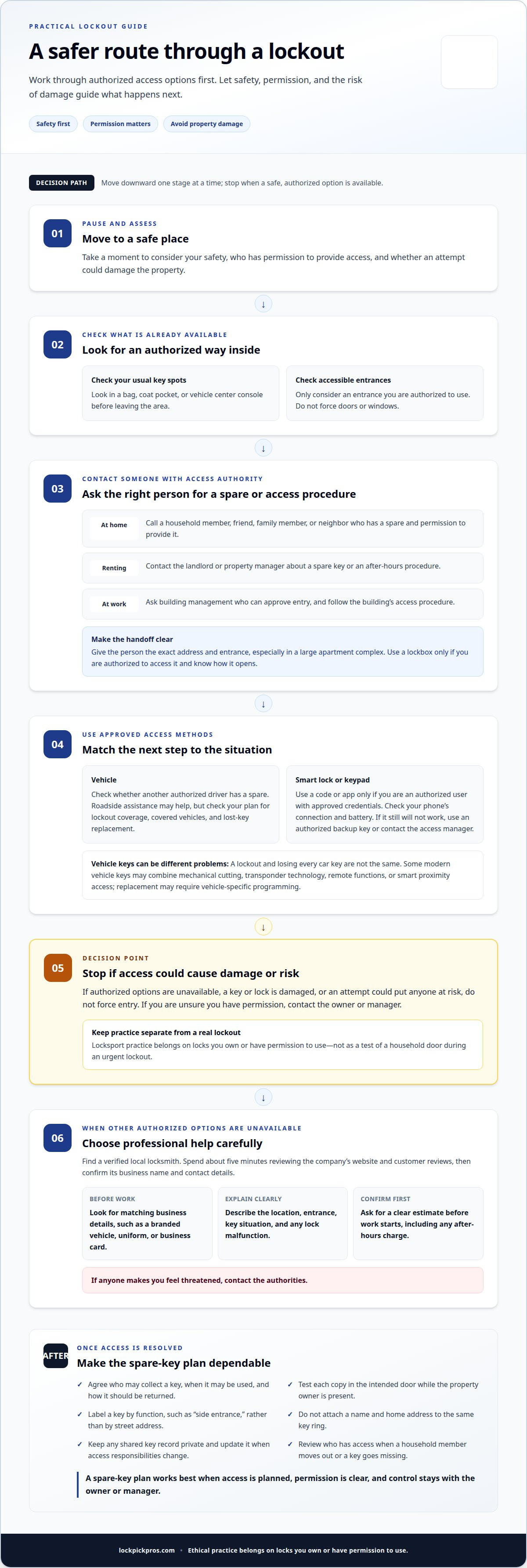
First, move to a safe place and identify who can authorize access. At home, that might be a household member with a spare key. In an apartment, contact the landlord or property manager, who may have a key or an after-hours procedure. At a business, ask building management who can approve entry before trying another route. An authorized person can help prevent a lockout from becoming a damaged door or a disputed entry.
Check your usual key spots, such as a bag, coat pocket, or vehicle center console, before leaving the area. Then call anyone who might have a spare: a friend, family member, neighbor, or roommate. Give them the exact address and entrance, especially in a large apartment complex. A lockbox can hold a backup key outside a home, but use it only if you’re authorized to access it and know how it opens.
For a vehicle lockout, check whether another authorized driver has a spare. Modern vehicle keys may combine mechanical cutting, transponder technology, remote functions, or smart proximity access. Replacing one may require vehicle-specific programming, so a spare is often the simplest option. Roadside assistance may unlock a car, but coverage depends on your plan. Check whether your membership includes lockout help, which vehicles it covers, and whether it includes lost-key replacement. A lockout and losing every car key are different problems.
A smart lock, keypad, or phone app may provide access if you’re an authorized user and the device is working. Try the code or app only if you have approved credentials. Check your phone’s connection and battery before trying again. If the lock has lost power or the app won’t connect, use an authorized backup key or contact the person managing access.
Entering a home or vehicle without authorization can create legal risks. Attempt access only to property you own or have clear permission to enter. If you’re unsure whether you have permission, contact the owner or manager.
Roadside assistance costs depend on membership coverage and the service needed. Smart-lock service costs depend on the issue, such as access setup or a malfunctioning device.
If no authorized person has a spare key, find a verified local locksmith. Spend about five minutes reviewing the company’s website and customer reviews, then confirm the business name and contact details. Before work begins, look for matching details such as a branded vehicle, uniform, or business card. Describe the location, entrance, key situation, and any lock malfunction. Ask for a clear estimate before work starts, including any after-hours charge. If anyone makes you feel threatened, contact the authorities.
2. Look for spare keys or ask friends, family, or neighbors
Once the immediate lockout is resolved, make key sharing a clear household arrangement rather than an informal favor. Decide who may collect a key, when it can be used, and how it should be returned. For example, a housemate borrowing a spare for a scheduled delivery should return it directly to its owner, not leave it in a shared hallway. Clear expectations reduce confusion and limit access to people with permission.
Test each copy before relying on it. A duplicate that looks right may still stick or fail in a worn lock. Ask the property owner to test it in the intended door while present, then label it by function, such as “side entrance,” rather than by street address. Don’t attach a name and home address to the same key ring. These small precautions help protect privacy if a key is misplaced.
In shared housing, agree on a simple key handoff that doesn’t rely on one person’s memory. A household note can record which copy is borrowed and who has it. Keep the record private, and update it when a housemate moves out or access responsibilities change. At work, follow the organization’s key-control process. Having a key doesn’t automatically authorize a staff member to let someone else in.
These practical alternatives to calling a locksmith work best when access is planned and permission is clear. If the person holding a copy can’t come, ask whether another authorized household member can arrange the handoff. Don’t pressure a neighbor or friend to enter property for someone else without the owner’s approval. In a rental, follow the lease and manager’s access procedure instead of borrowing another tenant’s building key.
Review your arrangement whenever household access changes. Check that the designated copy still works, that its holder knows which entrance it opens, and that former residents no longer have access. If a key is lost along with details identifying the property, treat it as a security concern, not just an inconvenience. A spare-key plan should make authorized access easier while leaving control with the owner or manager.
Keep practice separate from real access. Locksport is a skill-building hobby, not a way to test a household door during a lockout. For ethical practice on a lock you own or have permission to use, a pin-tumbler practice set offers a dedicated setting for developing technique.
Before calling a locksmith for a home lockout, look for spare keys and ask friends, family, or neighbors if they have one. If someone has a copy, arrange a direct handoff and confirm they’re authorized to provide it. A spare is useful only when access is permitted.
Renters can contact their landlord, as some landlords keep a spare key for emergencies. Property managers may have master keys or a locksmith on call for tenant lockouts. Ask whether they can arrange access before making other plans.
3. Avoiding damage from forced entry
For a locked car, use an authorized access method, arrange roadside assistance, or contact a professional auto locksmith. Don’t pry at the door: pressure can bend the frame, damage weather seals, or affect nearby wiring. The vehicle’s make, model, and lock design determine which non-destructive access method is appropriate.
Damage isn’t always visible from outside. A door may close even if its frame is slightly bent, leaving a poor seal or a latch that catches. Scratches near a window edge can indicate that something was forced between the glass and frame. Before using the door repeatedly, note any new marks, unusual gaps, or changes in how it closes.
A house entry is more than just a lock. The latch or deadbolt meets a metal strike plate attached to the frame. Force against a locked door can loosen the plate, split the surrounding wood, or shift the frame. Look for a small crack near the plate, loose screws, or a door that rubs against the jamb.
Don’t keep operating a damaged lock to see if it still works. A key that suddenly turns roughly, a latch that won’t retract, or a door that no longer sits square can point to a problem beyond the cylinder. Photograph visible damage and note what changed. This record can help explain the issue during a repair assessment and distinguish old wear from damage noticed after an entry attempt.
Treat window damage with similar care. Cracked glass, a shifted sash, or a torn screen can leave sharp edges and make the opening less secure. Don’t climb through a raised or damaged window to avoid a door problem. Keep people away from broken glass and arrange suitable repairs before using the opening normally again.
In rental units and commercial premises, report damage through the responsible property manager or building process. Identify the entrance, describe visible changes, and say whether the lock still works. Don’t alter shared hardware or conceal damage with a temporary fix. Accurate details help the authorized person determine whether the lock, frame, strike plate, or window needs attention.
Stop trying to enter as soon as the door, frame, or vehicle shows signs of stress. Repairing bent hardware or a damaged frame can cost more than waiting for authorized access. Protecting the entrance preserves its function and helps prevent a brief lockout from becoming a larger repair.
During an apartment lockout, forcing entry or climbing through a high window can damage property and put you at risk. Don’t force locks, doors, or windows; this can cause further damage. If authorized access options don’t work, a professional locksmith is safer than risking damage to the door or lock.
If a key breaks in a lock, don’t push the broken piece farther into the cylinder. Avoid trying to extract it with other tools, which could push it deeper or damage the lock. A professional locksmith can help open the door without unnecessary damage.
4. Trying a butter knife or bobby pin on simple locks
A butter knife or bobby pin may work on some simple locks, but neither is a dependable lockout tool. A credit card may sometimes affect a spring latch, but it won’t operate a deadbolt. These methods aren’t suitable for every lock or situation. Trying them on a door you don’t own or have permission to access can create legal and safety problems.
Avoid improvised tools if you can’t clearly identify the lock and its function. A deadbolt, commercial door, or high-security lock needs a different response from a basic spring latch. Forcing a knife into a gap can scratch the door, bend the tool, damage the latch, or injure your hand. A bobby pin can also bend or break inside the mechanism, making the problem harder to resolve.
If you’re locked out of a home, first look for a spare key or an authorized person who can let you in. In a rental, contact the landlord or property manager. At a commercial building, follow its access procedure and contact the person authorized to approve entry. Don’t try a household object on a lock just because the door looks simple.
Stop if the keyway resists, the door shifts, or a tool starts to deform. Don’t push a broken piece deeper or keep probing after a tool breaks. Repeated attempts can damage the lock or door and turn a temporary lockout into a repair. A professional locksmith is safer if the lock is damaged, a key is stuck, or the proper key won’t work with gentle use.
Call emergency services instead of trying to open a door if a child, vulnerable person, or pet is in immediate danger, or someone is trapped in unsafe weather. Call 911 when there’s an urgent safety threat, such as suspected unauthorized entry. Don’t spend time testing a butter knife or bobby pin during an emergency.
For a non-emergency lockout, consider what could happen if an attempt fails. Improvised tools can cause damage that needs repair or replacement, while emergency locksmith services typically cost more than regular appointments. The right choice depends on the lock, the risk of damage, and whether an authorized spare key or person is available. Don’t turn an uncertain situation into a forced-entry attempt.
Locksport practice is separate from emergency access. Learn on a practice lock you own or have clear permission to use, not on a door during a lockout. This lets you build careful technique without risking damage to a home or business entrance.
5. What to consider after losing a key
A lost key creates two concerns: getting inside and deciding whether the missing key poses a security risk. If it had an address tag, was lost near your home, or went missing with identifying documents, consider whether someone could connect it to your property. Finding a way inside solves only the immediate access problem.
First, note when and where you last saw the key. Check the route between those places, including a workplace reception desk, rideshare vehicle, or store lost-property counter. Ask household members whether they moved it. If the key could identify your home, tell the landlord or property manager before making changes to shared hardware.
In a rental, the manager may control the lock and decide how access changes are handled. Report the missing key promptly, explain whether it had identifying information, and follow the lease or building procedure. Don’t replace or rekey a shared lock without authorization. The property manager can determine whether compatible hardware can be rekeyed or needs replacement.
If you own the house, consider who may have a copy and whether the lost key was attached to an address. Rekeying changes which keys operate compatible hardware; replacing a lock changes the hardware itself. The right choice depends on the lock type and condition, and whether existing keys should still work. If the lost key creates a security concern, a locksmith can assess the options.
A vehicle lockout differs from losing every vehicle key. A spare may restore access; if all keys are gone, you may need a replacement. Modern vehicle keys can use mechanical cutting, transponder technology, remote functions, or proximity access. Some late-model vehicles may require dealer-only programming, so identify the make, model, and key situation before arranging help.
Insurance coverage for lockout expenses depends on the policy and the cause. A lockout alone doesn’t establish coverage; policy terms, exclusions, and deductibles determine whether related expenses qualify. If forced entry caused property damage, document it and contact the insurer after addressing safety needs and before arranging repairs.
Before deciding, gather the details that will shape your next step:
- Note whether the key was lost, stolen, or possibly left with someone.
- Identify whether it can be linked to your home or vehicle.
- Record any damage to the lock, door, window, or vehicle.
- For a rental, notify the manager and follow the property’s procedure.
Keep locksport separate from restoring access after a loss. For ethical practice on a lock you own or have permission to use, practice standard pin-tumbler skills on dedicated practice hardware, not on a live lock securing your property.
Lockpick Pros: Practice Locks
Lockpick Pros offers Practice Locks for building ethical locksport skills away from a live lockout. Use them to practice controlled movements, notice tactile feedback, and learn without risking damage to a door or vehicle. Choose Beginner Lockpick Sets for foundational practice, or Advanced Lockpick Sets as your skills develop. Vehicle Locksmith Tools are for hobbyists exploring vehicle-related locks in an appropriate practice setting.
Practice isn’t a substitute for authorized access during an emergency. If you’re locked out and no spare key or authorized person is available, use the safe access options described above. For skill-building, practice only on locks you own or have clear permission to use.
Contact Lockpick Pros for help choosing a practice option that suits your locksport goals.
Make Your Next Step a Prepared One
Planning ahead makes alternatives to calling a locksmith more useful than trying to decide during a lockout. Arrange a spare key, know who can authorize access, and keep skill practice separate from urgent entry. That preparation gives you a calm path forward when a key goes missing or a lock stops working.
In ethical locksport, progress comes from practice, patience, and using tools only on locks you own or have permission to work on. Build your skills in a dedicated practice setting, then choose equipment that suits your next learning goal.
Explore the Carbon Fiber Gen 2 Pro Series as a next step for developing standard pin-tumbler skills. Keep learning, practice responsibly, and grow your confidence one challenge at a time.
Frequently Asked Questions
What If You're Locked Out Late at Night?
At night, prioritize a well-lit, staffed place while arranging authorized access. If you’re outside an apartment, consider waiting in the lobby or a nearby open business rather than standing alone by the entrance. Keep your phone handy, tell a trusted contact where you are, and share your next step. If anyone faces immediate danger, contact emergency services instead of continuing access attempts.