

Comb Picks for Padlocks: How Over-Lifting Bypasses Common Locks
The fastest way through a pin-tumbler cylinder often requires ignoring the shear line entirely. Working with comb picks for padlocks might feel like a cheat code, but it is pure mechanical exploitation of a manufacturer's spacing oversight. If you have ever struggled with inconsistent bypass attempts on an unmarked brass body, you are certainly not alone. Wondering whether the pins will clear or bind up inside the housing can stall your momentum on the practice bench.
It is difficult to judge whether a lock's plug chambers are deep enough to swallow the entire pin stack, or if you should switch directly to single pin picking. You don't have to guess anymore. You will discover the exact physical vulnerabilities comb tools target, which common padlock models remain open to the attack, and how to execute a clean over-lifting bypass step by step. Here is what you need to know about over-lifting mechanics, spotting bypass flaws, and taking your next step in ethical locksport.
Key Takeaways
- Learn the mechanics of over-lifting and why comb picks for padlocks bypass the shear line entirely.
- Identify the design flaws and chamber clearances that leave select four-pin and five-pin padlocks open to bypass.
- Follow a clear sequence to gauge pin spacing, insert the tool, and compress the stacks cleanly.
- Recognize when tight tolerances, spool pins, or serrated pins require switching directly to single pin picking.
- Bridge the gap between fast bypass diagnostics and true precision picking as you climb the belt ranking tiers.
What Is a Comb Pick and How Does Over-Lifting Work?
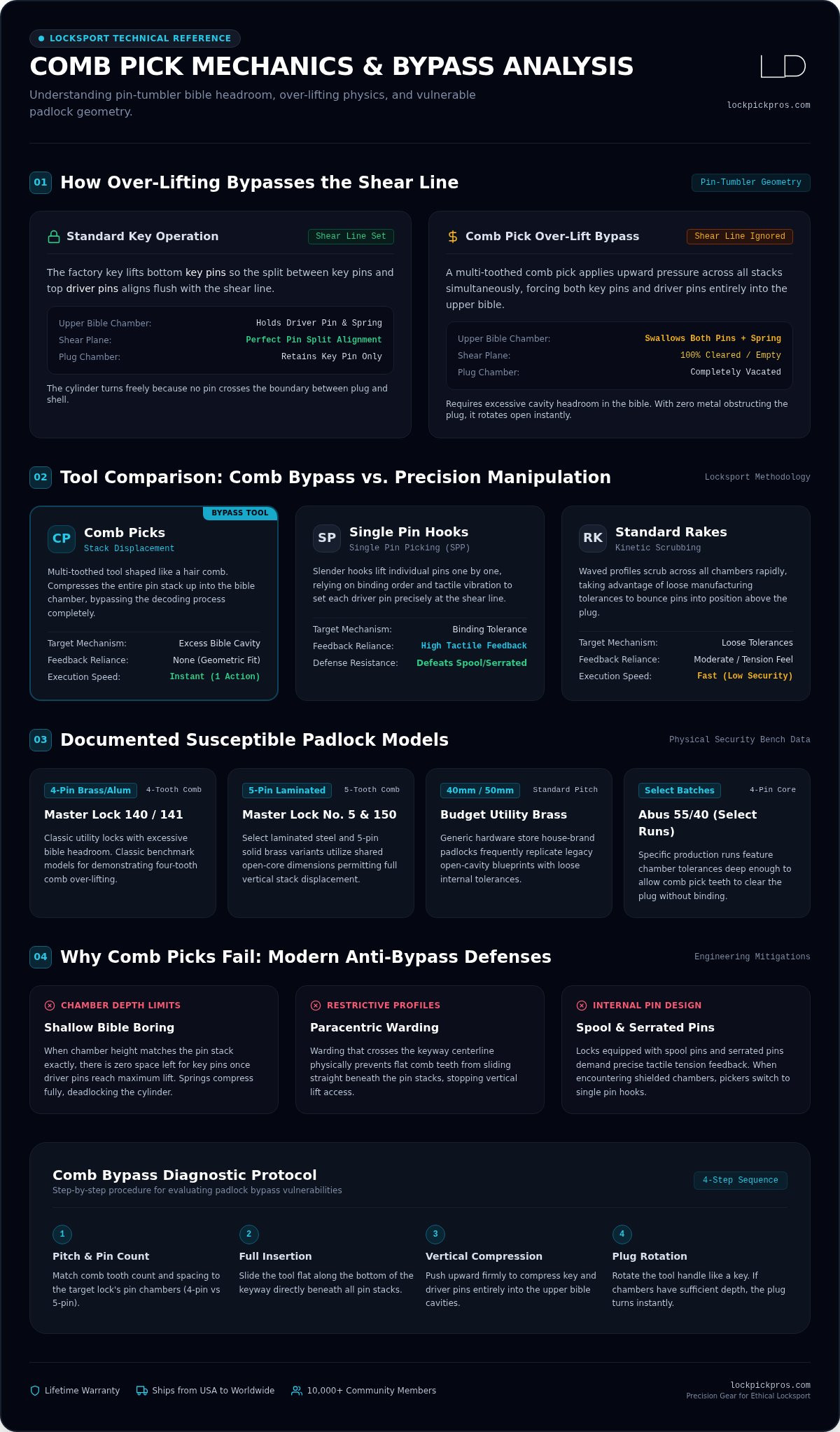
A comb pick is a multi-toothed bypass tool shaped like a miniature hair comb. Rather than interacting with individual components, it targets the pin tumbler stack as a single unit. In standard lock operation, a key lifts bottom key pins to align the split between key pins and top driver pins directly at the shear line. This split allows the plug to turn smoothly inside the lock shell.
Comb picks for padlocks bypass this alignment process completely. By applying vertical pressure across all chambers at once, the tool forces both the key pins and the driver pins entirely out of the rotating plug and into the upper bible housing. Once every pin clears the shear line, nothing bridges the cylinder, so the plug turns freely without picking a single pin.
The Mechanics of Pin-Tumbler Bible Chambers
Pin tumbler mechanisms rely on upper chambers inside the bible to house driver pins and small compression springs. Well-engineered cylinders restrict chamber depth, which stops the pin stacks from moving too high and binding the springs. However, vulnerable locks feature excessive headroom above the plug. This production shortcut leaves enough void space inside the upper chambers to swallow both pins plus the compressed spring, creating a catastrophic bypass vulnerability.
Comb Picks Versus Standard Hooks and Rakes
Understanding mechanical failure points helps ethical pickers appreciate why different tools exist across diverse lock picking techniques. Here is how comb bypass compares to traditional manipulation tools:
- Single pin hooks: Precision hooks lift pins one by one, relying on binding order and tactile feedback to set each driver pin at the shear line.
- Rakes: Rakes scrub quickly across the stack, taking advantage of loose manufacturing tolerances to bounce pins into position rapidly.
- Comb picks: Comb picks ignore the decoding process completely. Instead of balancing pins along the shear plane, they compress the entire pin stack up into the bible chamber, clearing the plug instantly.
While testing comb picks for padlocks highlights glaring engineering shortcuts, it represents an entry-level bypass rather than true mechanical manipulation. It shows where basic lock geometry fails, offering a clear diagnostic stepping stone as you develop higher-level picking skills.
Which Padlocks Are Vulnerable to Comb Picking?
Pin stack over-lifting requires very specific dimensional errors. Because of this mechanical reality, comb picks for padlocks only function on bodies manufactured with loose internal tolerances. If an upper chamber lacks the depth to accept the combined length of both pins plus the fully compressed spring, the stack binds solidly against the ceiling, deadlocking the cylinder.
In practice, vulnerable cylinders cluster heavily within low-tier consumer hardware. Padlocks engineered for real resistance prevent this attack by matching chamber depths precisely to their pin stacks, making the technique useless on higher-grade hardware.
Common Commercial Padlocks Susceptible to Bypass
Several standard hardware store models regularly yield to over-lifting tools during ethical security evaluations and Physical Penetration Testing exercises:
- Master Lock 140 and 141: These 4-pin brass and aluminum utility locks share excessive bible headroom, making them classic demonstration pieces for four-tooth comb profiles.
- Master Lock No. 5 and 150: Select laminated and 5-pin brass variants from this manufacturer use identical core designs that permit full vertical stack displacement.
- Budget solid brass padlocks: Generic 40mm and 50mm utility locks sold under hardware store house brands frequently copy older open-cavity blueprints without internal modifications.
- Abus 55/40 (select runs): Certain standard 4-pin production batches feature loose upper chambers that allow teeth to bypass the plug cleanly.
How Manufacturers Prevent Comb Pick Attacks
Modern lock makers prevent comb pick bypass through simple engineering adjustments. The primary fix involves boring shallower bible chambers. When chamber height matches the pin stack exactly, there is zero space left for key pins once driver pins reach full lift.
Cylinder designers also use variable pin lengths and restrictive keyway profiles. Paracentric warding twists across the keyway centerline, blocking flat comb pick teeth from sliding straight underneath the stacks. When you encounter shielded chambers or paracentric warding on the bench, bypass tools hit a wall. Upgrading your kit with the Carbon Fiber Gen 2 Pro Series ensures you have the slender hooks and high-feedback profiles needed to pick past these defenses pin by pin.
Step-by-Step Guide: How to Use Comb Picks on a Padlock
Bypassing a lock with an over-lifting tool requires careful tactile positioning. Rushing the process leads to stuck blades or crushed springs. When using comb picks for padlocks, proper alignment matters far more than raw physical force. Follow this structured process to test compatible hardware cleanly.
Selecting the Correct Comb Spacing and Tooth Count
Start by counting the pin chambers inside the plug. Count them by running a slender hook lightly along the roof of the keyway. Standard domestic commercial cylinders typically use 0.150-inch spacing between pin centers, while many European models rely on tighter metric spacing. Select a tool with an identical tooth count to the lock. Make sure the pick profile slides cleanly along the bottom of the keyway without catching on any side warding before you attempt to push upward.
Executing the Lift and Rotation Cleanly
Once you match the tool to the core, follow these operational steps:
- Insert fully: Slide the blade deep into the keyway until the rear stop rests against the lock face, positioning each tooth directly underneath its matching pin stack.
- Lift straight up: Apply firm, flat upward pressure along the entire tool shaft. Push smoothly to compress all bible springs equally until the pin stacks seat above the shear plane.
- Rotate gently: Keep continuous upward force on the tool while turning the handle clockwise or counter-clockwise, following the core's natural travel direction. The plug should spin instantly without needing a separate tension wrench.
Troubleshooting Common Comb Picking Errors
If the cylinder refuses to budge, inspect your technique rather than cranking harder on the metal. Angling the tool slightly causes back or front pins to drop into the shear zone. Keep the blade completely parallel to the keyway floor during your vertical lift.
Spring stacking presents another common hurdle. When a lock contains unusually long key pins or driver pins, the compressed spring coils bind completely before the pin bases clear the plug. If upward travel stops abruptly and rotation feels blocked by solid brass, that cylinder lacks the clearance for bypass. Stop applying torque immediately. Heavy rotational force against bound pins causes permanent pick-warp, bowing the thin metal spine and ruining the profile for future practice.
Comb Pick Limitations: When to Switch to Single Pin Picking
Comb picking is a strictly binary bypass method. Either the entire pin stack clears the plug instantly, or the tool hits a dead stop. There is no middle ground. When comb picks for padlocks fail to turn the core on the first two attempts, continuing to force the blade accomplishes nothing. You cannot coax an over-lifting tool through subtle angle shifts. Once chamber depth or keyway warding halts progress, switching directly to single pin picking (SPP) becomes mandatory.
Why Advanced Locks Resist Over-Lifting
Padlocks designed for real physical security eliminate over-lifting gaps through precise engineering tolerances. Tight manufacturing standards restrict upper bible cavities, leaving zero extra vertical headroom for key pins to enter. When cylinders incorporate security pins, over-lifting attempts fail immediately. Features like a Spool pin or serrated pins require measured counter-rotation and clean shear line placement rather than blunt upward displacement.
If you test a comb tool on these tighter cylinders, the longest key pins compress the springs solid against the chamber roofs before the driver pins ever clear the shear plane. Restrictive paracentric keyways also twist across the center axis, physically blocking straight comb tines from sliding underneath the pin stacks.
Developing Real Tactile Feedback with Single Pin Picking
Single pin picking transforms locksport from passive tool testing into an active, diagnostic discipline. While bypass tools rely entirely on factory assembly flaws, SPP teaches you to read internal components accurately. Inserting a dedicated tension wrench gives you the control needed to feel individual binding order, spring tension, and subtle spool counter-rotation.
Learning to interpret this direct mechanical feedback is how hobbyists progress through the community belt ranking system. Over-lifting tricks might produce quick opens on low-tier hardware, but true picking skill begins when those bypass shortcuts fail. Grab the Carbon Fiber Gen 2 Pro Series to equip your bench with high-yield hooks and experience the exact tactile feedback required to defeat advanced security pins.
Upgrading Your Locksport Kit Beyond Basic Bypass Tools
Testing comb picks for padlocks teaches an invaluable lesson about physical security: not all locking mechanisms are designed with care. Over-lifting proves that manufacturing shortcuts exist in mass-produced hardware. However, relying strictly on quick bypass methods limits your growth as a locksport enthusiast. A balanced kit uses bypass tools to study mechanical design flaws, but relies on high-yield stainless steel hooks and diamonds to develop authentic picking capability.
Transitioning from Bypass to Precision Single Pin Picking
New pickers often start with bypass profiles to understand the interior space of a padlock cylinder. Over-lifting provides instant satisfaction, yet it skips the true craft of locksport. Learning how to isolate a single pin, map binding orders, and interpret spring resistance builds reliable competence on any keyway you encounter.
Transitioning to dedicated practice cylinders bridges the gap between passive bypass and active skill. Instead of hunting for loose chambers, you learn to read the exact state of every component inside the plug. To structure your progression through harder locks, study the lock picking belt levels explained. Moving from entry-level padlocks up toward intermediate ranks requires setting standard and security pins manually, leaving simple over-lifting techniques behind.
Selecting High-Feedback Tools for Advanced Padlocks
Tackling tighter, higher-tier padlocks demands specialized equipment. Standard metal picks often flex or pick-warp under firm tension, absorbing the tiny vibrations produced by serrations and spool counter-rotation. In contrast, tools built with a rigid carbon fiber handle transmit subtle pin movements directly to your fingertips while reducing hand fatigue during long practice sessions.
Pairing slender hooks with top-of-keyway tension wrenches lets you navigate tight, paracentric keyways where thick bypass tools cannot fit. Upgrading to the Carbon Fiber Gen 2 Pro Series equips your bench with the refined profiles and tactile sensitivity required to defeat precision security pins pin by pin.
Elevate Your Lockpicking Skills Past Quick Bypasses
Over-lifting offers a fascinating look into internal cylinder tolerances. Operating comb picks for padlocks demonstrates how factory voids let pin stacks clear the shear plane completely. Yet bypass tools only take you so far on the workbench. Real skill progression begins when tighter bibles, paracentric keyways, and security pins demand true tactile manipulation.
Ready to move beyond basic bypasses? Join over 10,000 ethical lockpickers advancing through the community belt ranking system. Upgrade to precision control with the Carbon Fiber Gen 2 Pro Series. Every pick features real carbon fiber handle construction engineered for maximum tactile vibration and pin feedback. All precision tools come backed by a lifetime warranty, with orders typically shipped within 24 hours from the USA. Take your place at the bench and experience the satisfaction of genuine single pin mastery.
Frequently Asked Questions
Can a comb pick open every padlock on the market?
No, a comb pick cannot open every padlock. The technique only works on padlocks that have deep upper bible chambers with extra vertical clearance. Higher-security cylinders feature tight machining, anti-bypass plates, or paracentric warding that physically block over-lifting tools from pushing the pin stacks clear of the shear line.
Is using a comb pick considered single pin picking?
No, using a comb pick is classified as a bypass method rather than single pin picking (SPP). Traditional picking sets individual pin stacks one at a time across the shear line using feedback from a tension wrench. Comb picks for padlocks simply push both key pins and driver pins into the upper housing in a single movement.
Why do my comb pick teeth bend when turning the padlock?
Teeth bend when you apply turning torque before the pin stacks fully clear the shear line. If a key pin is too long, the spring compresses completely before the pin base exits the plug. Twisting the tool while pins still bridge the cylinder jams the metal, creating pick-warp and damaging the teeth permanently.
Are comb picks legal for locksport hobbyists to own in the US?
Yes, owning comb picks is legal under federal law and in the majority of US states for recreational hobbyists. State laws, such as those in California, evaluate ownership based on criminal intent rather than mere possession. Ethical pickers must only test locks they own or have explicit permission to pick.
What is the difference between a four-tooth and five-tooth comb pick?
The difference lies entirely in the chamber count and spacing of the target cylinder. A four-tooth comb fits standard four-pin utility padlocks, while a five-tooth version spans five pin chambers. You must match the tooth count and center spacing directly to your padlock, or extra teeth will collide with the core face.
How do lock manufacturers protect modern padlocks from comb picking?
Manufacturers prevent over-lifting by shortening the upper bible chambers to limit spring compression room. They also install paracentric keyways that twist across the midline, blocking straight blades. When testing comb picks for padlocks against newer hardware, these tighter tolerances force you to set pins individually with precision hooks.