

How to Practice Lockpicking Safely with the Right Locks
Practice lockpicking only on locks you own or have explicit permission to use. Start with a dedicated practice lock and use controlled, gentle movements. The process is approachable, but progress comes from noticing feedback and adjusting your technique, not forcing the tools.
It’s natural to wonder whether lockpicking requires special skills from the outset. Beginners can build a foundation by learning how the keyway guides a pick, how pins respond to movement, and how tension changes what they feel. A simple practice setup makes these details easier to study.
This guide explains how to choose beginner tools and practice locks, recognize keyways and security features, and compare locks of the same model. It also covers responsible practice and U.S. legal considerations, then shows how to choose equipment for your next locksport goal. Use each session to develop careful technique and a clearer understanding of the lock in front of you.
Key Takeaways
- Begin with a practice lock, a hook pick, and a tension wrench that fits the keyway; build control through gentle, deliberate movements.
- Study how keyway shape and pin feedback affect your approach, and avoid lifting pins past the point where they set.
- Practice on locks you own or have clear permission to use, and learn the rules that apply where you live before carrying lockpicking tools.
- Compare multiple locks of the same model to notice how small differences in feedback can change your picking approach.
- Choose beginner tools and practice locks that match your current skill, then progress to more challenging locks as your control improves.
Is it easy to learn lock picking?
- Start with a simple pin tumbler practice lock and learn one movement at a time. The basics are approachable, but consistent picking takes patience and attention to feedback. For how to practice lockpicking safely, use only a lock you own or have clear permission to practice on. Keep it separate from locks protecting property, and stop if you feel tempted to force the plug or pick.
Choose a straightforward practice lock before trying security pins or narrow keyways. A standard pin tumbler gives you a clear learning goal: raise each pin until its cut allows the plug to rotate. You don’t need a vise for a low-security practice lock; a steady surface and comfortable grip are enough to begin.
- Choose a small tool set so you can focus on control instead of sorting through unfamiliar shapes. Start with a short hook for single-pin picking and a tension wrench that sits comfortably in the keyway. The hook lets you feel pins individually; the wrench applies rotational force and helps you notice changes in the plug. A beginner lockpick set can provide a practical starting point.
Use light tension. Excessive pressure can bind pins or push them into the wrong position. Begin with about half the pressure it takes to press a keyboard key, then ease off if pins feel rigid. Avoid twisting the pick or wrench to compensate for unclear feedback. Delicate movement is easier to read and helps protect the lock and tools.
- Select a practice lock with a keyway that leaves room for the hook. A standard five-pin cylinder is a useful starting point. The keyway is the opening that guides the pick; its shape affects which tool fits and how easily you can reach each pin. Look for clear feedback before trying tight keyways or locks with security pins.
With a transparent practice lock, place it securely on a stable surface and orient the keyway so you can see and reach it. Follow the maker’s setup instructions, support the housing, and don’t pry or overtighten its parts. Use the clear casing to observe pin movement, but treat tactile feedback as your main guide. Stop if a component shifts or binds.
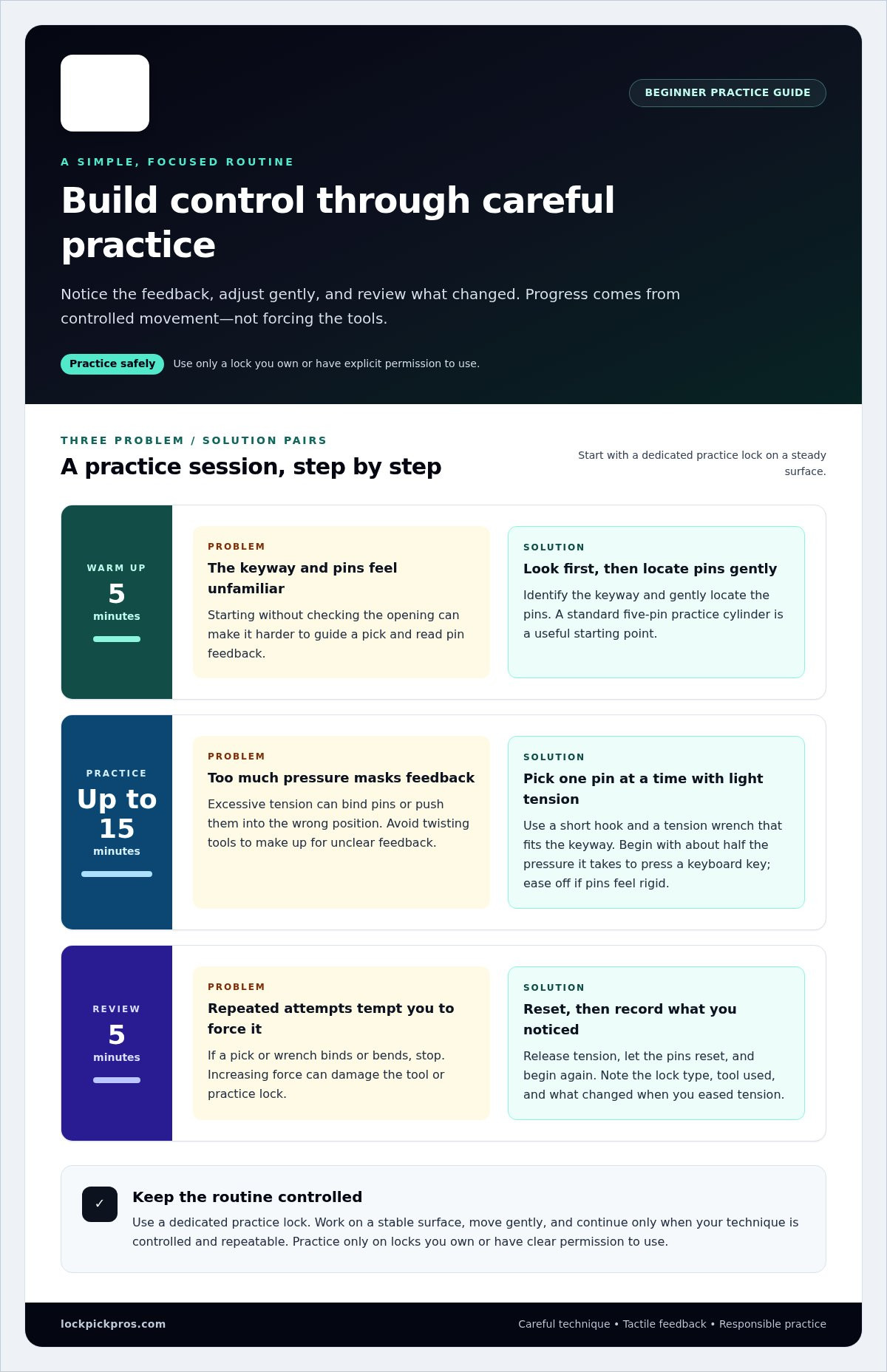
- Practice in short, focused rounds. Spend about five minutes warming up by identifying the keyway and gently locating pins. Use up to fifteen minutes for single-pin picking, then finish with five minutes reviewing the feedback you noticed. If repeated attempts fail, release tension, let the pins reset, and start again rather than increasing force.
Keep a simple practice note: record the lock type, the tool used, and what changed when you eased tension. This turns each attempt into useful feedback. Move to a more challenging lock only when you can work the current one with controlled movements and repeatable technique.
Learning lock keyways, pins, and security features
Protect the lock, your tools, and your practice space. The main risks are bending a pick through force, damaging a practice lock, and causing concern by handling tools near property you don’t own. Use a dedicated practice lock on a stable surface, keep picks under control, and stop if a tool binds or bends.
Practice at home on locks you own, or join a locksport club that allows practice under its rules. A locksmith training program can also provide an appropriate setting. Get permission before using any lock, and keep written permission for a lock owned by someone else.
- Study the keyway before inserting a pick. The keyway is the opening that guides your tool, and its shape determines how much room you have to move. On a standard pin tumbler, the pins sit above the plug; most front door locks have five pins. Use a light to inspect the opening, then note whether its profile is open or narrow. Start with an appropriate practice lock, not a door or padlock still in service.
- Hold the pick like a pencil, guiding its handle with your thumb and index finger while your other fingers support it. Keep your wrist relaxed and move from your fingertips, not your shoulder. Insert the tip gently, then identify each pin by lifting until you feel spring resistance. Don’t force the pick against the lock’s warding, the internal ridges that guide the key. If the pick twists, withdraw it and reset your grip.
- Learn standard pins before studying security pins. A standard pin lifts and settles with a straightforward change in feel. A spool pin has a narrowed waist and may create a false set when it catches at the shear line. Serrated pins have horizontal grooves that can produce several clicks. Treat each click as feedback, not proof that a pin is set. Reduce tension if the plug feels stuck, and avoid lifting a pin past its setting point.
- Practice reading tactile feedback instead of relying only on sight. In a transparent lock, watch how pin movement corresponds with the pressure you feel through the pick. Then use a metal practice lock to notice friction without a clear view. Record which pin felt springy, which felt firm, and how releasing tension changed the plug. For continued work with standard pin-tumbler locks, a standard pin-tumbler pick set can support practice as your control develops.
- Make permission part of your locksport routine. Before handling a lock outside your own practice setup, identify its owner and get clear approval for that specific lock. Keep written permission with you when practicing elsewhere, and follow any club or program rules about tools and practice locks. If someone questions your activity, stop and calmly explain the practice context. Never test your skills on a lock simply because it appears unused.
U.S. lock-picking laws and possession rules
- Keep practice limited to locks you own or have clear permission to use. In the United States, lockpicking is generally legal, but carrying tools with intent to use them as burglary tools can create legal trouble. The lock’s owner, your permission, and the circumstances around carrying tools matter. Clarify whose lock it is and obtain permission before practicing; this can help avoid legal uncertainty.
Before bringing picks to a club meet or shared practice space, ask the organizer about its rules. Keep written permission for any lock owned by someone else, and don’t test a lock just because it appears unused.
- Treat single-pin picking, raking, and zipping as learning techniques, not permission to work on unfamiliar locks. Single-pin picking involves feeling individual pins; raking moves a rake across several pins, while zipping draws it through the keyway. Practice these only on a dedicated lock you have permission to use. A bump key or bypass tool works differently, operating the lock without teaching you to read each pin’s tactile response. Don’t use bypass methods outside your own practice setup.
- Use gentle tension and stop at the first sign of excessive resistance. Too much pressure can bind pins, while forceful pick movements can bend a tool or damage a practice lock. If a pick twists, withdraw it. If pins stop responding, release tension and let the lock reset before trying again. Don’t push harder to resolve an unclear signal.
Keep fingers clear of sharp pick tips, and put tools away when practice ends. A stable work surface helps prevent slips. These habits reduce the risk of damaging tools or accidentally scratching the lock and nearby surfaces.
- Troubleshoot one variable at a time. If the plug feels rigid, ease tension. If the pick catches on the keyway, remove it and reassess its position instead of levering against the lock. If repeated attempts produce no useful feedback, reset the lock and return to a simpler practice example. Note the tool, how the tension feels, and the result so the next attempt has a clear purpose.
- Plan your hobby spending around practice needs, not a large collection of tools. Start with a suitable practice lock, a hook, and a tension wrench, then add specialty tools when a new lock type calls for them. Compare items by what they let you practice. Remember that owning equipment doesn’t give you permission to use it on another person’s property.
Practicing with multiple locks of the same model
- Use matching practice locks to separate technique from differences between locks. Two cylinders sold as the same model can still feel different. Wear, lubrication, pin condition, and manufacturing tolerances may affect feedback. Label each lock with a simple identifier, such as A or B, and record its condition before starting. Keep both off doors and other property in use.
Begin with one lock, then try the second using the same pick and tension wrench. This controlled comparison helps you notice whether a change comes from your technique or the lock’s response.
- Keep your setup consistent throughout the comparison. Use the same work surface, pick, wrench position, and comfortable grip for each lock. Apply light, steady tension and pay attention to how the pins feel as you move the pick. If you change tools or hand position, note the change. This helps you distinguish a tool-fit issue from different feedback inside the cylinder.
For example, if Lock A gives clear movement but Lock B feels rigid, ease the tension before changing your pick. Don’t force the plug to turn.
- Record observations instead of relying on memory. For each practice lock, note its model label, keyway shape, tool used, and how the plug responded. Describe pin feedback in plain terms, such as springy, firm, or unclear. Don’t assume that matching exterior labels mean identical internal behavior. A short log makes repeated patterns easier to recognize and helps you track your control over time.
Keep notes focused on your own practice locks. Don’t include details that could identify someone else’s property or suggest unauthorized testing.
- Alternate locks to see whether a technique transfers. Work on Lock A until you can describe its feedback, then set it aside and try Lock B with the same setup. If your familiar approach feels different, pause and reassess instead of increasing force. This comparison trains you to respond to tactile feedback rather than repeat one movement automatically.
Return to Lock A afterward. Note what changed between attempts, including your grip, tension, and pick placement. A clear comparison is more useful than a long session of repeating identical movements.
- Set a stopping point for each session and inspect both locks afterward. Remove the pick gently, check that no tool is bent, and confirm that each practice lock still operates normally with its key. If a key no longer turns smoothly, stop using that lock until you understand why. Keep matching practice locks together, but store them separately from working locks to prevent mix-ups.
Practice locks give you a dedicated way to compare feedback without treating an installed lock as a training target. Move to a different model only after you can explain how the two matching locks respond differently.
What beginner lockpicking tools are safe and legal to buy in the US?
- Choose tools for a dedicated locksport setup, and use them only on locks you own or have permission to practice on. In the United States, lockpicking itself is generally legal, but intent and circumstances can matter when carrying tools. A purchase doesn’t grant permission to work on another person’s property. Keep your practice lock separate from working locks, and store picks securely when you aren’t using them.
- Start with a short hook pick and a tension wrench for standard pin tumbler practice. The hook lets you feel individual pins, while the wrench applies rotational force and gives feedback through the plug. Choose a wrench that fits the keyway without wedging in place. A rake is another common pick shape, but beginners can focus on one hook and consistent, light tension before adding more tools.
- Pair those tools with a practice lock, not a lock installed on a door, gate, or vehicle. A standard pin tumbler cylinder offers a clear learning target, while a transparent practice lock can help you observe pin movement. Use a stable work surface and keep the key nearby to check normal operation afterward. Don’t practice on locks that protect property, even if you believe they’re temporarily unused.
- Keep ordinary picks and specialty tools separate when choosing a beginner setup. A wafer lock uses flat wafers rather than pins, so it calls for a different approach and matching tools. Dimple locks also require dedicated picks. Choose the practice lock before buying specialty tools. For a first pin tumbler setup, prioritize a hook, a compatible tension wrench, and a practice cylinder.
- Before buying or carrying picks, consider the legal rules where you live and why you have the tools. The key distinction is between lawful hobby practice and carrying tools with intent to use them unlawfully. Keep a practice lock with your kit, and retain written permission when practicing on someone else’s lock. Avoid carrying picks into situations where their purpose could reasonably be misunderstood.
- Inspect each tool before and after practice. A bent pick, damaged tip, or wrench that no longer sits properly can slip or harm a practice lock. Stop if a tool twists under pressure; don’t force it back into shape while it’s inside the keyway. When you’re ready to build a standard pin tumbler kit, choose a standard pin-tumbler pick set suited to continued locksport practice.
Lockpick Pros: Beginner Lockpick Sets
Lockpick Pros offers Beginner Lockpick Sets and Practice Locks to help you build a focused locksport setup. Choose a practice goal, work through one belt level at a time, and consider Advanced Lockpick Sets as your skills develop.
Start with the free Black Belt Challenge. Progress through the belt ranks, share picks-in-action content using Lockpick Pros tools, and earn reward picks as you advance. Sharing also contributes toward the challenge’s $5,000 bounty for reaching its social reach goal.
Choose tools that suit your next practice step, share your progress, and keep building toward Black Belt.
Build Your Next Locksport Goal
Give your next practice session one clear purpose: improve your control, rather than simply aiming to open the lock. A useful next step in learning how to practice lockpicking safely is to choose one skill, observe your progress, and finish with your tools and practice lock in good condition. Treat each session as a small experiment, and use what you learn to shape your next goal.
Progress isn’t measured only by the moment the plug turns. It also shows in controlled movements, careful tool handling, and knowing when to pause and reset. As your technique develops, choose equipment that matches the locksport skills you want to build, rather than adding tools without a practice goal.
Ready to advance your standard pin-tumbler practice? Explore the Carbon Fiber Gen 2 Pro Series as you plan your next step. Keep practicing with purpose, respect permission, and enjoy the challenge ahead.
Frequently Asked Questions
Is picking locks a good skill?
Yes, lockpicking can be a rewarding hobby that develops patience, fine motor control, and structured problem-solving. Treat each practice session like a small experiment: make one deliberate adjustment, observe the result, and record what changed. For example, compare notes between sessions instead of relying on memory. Locksport belt ranks can also provide milestones for setting goals and tracking progress.
Is lockpicking legal in the United States, and what state laws apply?
Lockpicking tools are legal in most areas when they aren’t used for illegal purposes, but state and local rules can differ. For a particular state, look for laws addressing possession of lockpicking tools and circumstances involving alleged criminal intent. Don’t assume the rules stay the same when crossing state lines. Always check your local laws before purchasing or carrying tools in public.
Can you practice lockpicking on locks you own or have explicit permission to open?
Yes. A useful practice setup is a spare cylinder removed from a door, with its key nearby for a function check afterward. Label it “practice” and store it separately from cylinders still installed in doors or gates. If the lock belongs to someone else, agree on the specific lock and practice activity beforehand. That clear scope helps prevent confusion about what was authorized.
What are beginner lockpicking steps for a simple pin tumbler lock?
Before starting, confirm that the cylinder is a practice lock and identify the keyway orientation. Keep its working key nearby, and note how smoothly the key turns before practice. During a session, change one variable at a time, such as hand position or tool choice, so your observations stay useful. Finish by removing the tools and checking that the cylinder still operates normally with its key.