

How to Practice Raking and Tension for Lock Picking
Your first successful rake may come quickly, but consistent control takes practice. If you’re asking whether lock picking is hard to learn, the short answer is that basic raking is approachable, while reliable technique develops over time. You may grasp the basics in a few minutes, but working confidently across different locks takes patience and attention.
It’s normal for early attempts to feel uncertain. The useful skill is learning to notice what a lock communicates through the tools, then making small, deliberate adjustments instead of forcing a result. Practice should stay ethical: use locks you own or have clear permission to pick, and remember that local laws can vary.
This guide covers choosing practice locks, understanding pin-tumbler mechanisms, and controlling raking and tension. It also explains why one lock may feel different from another, what affects learning time, and how to build a steady practice routine. You’ll find a practical path from your first attempts toward more consistent locksport skills, with permission and careful technique at the center.
Key Takeaways
- Practice only on locks you own or have permission to pick, and keep local laws in mind.
- Begin with a practice lock, then progress to real pin-tumbler locks as your control and feedback improve.
- Use a gentle rake motion and adjust your approach when the pins don’t respond.
- Balance tension carefully: too much or too little can make setting pins more difficult.
- Build skill through regular practice; early success can come quickly, while consistency takes longer.
Legal considerations for learning lock picking and owning tools
- Start with permission, not the lock pick. Laws on lockpicking and tool ownership vary by location, so check the rules that apply where you live. Practice only on a lock you own or one whose owner has clearly authorized the exercise. A neighbor’s door, a workplace cabinet, or a rented property is not automatically yours to practice on. Treat explicit permission as the first step, and keep practice separate from gaining access to property without consent.
- Check the rules that apply where you live before carrying tools beyond your practice area. Requirements can differ across local jurisdictions, so don’t assume a rule in one state or city applies elsewhere. If you travel with a set, check how the destination’s laws address possession and use. Keep the purpose clear: locksport practice on authorized hardware. A responsible hobbyist can explain what a tool is for and identify the lock they have permission to work on.
- Choose practice hardware that makes permission straightforward. A practice lock or spare lock you own gives you a clear boundary. Keep it separate from doors and containers in everyday use, even if they belong to you. For example, practice on a separate padlock instead of the one securing a shed. That keeps the exercise focused on learning and avoids putting property you rely on at risk.
- Use each tool as intended and learn the feedback it gives. Pay attention to changes in resistance as you practice; they can offer clues about what is happening inside the lock. A rake moves across the pins, while a hook manipulates them individually. Start with light pressure and pause when the feedback changes rather than forcing the tool against resistance. Excess force can bend a pick or damage practice hardware, making the lock harder to read.
- Match the tool to the lock type before beginning. Standard pin-tumbler practice calls for a lock pick and tension wrench; a wafer lock uses flat plates instead of pins and needs specialized tools. Dimple locks also require a different pick style, such as these dimple lockpicking tools. Don’t treat one set as suitable for every mechanism. Identifying the lock first helps keep practice controlled, purposeful, and within the permission you received.
Practice locks and real-world pin tumbler locks
Practice on a lock you own, a dedicated practice lock, or hardware you have clear permission to pick. A practice lock gives beginners a controlled way to learn before trying different designs.
-
Learning how pin tumbler locks work
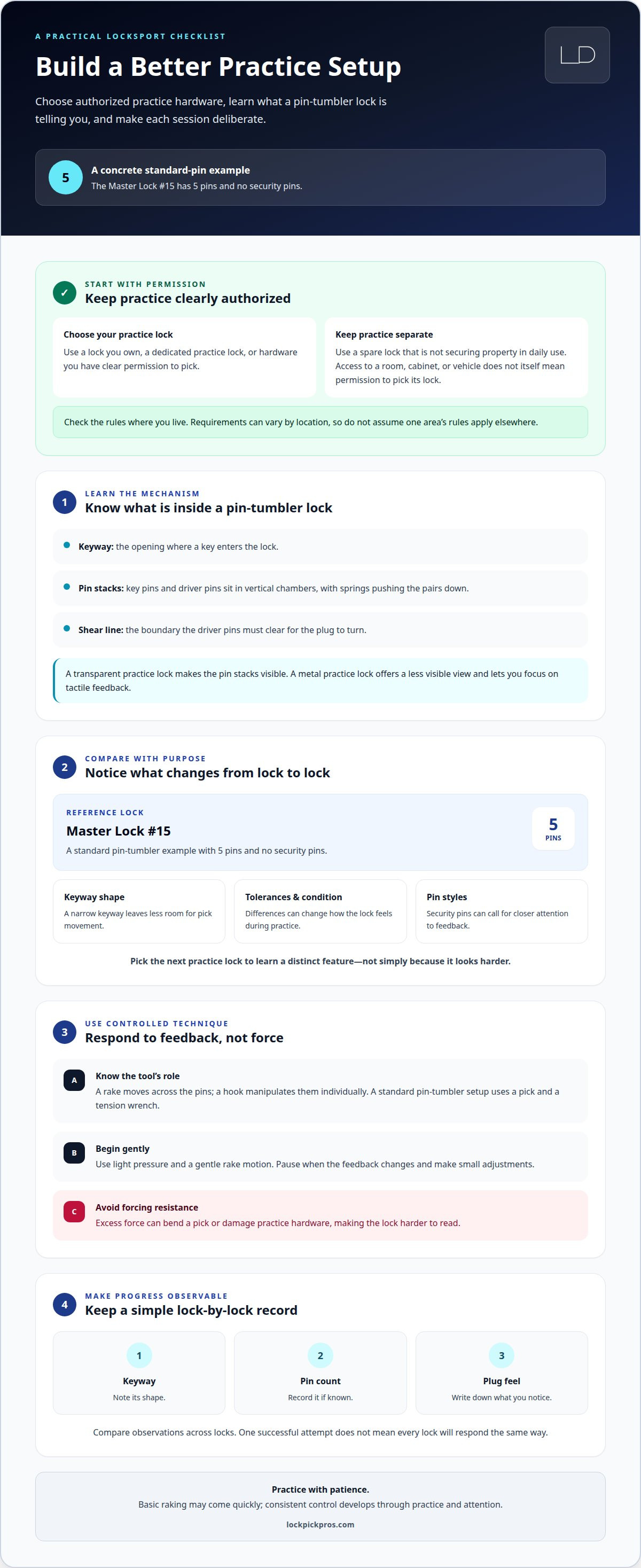
Begin by identifying the keyway, the opening where a key enters a pin-tumbler lock. Inside, pairs of key pins and driver pins sit in vertical chambers. Springs push the pairs downward, preventing the plug from turning until the correct key raises them.
Use a cutaway or transparent practice lock to watch the pin stacks as you insert a key. Notice how the key’s cuts raise the key pins to different heights. The driver pins then clear the plug’s boundary, called the shear line. This basic layout helps explain why keyway shape and pin arrangement affect how a lock feels.
Check the lock’s design before choosing practice hardware. A standard pin-tumbler lock offers a familiar mechanism for beginners, while a different lock type requires learning a different internal layout. Treat each design as a separate learning challenge rather than assuming one technique works on every lock.
-
Practicing on locks with varied designs
Start with one familiar pin tumbler practice lock, then add locks with different keyways and pin arrangements. A Master Lock #15 has 5 pins and no security pins, making it a concrete example for recognizing a standard stack. Other locks may feel harder because their tolerances, condition, and internal pin styles differ.
Keep a simple record for each lock: note its keyway shape, pin count if known, and how the plug feels. Compare observations across locks instead of treating one successful attempt as proof that every lock will respond the same way. For example, a narrow keyway limits the space available to move a pick.
Use varied designs to build recognition, not to rush toward harder hardware. A lock with security pins or different tolerances may require more careful attention to feedback than a familiar practice lock. Choose the next lock because it introduces a distinct feature, such as a changed keyway, rather than simply because it looks more difficult.
-
Finding legal places to practice
Choose a lock you own or a dedicated practice lock, and get clear permission before working on anyone else’s property. These are straightforward places for beginners to practice. Never assume that access to a room, cabinet, or vehicle means permission to pick its lock.
Pair a practice lock with a learning resource that explains its mechanism. A transparent training lock makes the pin stacks visible, while a metal practice lock offers a less visible view. Switching between them can help connect what you see with the tools’ tactile feedback.
When your practice moves to real pin tumbler locks, select a spare lock that is not securing property in daily use. This keeps the exercise separate from essential access. A beginner ready to work across standard pin-tumbler designs can consider a pin set for varied practice as skills develop.
Raking techniques and beginner success
Basic raking can take only a few minutes to learn, though consistent results require practice. A beginner set’s cost in the US depends on what it includes, such as picks and practice hardware.
-
Using beginner guides and sets
Choose a beginner set with a rake, a hook, and a tension wrench, then pair it with a clear guide. These tools cover basic raking and introduce single-pin picking without requiring a large collection. Look for guidance on holding each tool and recognizing feedback. Beginners gain more from understanding a few picks than from owning tools they can’t yet identify.
-
Following beginner lock-picking steps
Start with a practice lock you own or have permission to pick. Insert the tension wrench into the keyway and apply light rotational pressure. Place the rake at the back of the keyway, lift gently, then scrub back and forth. Keep the motion controlled; if the pins don’t respond, adjust the rake’s angle, height, or speed.
Listen and feel for clicks or shifts. These signs can indicate pin movement, but don’t treat every click as proof of success. If the lock remains closed after 10-20 seconds, release tension and reset before trying again.
-
Assessing beginner learning time
Use early practice sessions to learn the motion, not to judge your overall ability. Basic raking may click within a few minutes, and a responsive lock may open in a few seconds. A clear practice lock can take beginners 15 to 30 minutes to open. Real locks vary, so repeat the same technique on suitable practice hardware before drawing conclusions.
- Avoid common beginner mistakes: heavy tension, rushed scrubbing, and repeating a motion without noticing feedback. Too much pressure can make pin movement harder to feel; too little may not hold the driver pins in place. Keep the wrench steady, use a light raking motion, and pause after each attempt to notice what changed.
If raking hasn’t opened the practice lock in under two minutes, change techniques instead of forcing the rake. Try a hook for single-pin picking, or reset and adjust the rake’s angle. A standard pin-tumbler pick set can support that progression as you move from raking toward more controlled pin manipulation.
Applying the right amount of tension
On an authorized pin-tumbler practice lock, tension affects how the plug responds as you work. Make pressure changes deliberately so you can read the feedback more clearly.
- Set your hand position before applying pressure. Seat the tension wrench securely in the keyway, then rest your fingers so they can hold it steadily without gripping tightly. The wrench turns the plug; the pick moves the pins. Keeping those actions separate helps you tell whether a change comes from tension or pick movement.
- Start with a gentle, steady touch and pause before moving the pick. Notice the plug’s resistance and how the wrench feels under your fingers. The goal isn’t to turn the plug far; it’s to maintain enough rotational force for feedback to change as the pins move. A light touch leaves room to adjust instead of locking your hand into heavy pressure.
- Test one small adjustment at a time. If a pin feels resistant, ease the wrench pressure slightly and check whether the pin moves differently. If the plug no longer holds the pin, restore a little pressure and reassess. Changing pick position and wrench force together makes it harder to tell which adjustment affected the result.
- Track changes in resistance as you work through the pin stack. A pin that feels firmer than its neighbors may be binding under the plug’s rotational force. Lift it with controlled movement, then pause to notice a click, shift, or change in resistance. Don’t assume every sound means a pin is set; use the feel of the plug as additional feedback.
- Stop if either tool flexes, slips, or catches. Excessive force can bend or break a pick and may damage the practice lock. Release pressure, reposition your hands, and make sure the wrench and pick aren’t pressing against each other. Resetting smoothly is more useful than pushing through resistance, which can mask the lock’s feedback.
- Compare attempts instead of increasing force when progress stalls. Keep your grip and pick movement the same while making a small tension adjustment, then note how the plug responds. If the feedback becomes less clear, release tension and reset the practice lock before trying again. This makes it easier to distinguish a pressure issue from a change in pick angle or pin contact.
- End each attempt by relaxing your grip and reviewing the response. Note whether steady, lighter, or slightly adjusted tension gave clearer feedback on that lock. These observations help develop control across practice sessions without treating one setting as correct for every mechanism. Use locks you own or have permission to pick, and stop if the hardware behaves unexpectedly.
How long learning lock picking takes
Learning time depends on the skill you’re measuring. A first opening may come quickly, while consistent results across different mechanisms take longer. If you’re asking, “Is lock picking hard to learn?” the answer partly depends on whether you mean a first success or steady control.
- Separate an early success from a repeatable skill. A beginner may pick a lock on the first day, but one opening doesn’t show consistent control. Record which practice lock you used and whether you raked or picked pins individually. That gives later attempts a useful point of comparison. If the same lock responds again, you’re building consistency rather than repeating a lucky result.
- Use regular practice to set a realistic early milestone. Many beginners may open a basic pin-tumbler lock within one to two weeks of regular practice. Treat this as an estimate, not a deadline. The lock’s condition, pin arrangement, tolerances, and your familiarity with its design all affect progress. Practice only on hardware you own or have permission to pick.
- Allow more time for single-pin picking than for a first rake. Learning to pick pins individually well enough to open a lock may take days or possibly weeks. You need to identify individual pins, notice which one binds, and respond with controlled movement. A different keyway or pin arrangement can change the feel, so success on one mechanism may not transfer immediately.
- Track what makes one attempt harder than another. After each session, note the lock type, its condition, and whether it has security pins. Record your method and the feedback you noticed, too. A familiar keyway may feel manageable, while a different pin style can make the same technique less effective. These notes help explain variation without treating every slow attempt as lost progress.
- Measure progress by repeatability, not speed alone. First, aim to recognize the mechanism and control your tools. Then try the same authorized practice lock again, followed by a different pin-tumbler design. Compare the feedback. If you’re still wondering, “Is lock picking hard to learn?” use those comparisons to judge how your control is developing instead of relying on one attempt.
- Choose practice hardware that supports this gradual progression. A standard pin-tumbler set gives you a consistent starting point before you work with narrower keyways or more complex pin arrangements. As you build experience across mechanisms, choose a pick set for standard pin-tumbler practice that fits your next stage.
Lockpick Pros: Practice Locks
Lockpick Pros offers practice locks and beginner lockpick sets for building skills with dedicated practice hardware. Choose a starting set that suits your experience, then consider advanced lockpick sets as you take on new locksport challenges. Keeping practice separate from locks used for everyday access helps make each session focused and responsible.
The free Black Belt Challenge offers a community path through the belt ranks. Join, progress one belt at a time, and share picks-in-action content using Lockpick Pros tools. Participants can earn reward picks as they advance, and shared posts contribute toward the challenge’s $5,000 social-reach bounty.
Build your practice routine around ethical locksport, then choose tools suited to your next skill step. Contact Lockpick Pros if you’d like help choosing practice locks or a lockpick set.
Build Your Next Locksport Skill
Give your next practice session one clear goal: make your raking and tension more consistent. Choose a lock you’re authorized to practice on, then notice how small changes in pressure affect feedback. Deliberate practice turns each attempt into a useful learning opportunity.
If you’re asking whether lock picking is hard to learn, treat it as a skill you can develop one technique at a time. Start with beginner lockpick sets and practice locks, then explore advanced sets as your interests grow. Lockpick Pros offers options for different stages of locksport practice.
Choose tools that fit the practice ahead, and keep ethical use at the center of every session. For help selecting equipment for standard pin-tumbler practice, contact Lockpick Pros for help. Keep learning, stay curious, and enjoy each new step in your locksport journey.
Frequently Asked Questions
How long does it take to learn basic lock picking?
Basic raking may take only a few minutes to understand, but repeatable picking takes practice. Many beginners can open a clear practice lock within 15 to 30 minutes; opening a basic real-world pin-tumbler lock may take one to two weeks of regular practice. Treat these as different milestones. Progress depends on the lock’s design, condition, and your familiarity with its mechanism.
What tools do beginners need to practice lock picking?
A beginner can start with a rake, a hook, and a tension wrench for pin-tumbler practice. Choose a set that makes these tools easy to identify, then pair it with a practice lock you own or have permission to use. A rake introduces scrubbing motions; a hook helps manipulate individual pins. Specialty mechanisms, such as dimple locks, require tools designed for that lock type.
What are the basic steps for picking a pin tumbler lock?
Practice only on a lock you own or have permission to pick. Insert a tension wrench, apply light rotational pressure, and use a hook to feel for the binding pin. Lift it gently and notice any movement or click. Read the feedback from each pin rather than applying the same force throughout. If the lock doesn’t respond, release tension and reset before another attempt.
How does lock picking difficulty vary by lock type and security level?
Difficulty depends on the mechanism and its design. A standard pin-tumbler lock differs from a wafer lock, which uses flat plates rather than pins and requires specialized tools. Within pin-tumbler locks, keyway shape, pin arrangement, security pins, wear, and manufacturing tolerances affect the challenge. For practice, change one feature at a time so you can identify what changes the feedback.
Is lock picking legal in the United States?
Laws about lockpicking tools vary by location. Check your local laws before purchasing or carrying tools in public. For ethical locksport practice, use a lock you own or have the owner’s clear permission to pick. Permission to enter a space doesn’t automatically mean permission to pick its lock.
What are the risks of damaging a lock while practicing?
Forceful or prolonged attempts can damage practice hardware, and excessive force can bend or break a pick. A stuck tool or sudden increase in resistance is a reason to pause, not push harder. Practice on a spare lock rather than one needed for everyday access. If a pick bends, catches, or stops moving smoothly, release pressure and inspect it before continuing.
Are online tutorials or community resources available for beginners?
Online learning materials can help beginners understand tool handling and locksport terminology. Lockpick Pros provides a Lockpicking Bootcamp video series with every purchase. Locksport communities can also offer ways to discuss practice and progression; choose settings that emphasize permission, ethical use, and practice on locks members own or are authorized to pick.