

Is a Bump Key Better Than Picking? A Practical Locksport Comparison
A bump key may seem like the quicker route, but speed and skill aren’t the same thing. The practical question is: is a bump key better than picking? It depends on what you want to learn from locksport.
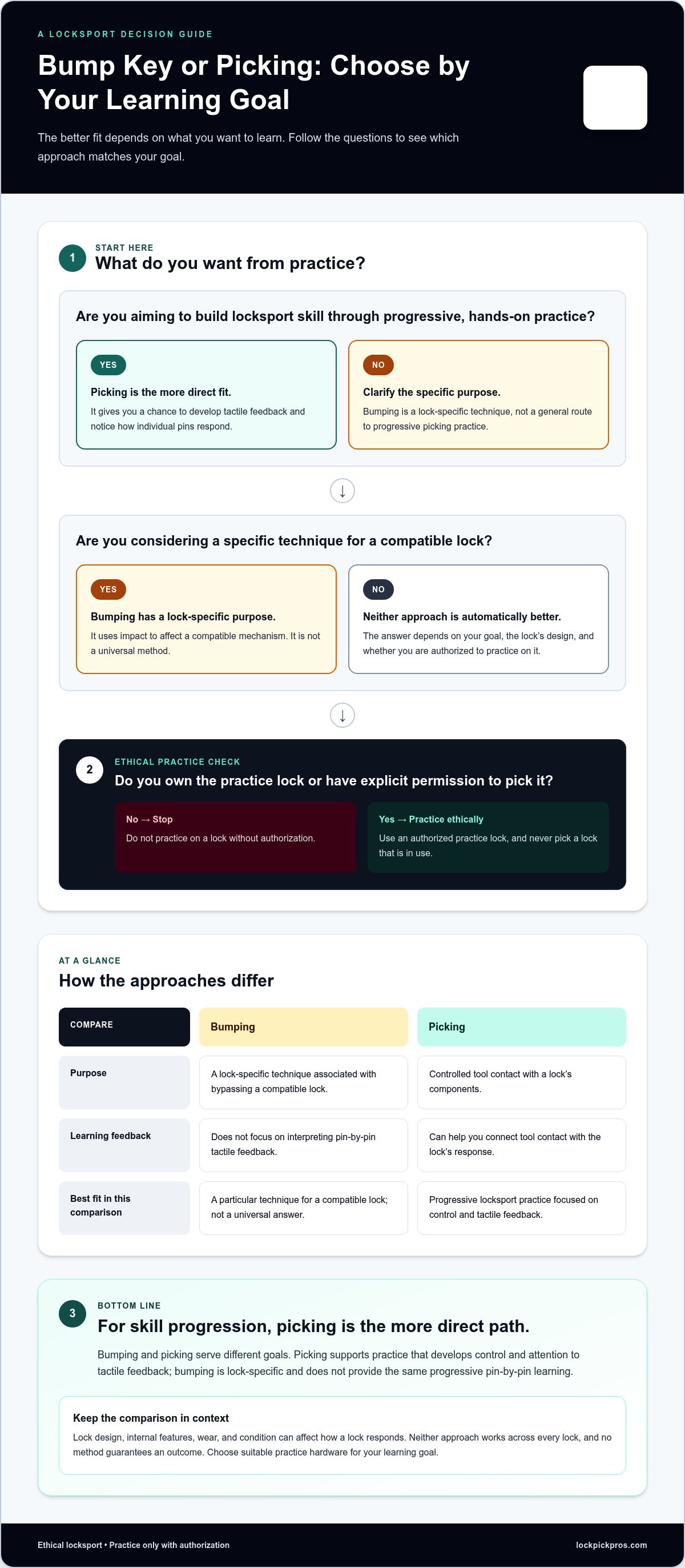
It’s understandable to compare the two: both involve manipulating a lock, and the differences can be unclear when you’re choosing your first practice tools. Bumping is a kinetic technique, while picking gives you a chance to develop tactile feedback and learn how individual pins respond. For hobbyists building progressive skills, that distinction matters.
This comparison explains the approaches at a high level, including what each is suited for and why single-pin picking is central to belt-rank practice. You’ll also get guidance on choosing tools for a learning path, from beginner sets to picks suited to more challenging locks. Keep practice ethical: work only on locks you own or have explicit permission to pick, and never pick a lock that’s in use.
Key Takeaways
- Neither method is automatically best for every purpose; the right choice depends on whether you want a specific technique or progressive locksport practice.
- Learn how bumping and picking differ in purpose, feedback, and suitability for practice without treating them as interchangeable.
- Use an authorized practice lock to build skills and keep locksport ethical.
- Choose picks that support controlled practice and help you notice tactile feedback as your skills develop.
- If you’re asking “is a bump key better than picking,” consider whether your goal is skill progression: picking is the more direct fit for building locksport ability.
Is a Bump Key Better Than Picking? Start With the Actual Difference
Neither method is automatically better for every purpose or lock. A bump key is designed for a particular type of lock and uses a brief impact to try to move its internal components; lock picking uses tools to manipulate a lock’s components through controlled contact and feedback. That’s the core distinction: bumping is a lock-specific technique, while picking is a hands-on skill that can be practiced and refined.
So, is a bump key better than picking? The answer depends on what you mean by “better,” the lock’s design, your practice goals, and whether you’re authorized to work on that lock. Neither approach applies universally, and this comparison is about understanding their different purposes, not instructions for opening locks.
What does the comparison actually mean?
People comparing the methods may be weighing speed, accessibility, reliability, or learning value. Those are separate measures, and none guarantees that a method will work on a particular lock. A technique intended to bypass a lock is also different in purpose from deliberate locksport practice, where the challenge is to understand the mechanism and build control through repetition.
Picking invites attention to tactile feedback: how a tool contacts the lock and how that contact changes as you practice. Bumping doesn’t offer the same kind of progressive pin-by-pin feedback, so it’s less suited to learning those picking skills. For a broader introduction to ethical locksport, its recreational context and ethical principles help frame why learning goals matter.
What should beginners keep in mind?
Start with a clear goal. If you want to develop locksport skills, a practice lock and a suitable pick set give you a focused way to learn and assess your progress. Different lock designs can call for different tools; for example, dimple lockpick tools are a specialty category rather than a general answer for every lock. Choosing equipment for the practice lock helps keep the learning process purposeful.
Only practice on locks you own or have explicit permission to use, and never pick a lock that’s in use. Legal rules around lockpicking tools and their use vary by location, so don’t assume one general rule applies everywhere. If you’re choosing your first practice setup, this beginner lock pick set guidance can help you consider the tools and practice hardware that fit your learning goals.
How Bumping and Picking Differ Without the Myths
Bumping and picking can both interact with pin-tumbler locks, but they call for different kinds of engagement. Bumping is a lock-specific technique that uses impact to affect a compatible mechanism. Picking involves controlled contact with the lock’s components, with the learner paying attention to tactile feedback. Neither method guarantees an outcome, and neither works across every lock design.
Purpose and learning value are not the same
A bypass-oriented goal focuses on whether a particular technique can affect a particular lock. Locksport practice has a different focus: learning how a mechanism responds and improving control through careful, repeated practice. The distinction matters for beginners choosing what to work on. A result alone may tell you little about what happened inside the lock; attentive picking practice encourages you to connect tool movement and feedback with the mechanism’s behavior.
With suitable practice hardware, studying pin-tumbler locks can build a foundation for understanding their basic mechanics. That knowledge can help you interpret later challenges, though it doesn’t make every lock identical or every skill automatically transferable. Bumping isn’t a shortcut to that feedback-led learning, and picking shouldn’t be described as universally easier, faster, or more reliable. Any comparison depends on the method, the lock, and the user’s goal.
Why lock design changes the answer
In a pin-tumbler lock, pins meet at a boundary called the shear line. The plug can turn when the pins are aligned at that boundary. This basic idea gives context for why different techniques may interact with some locks but not others. It isn’t a guarantee of success: lock design, internal features, wear, and condition can all affect how a lock responds.
Security research also examines weaknesses in mechanical lock designs. Matt Blaze’s paper discusses mechanical vulnerabilities, offering broader context for why lock design matters without making any technique universal. For foundational background on how pin-tumbler components fit together, read about lock rekeying and internal mechanics.
If your aim is progressive, feedback-led locksport practice, choose suitable practice hardware and picks for the lock you’re learning on. The Carbon Fiber Gen 2 Pro Series is one option for developing picking skills on locks you own or are explicitly authorized to practice on.
Bump Key vs. Picking: Compare the Trade-Offs for Locksport
Each approach serves a different goal, so a useful comparison looks beyond claims about speed or ease. For locksport learners, the key question is whether they want to study a lock’s response and build a repeatable skill. Picking aligns more directly with that aim because it rewards controlled tool movement and attention to feedback.
| Comparison | Bumping | Picking |
|---|---|---|
| Purpose | A lock-specific technique generally associated with bypassing a compatible lock. | A method of manipulating a lock’s components through controlled tool contact. |
| Learning feedback | Doesn’t focus on interpreting pin-by-pin tactile feedback. | Can help learners notice how tool contact and the lock’s response relate. |
| Context | Suitability depends on the lock’s design and the intended task. | Fits deliberate practice with appropriate, authorized practice hardware. |
| Practice value | Not a direct substitute for developing picking technique. | Supports progressive skill practice, including locksport belt progression. |
When might a learner prefer picking?
Choose picking if your goal is to develop tactile awareness, controlled tool handling, and a better understanding of lock mechanics. A suitable practice lock gives you a place to focus on feedback and reflect on what you’re learning, rather than judging progress only by an outcome. As your experience grows, you can select practice locks that present new challenges and follow the community’s belt levels. See lock picking belt levels explained for an overview of that progression.
Why is a bump key not a universal alternative?
There’s no blanket answer to “is a bump key better than picking?” A technique’s suitability depends on the lock’s characteristics and the purpose of the activity. Broad promises that bumping is effortless or works universally aren’t a sound basis for choosing a practice path. For locksport, picking offers a more direct way to develop skills through observation and repeated, authorized practice.
Takeaway: choose based on a legitimate practice goal and a lock you own or have explicit permission to use, not a universal ranking of methods. If you’re building a progressive picking setup, explore the Carbon Fiber Gen 2 Pro Series as a tool option for ethical locksport practice.
How to Choose an Ethical Practice Path and the Right Tools
A useful locksport setup starts with your learning goal, not with a tool that promises a quick result. If your aim is to develop picking skill, build a practice routine around a lock you’re authorized to use, a suitable set of picks, and time to notice what the lock communicates through tactile feedback.
Match tools to your current locksport level
Begin with foundational picks and practice hardware suited to your current experience. A beginner-oriented set such as the Trainee 2.0 starter kit can provide an entry point for learning the feel of picking. A beginner set isn’t a promise of particular results; progress comes from patient, responsible practice and choosing a challenge that fits your level.
As your goals develop, consider whether your current tools support the type of practice you want to continue. Choose equipment to match the practice lock and the skills you’re working on, rather than buying advanced tools before you have a reason to use them. The question “is a bump key better than picking” becomes easier to answer when your goal is clear: for progressive picking practice, select tools that help you focus on control and feedback.
Keep practice authorized and progressive
Use locks intended for practice, or locks you own or have explicit permission to work on. Don’t practice on a lock that’s in active use. Keep the session focused on learning, not on opening anything without authorization.
A simple routine can help make each practice session purposeful:
- Define your goal. Choose one skill to focus on, such as controlled tool movement or recognizing changes in tactile feedback.
- Select suitable hardware. Use a practice lock that matches your experience and is set aside for learning.
- Choose appropriate tools. Start with foundational picks, then consider other options as your practice needs change.
- Reflect on feedback. Notice what you felt and what you want to work on next, without treating one result as proof that a method always works.
Progress at a steady pace. Repeating practice on appropriate hardware can help you build familiarity before you take on more challenging locks. For continued skill-building, explore the Carbon Fiber Gen 2 Pro Series for your next picking practice setup.
Choose Skill-Building Picks for Your Next Locksport Step
For readers aiming to build progressive locksport skills, picking is the more direct fit. It gives practice a clear focus: learning controlled tool handling, noticing tactile feedback, and understanding how a practice lock responds. Bumping has a different purpose, so it isn’t a substitute for developing those picking skills.
Build skill through feedback and steady progression
Deliberate practice can help you recognize changes in feedback over time. Choose a practice lock suited to your experience, work only on hardware you own or are explicitly authorized to practice on, and pay attention to what each session teaches you. Progress takes patience; no tool or routine can promise a particular speed, result, or level of mastery.
The Black Belt Challenge offers a community path for setting goals and progressing one belt at a time. Join free, work toward your next rank, and share your picks-in-action progress on social media using Lockpick Pros tools. That share-to-earn loop helps build the challenge community and contributes toward its $5,000 social reach bounty.
Make the next step simple
Start with three choices: select a practice lock, choose picks suited to that lock and your current experience, then set a manageable skill goal. As your practice develops, you can adjust your tools and challenge level. A practice-focused pick set keeps attention on control and feedback rather than claims that one method works every time.
If you’re still weighing the question “is a bump key better than picking,” let your learning goal guide the decision. For progressive locksport practice, begin with picking and build steadily on authorized practice hardware. Join the free Black Belt Challenge, share your progress, and keep moving toward the next rank.
Ready to support your next practice step? Explore the Carbon Fiber Gen 2 Pro Series.
Keep practice ethical, stay curious about the feedback you feel, and progress one challenge at a time alongside the locksport community.
Build Your Locksport Skills One Practice Session at a Time
So, is a bump key better than picking? Neither method is best for every purpose, but picking is the more direct choice for progressive locksport practice. It lets you focus on tool control and tactile feedback, while a suitable practice lock gives you a responsible setting to develop your skills.
Choose picks that fit your learning goals, practice only on locks you own or are explicitly authorized to use, and build your ability one challenge at a time. Belt progression can give that practice a clear direction and connect you with a community of ethical hobbyists.
Lockpick Pros offers precision tools for ethical lockpickers, including carbon fiber lockpicks for skill-focused practice. Explore the Carbon Fiber Gen 2 Pro Series for your next locksport step, and keep learning at a pace that feels right. Every thoughtful practice session is progress.
Frequently Asked Questions
Is a bump key better than picking?
Neither method is universally better. A bump key is associated with a bypass-oriented approach, while picking is commonly practiced as a locksport skill. The better fit depends on the lock’s design and condition, your goal, and whether you’re authorized to practice. If you’re asking “is a bump key better than picking,” hobbyists seeking tactile feedback and progressive skill development will generally find picking the more direct practice path. Use dedicated practice hardware and keep every session ethical.
Can a bump key open every pin-tumbler lock?
No, a bump key can’t be assumed to open every pin-tumbler lock. Results can depend on lock design, condition, and other characteristics, so broad promises of universal performance or guaranteed outcomes aren’t reliable. For locksport, use only a lock you own or have explicit permission to practice on. A practice lock set aside for learning lets you explore lock behavior responsibly without testing methods on locks in active use.
Is lock picking harder to learn than using a bump key?
Picking takes practice because learners develop tool control and learn to interpret tactile feedback. That doesn’t make it an unsuitable starting point. Beginners can build familiarity gradually with appropriate practice locks and tools. A simple difficulty ranking doesn’t capture the whole comparison, since suitability depends on the lock and the learner’s purpose. If your goal is locksport skill development, focus on patient practice and understanding what the lock’s feedback can teach you.
What is the main difference between bumping and single-pin picking?
At a high level, bumping is a bypass-oriented method, while single-pin picking is a locksport skill focused on interacting with a lock’s pin mechanism and noticing feedback. This distinction is about purpose and learning value, not a procedure. Keep practice to locks you own or have explicit permission to use, and don’t assume either method works on every lock. Practice hardware offers an appropriate setting for developing picking skills.
Can beginners learn lock picking with a practice lock?
Yes. A practice lock gives beginners a controlled way to learn tool handling and pay attention to feedback without experimenting on locks in active use. Start with a setup suited to your experience, take a gradual approach, and follow ethical locksport guidelines. A beginner-focused pick set can support that learning path, but no particular tool guarantees that a learner will open a lock. Progress comes from focused, responsible practice.
Are bump keys and lock picks legal to own in the United States?
Rules about lockpicking tools can vary by state and local jurisdiction, and circumstances may matter. This answer isn’t legal advice and doesn’t make a universal claim about possession. Before acquiring or using lockpicking equipment, check the rules that apply where you live. For locksport practice, use only locks you own or have explicit authorization to work on, and never practice on a lock that’s in use.
Which lock picks should a beginner choose for ethical locksport?
Choose beginner-appropriate picks and pair them with a lock intended for practice. Look for a setup that supports learning controlled handling and recognizing tactile feedback, rather than relying on claims of guaranteed results. Keep practice authorized and progress at a pace that suits your experience. A beginner-oriented set can be a sensible starting point; as your skills and practice goals develop, you can consider tools suited to later stages of locksport.