

Mastering the Basics: Why a Lockpicking Practice Kit with a Clear Lock is Your Best First Step in 2026
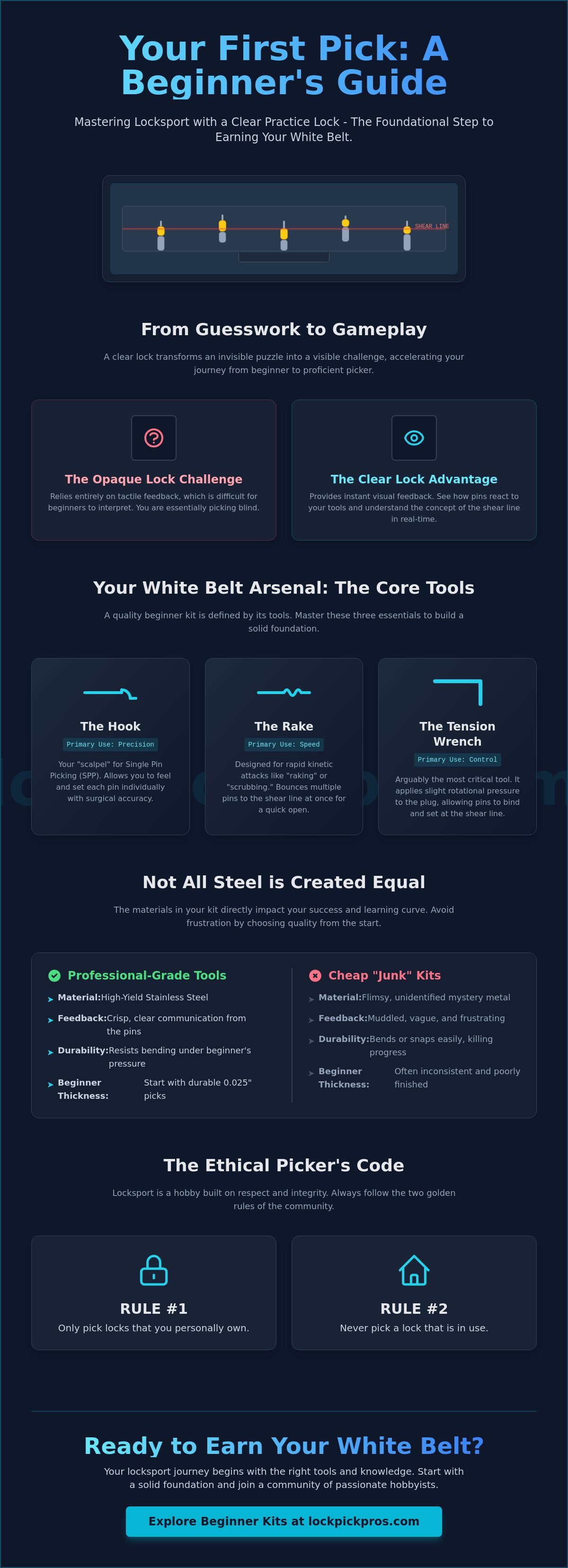
What if the secret to mastering locksport wasn't just in your hands, but in your eyes? It's completely normal to feel a bit of stage fright when you first stare down a keyway. You might worry about snapping a pick or accidentally ruining a real door lock before you even understand how the mechanics work. That's why a lockpicking practice kit with clear lock is the most effective way to demystify the process and start your journey toward your first belt rank.
We agree that the technical jargon can feel overwhelming at first. This transparent setup bridges the gap between visual learning and the muscle memory required to earn your first White Belt. Instead of guessing what's happening inside, you'll see every pin stack move in real time. This article explains how these foundational kits turn complex concepts into intuitive skills. We'll show you how to build a reliable toolset that helps you achieve that exhilarating first "open" while avoiding the "junk" kits that break on day one. You'll gain the confidence to move from visual cues to tactile feedback as you join our community of ethical lockpickers.
Key Takeaways
- Understand how a lockpicking practice kit with clear lock translates internal mechanical movements into visible learning cues.
- Master the essential "Big Three" tools, the hook, rake, and tension wrench, to build a reliable foundational kit.
- Learn the "feather-touch" rule for tensioning to prevent tool breakage and improve your success rate.
- Discover how clear practice locks align with the White Belt tier of the official locksport ranking system.
- Identify the material standards, like high-yield stainless steel, that separate professional-grade tools from cheap imitations.
What is a Lockpicking Practice Kit with a Clear Lock?
A lockpicking practice kit with clear lock is your passport to the exciting world of locksport. Think of this kit as the "White Belt" of your training journey. While some people view these as simple demonstration pieces, they're actually sophisticated mechanical maps. The housing, typically crafted from durable acrylic or polycarbonate, allows you to see exactly what happens inside a cylinder without the guesswork. It turns an invisible puzzle into a visible challenge.
Visual feedback is the fastest way to understand the concept of the shear line. Lock picking is essentially a game of physics and tight tolerances. When you use a clear lock, you see the pins react to your tension and pick placement. You aren't just fumbling in the dark; you're building a mental library of how metal interacts with metal. This clarity helps you bridge the gap between seeing the mechanics and feeling them through your tools.
The Anatomy of a Transparent Practice Lock
Inside the shell, you'll find the pin stack. This consists of driver pins, key pins, and springs. Your goal is to lift each key pin so the gap between it and the driver pin aligns perfectly with the shear line. In a clear lock, you can actually watch the plug rotate the moment that alignment is achieved. You can also identify the "binding order" visually. Instead of struggling to feel which pin is stuck, you can see which one resists movement first. This visual bridge makes the eventual transition to standard, opaque locks much smoother for any trainee.
Ethical Foundations of the Hobby
We take pride in being ethical lockpickers. Every journey in this sport starts with two golden rules. First, only pick locks that you own. Second, never pick a lock that is currently in use, such as your front door or a padlock on a shed. A clear lock reinforces this "ranking reference" mindset. It's a training aid designed for skill refinement and hobbyist progression, not for illicit activities. By starting with a specialized kit like The Trainee 2.0, you're joining a community that treats this as a legitimate sport. You're learning a foundational skill that rewards patience, precision, and a deep respect for security mechanics.
Essential Components of a Quality Beginner Kit
A lockpicking practice kit with clear lock is only as good as the steel that comes with it. While the transparent lock shows you the "why" behind the mechanics, your picks and tensioners provide the "how" for the actual opening. Quality materials are vital because beginners often apply too much pressure while learning the ropes. High-yield stainless steel or spring steel tools resist bending and provide the crisp feedback you need to identify individual pins. Every quality kit centers on three main components:
- The Hook: This is your primary tool for precise, one-pin-at-a-time manipulation.
- The Rake: These are designed for quick openings using kinetic energy to "scrub" pins into place.
- The Tension Wrench: Often called the most important tool, it controls the plug rotation.
Ergonomics shouldn't be an afterthought. Your first few practice sessions can be long as you hunt for that elusive shear line. Handles with comfortable, non-slip grips allow you to focus on the lock rather than hand fatigue. Additionally, a sturdy carrying case is vital for any lockpicking practice kit with clear lock. These tools are precision instruments. If a pick gets bent in a junk drawer or a pocket, its geometry changes, making it significantly harder to reach the back pins of a cylinder.
Selecting the Right Picks for Your First Kit
Your starter set should feature the "Short Hook." This is the scalpel of the locksport world. It allows you to perform Single Pin Picking (SPP) with surgical precision. For a faster "open," you'll use a Bogota or Snake Rake. These tools use kinetic energy to bounce pins into the shear line. Beginners should stick to a 0.025" thickness for their first set of picks. Thinner picks are great for tight European keyways, but they're fragile. A thicker pick is durable enough to survive your first few weeks of training. As the MIT Guide to Lock Picking explains, understanding the physics of these tools is the first step toward mastery.
Tension Tools: The Secret to Every Open
Tension is everything. Without it, the pins just fall back down. Most beginner kits include Bottom of Keyway (BOK) wrenches, which are easy to use but can sometimes crowd the keyway. Top of Keyway (TOK) tools are often preferred as you advance because they leave more room for your pick. These wrenches translate the tiny clicks and movements of the pins directly to your fingertips. Having a variety of tension widths ensures a snug fit in different locks, preventing the wrench from slipping and resetting your progress. Once you've mastered these basics, upgrading to our carbon fiber series can significantly enhance your tactile sensitivity.
Visual vs. Tactile Learning: Clear Locks vs. Cutaway Locks
Choosing between a clear lock and a cutaway is a common crossroads for new pickers. While your eyes lead the way on day one, your fingertips eventually take over the conversation. A lockpicking practice kit with clear lock serves as your initial "Visual Bridge." It allows you to memorize pin behavior by watching how they dance under the pressure of your pick. This visual input is vital for building a mental model of the internal mechanics. However, it's essential to understand that clear locks feel different than the locks you'll find on a real door.
Acrylic locks often feel "mushy" compared to metal. The friction between a steel pin and an acrylic housing isn't the same as the brass-on-brass contact found in professional hardware. Experts who study the security of locks often use transparent tools to demonstrate vulnerabilities, but they rely on metal for serious practice. You should use your clear lock to master the concept, then transition to a cutaway or standard lock to refine your tactile "feel."
The Pros and Cons of Acrylic Clear Locks
Acrylic locks offer 360-degree visibility, which is a massive advantage over cutaway locks that typically only reveal one side. They're affordable and perfect for teaching friends the basics of the sport. On the downside, they aren't as durable as metal and can crack if you apply heavy-handed tension. Acrylic locks act as a conceptual map for the mind. They help you visualize the "binding pin" before you ever have to feel it in the dark. If you're starting from scratch, The Trainee 2.0 provides the perfect visual starting point.
The Role of Cutaway Practice Locks
Cutaway locks are the "Yellow Belt" bridge to the real world. These are real metal locks that have been CNC milled to expose the pin stacks. They provide the authentic metal-on-metal friction you need to develop professional-level sensitivity. Using a cutaway allows you to see the pins while feeling the crisp "click" of a set pin. This stage of your lockpicking practice kit with clear lock journey is where you stop guessing and start knowing exactly how much tension is required to bind a pin.
Mapping Your Progress to the Belt Ranking System
The locksport community uses a color-coded belt system to track your skill progression. Understanding where you stand helps you choose the right tools for your current level:
- White Belt: Successfully opening your first clear lock using any basic tool.
- Yellow Belt: Consistently picking a metal cutaway or a basic commercial padlock without looking.
- Orange Belt and beyond: Moving toward high-security cylinders and locks with security pins like spools or serrated pins.
As you move toward blind picking, you'll want tools that translate vibrations better. Upgrading to a carbon fiber series pick set will give you the edge needed for those higher-tier challenges.
Step-by-Step: Using Your Clear Lock to Earn Your White Belt
Setting up your practice station is the first step toward that first satisfying open. You don't need a professional workshop; a well-lit desk and a steady hand are enough. When you use a lockpicking practice kit with clear lock, visibility is your greatest asset. Position the lock so light hits the pin stacks directly. This setup allows you to witness the mechanical dance we discussed in earlier sections without straining your eyes. Success in locksport starts with comfort and clarity.
Applying tension is where most beginners struggle. We teach the feather-touch rule. You only need enough pressure to keep the pins from falling once they're set. If you press too hard, the pins will bind so tightly they won't move at all. Watch the pin stack as you apply light tension. You'll see one pin that looks slightly more stuck than the others. That's your first binding pin. Once you lift that pin to the shear line, you'll hear a tiny click and see it rest on the edge of the plug. Repeat this for each pin in the stack. When the final pin reaches the shear line, the plug will rotate freely. That moment of rotation is your official entry into the White Belt rank.
The Single Pin Picking (SPP) Method
Some beginner guides suggest raking until the lock pops open. While raking is a valid skill, Single Pin Picking (SPP) is the core discipline of the ethical lockpicker. It involves lifting one pin at a time to find the binder. As you work, watch for the False Set. This is a slight rotation of the plug that happens when driver pins are partially caught. It's a sign you're close to success. By using a lockpicking practice kit with clear lock, you develop a mental image of the internal state. This visualization is what eventually allows you to pick opaque locks by feel alone.
Troubleshooting Common Beginner Mistakes
If the pins won't move, you're likely over-tensioning. Lighten your touch until the pins can slide vertically again. Another common issue is over-setting. This happens when you push a pin too far past the shear line. If the lock won't open and you've tried every pin, it's time to reset. Simply release the tension wrench, let the pins drop, and start over. It's okay to start over frequently. Every reset is a chance to refine your tactile sensitivity. As you progress beyond these basic challenges, you'll want to upgrade to our professional carbon fiber series to feel the most subtle pin movements.
Elevate Your Game with Lockpick Pros Kits
Your journey into locksport is just beginning. Starting with a lockpicking practice kit with clear lock gives you the visual foundation needed to succeed. At Lockpick Pros, we don't just sell tools; we provide the roadmap for your progression from a curious beginner to a master of the craft. Our kits are specifically curated to match the community-standard belt rankings. This ensures you always have the right tool for the challenge at hand.
The best place to start is with The Trainee 2.0. This set is designed for the White Belt tier. It features the essential picks and tensioners we've discussed; it also includes a high-quality transparent lock. As your skills sharpen and you move toward Yellow and Orange belts, you'll need tools that offer more feedback. That's when you should transition to the Carbon Fiber Gen 2 Pro Series. These intermediate tools use advanced materials to transmit the tiniest vibrations from the pin stack directly to your hand.
Why Lockpick Pros is the Hobbyist Choice
We focus on precision engineering and high-yield materials. Our tools aren't generic "junk" kits; they're professional-grade instruments built for durability. We're committed to the community of ethical lockpickers. This means we emphasize legal use and responsible practice at every step. When you choose us, you gain access to our "Lock Difficulty Reference Guide." This hub maps common locks to their belt classes. It helps you plan your progression and ensures you're always pushing your boundaries in a structured way.
The Share-to-Earn Loop and Community Bounty
We want to celebrate your success. Once you achieve that first "open" with your lockpicking practice kit with clear lock, don't keep it to yourself. Record a video of your success and share it on social media. Our "share-to-earn" loop allows you to earn rewards for hitting social reach goals with your progress content. We even offer a community bounty for those who help grow the sport. It's a fun way to give back to the hobbyists who make locksport great.
Are you ready to earn your first belt? Join the Free Black Belt Challenge and Start Your Journey Today! You'll get the support, the gear, and the community you need to master the art of lockpicking.
Join the Ranks of Ethical Lockpickers
You've seen how a lockpicking practice kit with clear lock acts as a mechanical map for your mind. It transforms the complex physics of the shear line into a visible, achievable challenge. By mastering the Single Pin Picking method on a transparent cylinder, you build the foundational muscle memory needed for every future open. Our tools are crafted from precision-engineered high-yield stainless steel to ensure they last through every training session. We're proud to be a home for the ethical locksport community where skill refinement is the ultimate goal. Every purchase includes a free entry into our Black Belt Challenge. It's time to stop watching and start picking. Start your journey with The Trainee 2.0 Practice Kit and join a community of passionate hobbyists today. We can't wait to see your first open on social media!
Common Questions About Locksport Training
Is it legal to own a lockpicking practice kit in the United States?
Owning a lockpicking practice kit with clear lock is legal in all 50 U.S. states. The primary legal distinction in most jurisdictions is your intent. As long as you use your tools for the legitimate sport of lockpicking on hardware you own, you're staying within the law. Some states have "prima facie" statutes where possession can be used as evidence if a crime is committed, so always stick to the ethical rules of the hobby.
Can I use a clear practice lock to learn how to pick real door locks?
A clear lock is an excellent tool for understanding the internal mechanics of a real door lock. It reveals the pins and the shear line, which are identical in concept to the components you'll find in a standard deadbolt or padlock. While the tactile feedback of acrylic is different from brass or steel, the mechanical principles you learn will directly translate to real-world hardware as you progress through the belt ranks.
How long does it typically take a beginner to pick their first clear lock?
Most beginners achieve their first successful "open" within 5 to 20 minutes of starting. The lockpicking practice kit with clear lock is designed to provide immediate visual feedback, which drastically shortens the initial learning curve. This quick success is vital for building the confidence you need to move on to more challenging, opaque locks later in your training journey.
What is the difference between a clear lock and a cutaway lock?
Clear locks are made of transparent acrylic to provide a 360-degree view of the internal springs and pins. Cutaway locks are real metal locks that have been CNC milled to expose the pin stacks on one side. Clear locks are perfect for conceptual learning and seeing the binding order, while cutaways provide the realistic metal-on-metal friction required for advanced tactile training.
Are the picks in a beginner kit strong enough for professional use?
Our beginner kits are built with high-yield stainless steel, which is durable enough for professional-level practice. While they're designed to be resilient for trainees who might use too much tension, many professional locksmiths and locksport experts keep these standard picks in their kits. They offer a great balance of strength and flexibility for a wide range of common pin tumbler locks.
What is the "belt ranking system" in the lockpicking community?
The belt ranking system is a community-standard hierarchy used to track your progress in locksport, much like martial arts. It starts at White Belt for beginners picking their first clear lock and goes all the way to Black Belt for masters of high-security cylinders. It's a fantastic way to set goals, join the community, and stay motivated as you refine your skills.
Do I need a special kit to pick locks with security pins?
You don't necessarily need a different kit, but you'll eventually want tools with higher tactile sensitivity. Security pins like spools or serrated pins require very precise tension control and feedback to overcome false sets. As you move into these intermediate ranks, upgrading to tools like our carbon fiber series will help you feel the subtle movements those specialized pins make inside the keyway.
What happens if I break a pick inside my practice lock?
Don't panic if a pick snaps; it's a common rite of passage for every new picker. You can usually remove the broken piece using a pair of needle-nose pliers or a specialized extraction tool. Practice locks are designed to be resilient, so a broken pick rarely ruins the lock itself. Just reset the pins, grab a fresh pick, and keep practicing your feather-touch tension.