

Why amazon lock picks are bad
Cheap lock-pick kits can be an accessible way to explore locksport, but a low price doesn’t tell you whether a set suits your practice. The reasons why Amazon lock picks are bad for some beginners often involve a mismatch between the tools, the practice lock, and the learner’s goals. A crowded case can still leave important questions unanswered.
It’s reasonable to want a straightforward starting point. Before choosing a kit, consider what you’ll practice, how you’ll judge the tools’ fit, and whether the listing explains its contents clearly. This guide examines common kit shortcomings, the role of tension tools and pick quality, and how to compare price with durability. You’ll also find practical ways to assess product descriptions and select a first setup for ethical practice on locks you own or have permission to use.
Key Takeaways
- Judge a starter set by whether its tools suit your practice goals, not by how many pieces come in the case.
- Look for pick profiles that let you feel and control movement inside the practice lock.
- Compare tension tools for fit and control, since steady feedback matters more than a large assortment.
- Read product descriptions carefully and assess whether the listed contents match what you need to learn.
- Choose practice equipment that supports ethical locksport and gives you room to build skill over time.
Choosing a first lock-picking setup
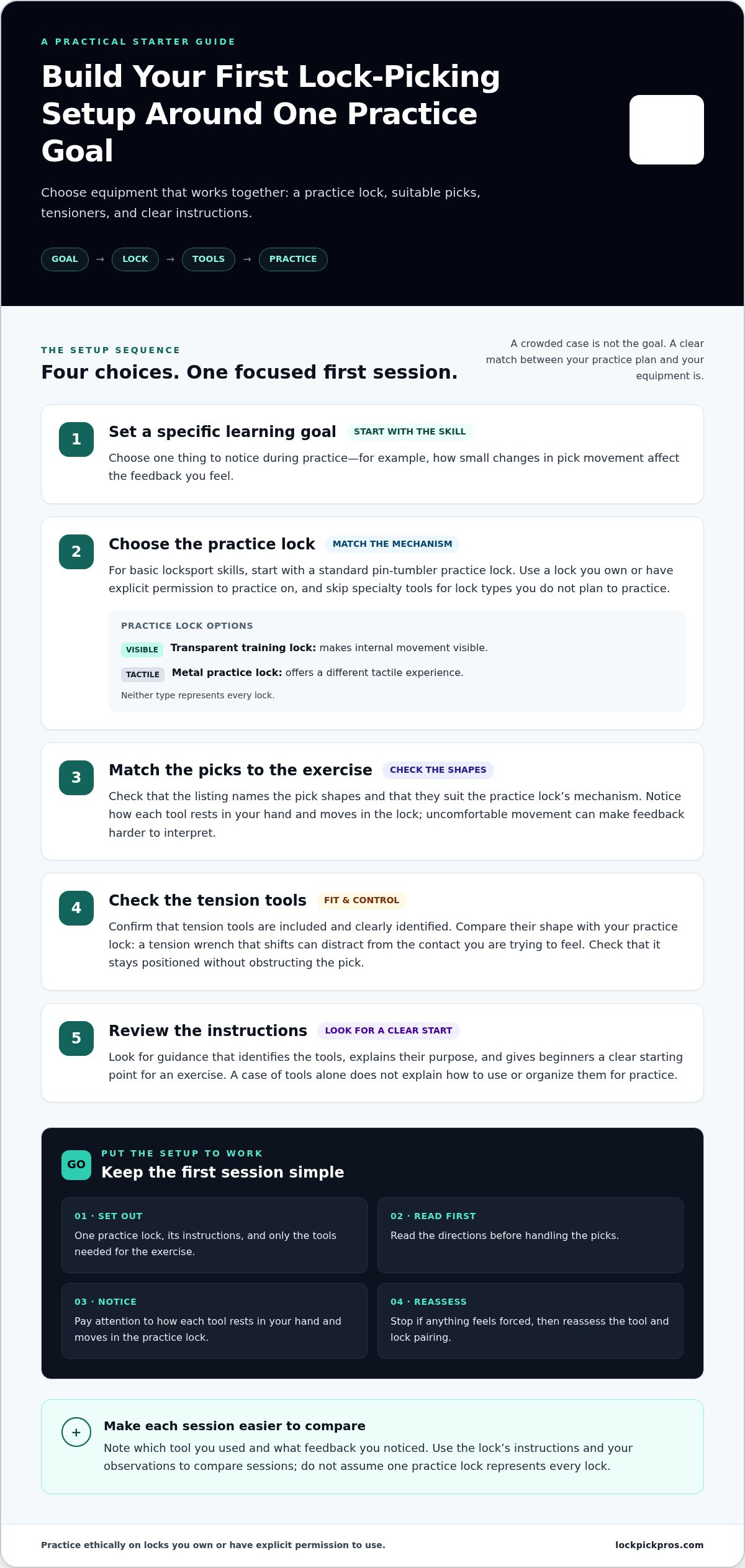
A first setup should support a specific practice goal, not simply fill a case. A beginner’s kit needs four useful parts: picks, tensioners, a practice lock, and instructions. Each has a role in learning. The lock provides a consistent practice object, while instructions explain the tools and the purpose of each exercise.
Start with the practice lock. Choose a standard pin-tumbler lock if your goal is to learn basic locksport skills. Use a lock you own or have explicit permission to practice on. Keep that boundary clear before selecting tools, and avoid specialty tools for lock types you don’t plan to practice.
- Set a learning goal. For example, focus on recognizing how small changes in pick movement affect the feedback you feel.
- Match the pick selection. Check that the set identifies its pick shapes and suits the practice lock’s mechanism.
- Check the tensioners. Confirm that the kit includes tension tools and that the listing identifies them clearly.
- Review the instructions. Look for guidance that explains the tools and gives beginners a clear starting point.
Once you’ve chosen your equipment, keep the first session simple. Set out one practice lock, its instructions, and only the tools needed for the exercise. Read the directions before handling the picks. Notice how each tool rests in your hand and moves in the practice lock. Stop if anything feels forced, then reassess the tool and lock pairing.
A practice lock can help connect finger feedback with what is happening inside the mechanism. A transparent training lock makes internal movement visible, while a metal practice lock offers a different tactile experience. Neither represents every lock. Use the lock’s instructions and your observations to compare sessions, rather than assuming one result applies universally.
Selection can feel overwhelming: thousands of lock-pick kits appeared in Amazon search results in a comment dated April 7, 2023. Narrow the options by checking the written contents, the intended lock type, and whether instructions accompany the tools. A large piece count doesn’t tell you whether a kit fits your first learning goal.
Before your first session, arrange the lock, instructions, and selected tools together. Note which tool you used and what feedback you noticed. These notes give each session a specific focus and make it easier to decide what to learn next.
Common shortcomings of inexpensive lock-pick kits
A low price doesn’t automatically make a kit unsuitable. The real question is whether its contents support a clear practice goal. For example, a beginner may open a case with numerous tools but find no explanation of which shapes suit the exercise. Understanding why Amazon lock picks are bad for some learners means looking beyond price to whether the tools, instructions, and practice hardware work together.
Product reviews can help, but they don’t show that every kit has the same quality or usability. Look for concrete descriptions of fit, handling, and what arrived. A review identifying a specific tool or missing item offers more useful evidence than a star rating without detail. Compare repeated, specific comments with the listing’s stated contents.
- Unclear tool descriptions: A listing may show several shapes without naming them. That makes it harder to connect a tool to a specific practice exercise.
- Incomplete contents information: A photograph may show accessories that the written list doesn’t identify. Compare the image with the itemized contents.
- Unclear practice hardware: A kit may mention a practice lock without explaining its type. Confirm that it fits the skill you intend to work on.
- Limited learning guidance: A case of tools alone doesn’t explain how to identify each piece or organize a practice session.
Are practice locks included with Amazon kits useful? They can be, if the lock works and suits the learner’s goal. A transparent training lock shows internal movement, while a metal practice lock offers a different tactile experience. Neither represents every lock.
Fit and handling also matter. A pick that doesn’t move comfortably in a practice lock can make feedback harder to interpret. A tension tool that shifts can interrupt practice. Product photos and descriptions may help you assess fit, but a high piece count alone doesn’t answer these practical questions.
Before buying, read the listing in order: identify the lock type, compare the written contents with the images, then look for reviews describing specific items. Check whether instructions are included and explain the tools. This makes the question of why Amazon lock picks are bad more useful as a buying decision. It directs attention to unclear contents, mismatched equipment, or inadequate guidance instead of treating every inexpensive set as identical.
If the contents are clearly described, decide whether they suit your practice plan. For standard pin-tumbler locks, you can also compare a pin-tumbler pick set with the tools you need. Keep practice to locks you own or have explicit permission to pick.
Tension tools and pick quality
A tension wrench applies rotational force to a plug and provides feedback during practice. Fit matters: if the wrench shifts in the keyway, it can distract from the contact you’re trying to feel. Compare the tool’s shape with your practice lock, then check that it stays positioned without obstructing the pick. A secure fit supports steadier, more repeatable practice.
Pick quality also affects control. Examine the tip and edges for a smooth finish, and look for clear descriptions of material and intended use. A rough edge can make pin contact harder to interpret. A pick that flexes or twists under pressure may change how movement feels. This deformation, called pick-warp, can make consistent practice more difficult.
Use this inspection sequence before choosing a set:
- Match the profile: Compare the pick’s shape with the lock type you’ll use for ethical practice.
- Inspect the finish: Look for close-up images showing the tip and edges clearly.
- Assess the handle: Consider whether its shape allows a stable, comfortable grip during a practice session.
- Read the contents list: Confirm that tension tools are included and described, rather than assuming from a photo.
Tension control is a tactile skill, not a contest to apply force. On a practice lock, too much pressure can make feedback harder to distinguish. If a wrench slips or the pick feels trapped, stop and reassess the fit. Don’t force either tool. This keeps the session focused on learning and reduces unnecessary strain on delicate tools.
Choose a pick shape to match the exercise. A hook supports focused contact with individual pins, while a rake has a different profile for broader practice movements. A large assortment is less useful if the shapes aren’t identified. Choose a small selection you can recognize, then note which tool you used with each practice lock. Those notes make later comparisons more meaningful.
Read material claims carefully. A listing that names a steel type gives more information than a generic “strong” label, but the description alone doesn’t show edge finish or fit. Look for clear photos, a complete contents list, and reviews that describe handling. For ethical locksport, prioritize control and understandable feedback over a high piece count.
Use tools only with locks you own or have explicit permission to practice on. When comparing sets, consider whether each pick and tension wrench serves a defined purpose. That approach helps distinguish useful variety from extra pieces that add little to your routine.
Amazon vs Professional Lock Pick Sets: Price & Durability
Price alone can’t tell you how a lock-pick set will hold up. Compare the tools, materials, fit, and support described for each option. Two kits, for example, may show similar pick counts, but one listing may identify the pick material and intended lock type while another offers little beyond product photos. Those details help explain what you’re paying for.
Amazon listings can make initial comparisons quick, but a large assortment doesn’t guarantee useful variety. A set might include several shapes with nearly identical purposes yet lack a tension wrench that fits your practice lock. A professional set may cost more because it offers clearly specified profiles, replacement options, or documented material details. Compare the contents before judging value.
Durability depends on how a pick responds during careful practice. Check for clear material descriptions and close-up views of the tip and shaft. A thin pick that twists under pressure may be harder to control, while a rough tip may make feedback less distinct. These details matter more than a broad label such as “heavy duty.”
Use this comparison checklist before choosing:
- Contents: Match each named pick and tension wrench to your practice locks.
- Material details: Prefer specific descriptions over unsupported claims about strength.
- Finish: Inspect visible tips and edges in listing photos for obvious irregularities.
- Fit: Check whether the stated tool profiles suit your intended lock type.
- Support: Review the seller’s stated return or warranty terms before purchase.
A lower purchase price may not mean better value if a pick bends early or key tools don’t fit. Replacing an unsuitable piece can erase the initial saving. A set with fewer, clearly described tools may serve a beginner better than a crowded case with uncertain contents. Compare the full setup, not just the price shown on the product page.
Professional branding alone doesn’t prove durability. Read the exact specifications, examine the tool profiles, and compare the stated terms. A named steel type, for example, provides more information than “premium metal,” while a clearly listed tension wrench is easier to assess than an unlabeled accessory in a photo. Don’t assume a higher price guarantees longer service.
For ethical locksport, choose tools for locks you own or have permission to practice on. Tie your purchase to your practice plan: standard pin-tumbler locks call for suitable picks and tension tools, while other mechanisms need different equipment. A deliberate comparison helps you spend on useful fit and information rather than piece count alone.
Are Amazon lock pick sets often mislabeled or inaccurately described?
Listings vary, so don’t assume every Amazon kit is mislabeled. The practical question is whether the description matches the pictured contents and intended lock type. For example, a title may call a set “professional,” while its contents list gives no pick profiles, material details, or description of the tension tools. Treat broad labels as marketing, not specifications.
Check the title, product details, photos, and customer comments as separate pieces of evidence. If a listing says it includes a hook and tension wrench, confirm both appear in the contents list and images. If the photos show tools that the written description doesn’t name, note the mismatch before buying.
Some seller discussions warn that avoiding common search terms can make lock-pick listings harder to find. That describes a visibility issue, not proof that a particular kit is mislabeled. For buyers, search wording may not explain a kit’s actual purpose. Read the full description instead of relying on the title or a search-result snippet.
- Compare names and photos: Confirm that each named tool appears in the product images.
- Check material wording: “Steel” identifies a broad material category; it doesn’t explain the exact grade or finish.
- Match the lock type: A pin-tumbler set and a dimple-pick set serve different practice needs.
- Read specific reviews: Give more weight to comments describing a tool or fit issue than general praise.
A mismatch can be straightforward. A listing might show a carrying case in promotional photos but leave it out of the written contents. Another might describe a “complete kit” without identifying its practice lock or instructions. Neither example proves deliberate misrepresentation, but both leave buyers less certain about what will arrive.
Vague performance claims can also confuse beginners. Words such as “precision,” “heavy duty,” or “professional” don’t tell you whether a pick fits your practice lock. Look instead for concrete details: named tool shapes, clearly shown contents, a stated lock type, and usable instructions. If those details conflict, approach the listing cautiously.
Use a simple decision rule: buy only when the written contents, photos, and intended use tell a consistent story. Keep screenshots or order details if the delivered contents differ from the listing. For a clearly named option focused on standard pin-tumbler practice, compare the pin-tumbler pick set with the tools your practice plan requires.
A listing’s clarity is separate from whether buying or owning a set is permitted. A UK retailer said it was legal to sell or own a lock-pick set in the UK. That statement doesn’t confirm that a particular listing accurately describes its contents, so continue comparing the written details with the photos and intended practice use.
Use the tools responsibly, regardless of how a listing presents them. Lock Cowboy advised customers to pick only locks they own or have the owner's explicit permission to open. Clear product information can help you choose suitable practice tools, but it doesn’t grant permission to open a lock. If the description is vague or the delivered contents differ, don’t treat marketing claims as a substitute for verifying what the set contains.
Lockpick Pros: Beginner Lockpick Sets
At Lockpick Pros, we offer Beginner Lockpick Sets and Practice Locks for readers ready to build a focused locksport setup. Choose a beginner set when you want tools selected for introductory practice instead of an assortment with unclear contents or purpose. Pairing picks with a practice lock gives you a dedicated place to develop control and recognize tactile feedback.
As your skills grow, explore our Advanced Lockpick Sets, Everyday Carry (EDC) Tools, Carbon Fiber Lockpicks, and High Yield Lockpicks. Keep practice ethical: use locks you own or have explicit permission to pick. Visit Lockpick Pros to explore beginner sets and practice locks for your setup.
Choose Your Next Practice Goal
Understanding why Amazon lock picks are bad matters less than deciding what you want to learn next. Treat your first setup as the start of a skill-building routine, not a final purchase. Choose a practice goal, note what you notice, and adjust your tools as your interests develop. Progress comes from deliberate practice, patience, and respect for the locks you work on.
For your next step, explore a set designed for standard pin-tumbler locks and consider how it fits your practice plans. A focused choice can help organize your learning as your control and confidence grow. Always practice on locks you own or have explicit permission to pick.
Explore the Carbon Fiber Gen 2 Pro Series and choose a clear next goal for your locksport journey. Keep learning at your own pace, and enjoy each new challenge.
Frequently Asked Questions
Why buy from the specialist?
Choose a specialist when you want equipment organized around locksport practice. At Lockpick Pros, we offer Beginner Lockpick Sets, Advanced Lockpick Sets, and Practice Locks to help you match tools and hardware to your learning stage. Our stainless-steel picks and cases carry a lifetime warranty. Orders ship in plain, discreet packaging with no indication of contents. Always check your local laws before purchasing or carrying tools in public.
Why are lock pick sets sold on Amazon considered low quality?
Some buyers consider a set low quality when its listing gives little useful information about the tools included. A large piece count doesn’t show whether each item suits the intended practice lock or whether the set includes useful learning material. Look for itemized contents and clear product details. A marketplace listing alone can’t show how a pick feels during practice.
Which lock pick tools are missing from inexpensive Amazon kits?
Contents vary by kit, but a beginner may find a set lacks a suitable tension wrench, compatible practice lock, or clear instructions. A wrench that doesn’t fit the practice lock can make controlled learning difficult. Before ordering, compare the written contents with the tools shown. Treat a case or accessory in promotional images as included only if the listing says so.
What should beginners look for when buying a reliable lock pick set?
Choose a set by matching its stated purpose to the practice lock and skills you want to develop. Confirm the listed tools, materials, practice hardware, and learning guidance before buying. Check that warranty terms are clearly explained, then use the tools only with locks you own or have permission to pick. A well-matched starter setup gives you a clear practice goal without relying on piece count alone.
What do customer reviews say about Amazon lock pick set quality and usability?
Reviews can describe a particular set’s fit, handling, and whether the listed items arrived. Specific comments about tools or missing items are more useful than a star rating alone, but they don’t establish that every kit has the same quality or usability.