

Best Dimple Lock Picks: How to Choose the Right Set in 2026
The best dimple lock picks aren’t necessarily the set with the most pieces. A tool that doesn’t suit your practice lock or feel comfortable in your hand may teach you less than a smaller, better-matched set.
If you’re used to standard pin-tumbler picks, dimple tools can feel like a specialized step. They’re made for a different lock format, so the right choice depends on the locks you’re authorized to practice on, your experience, and the feedback you want to learn from. Product descriptions don’t always make those differences easy to assess.
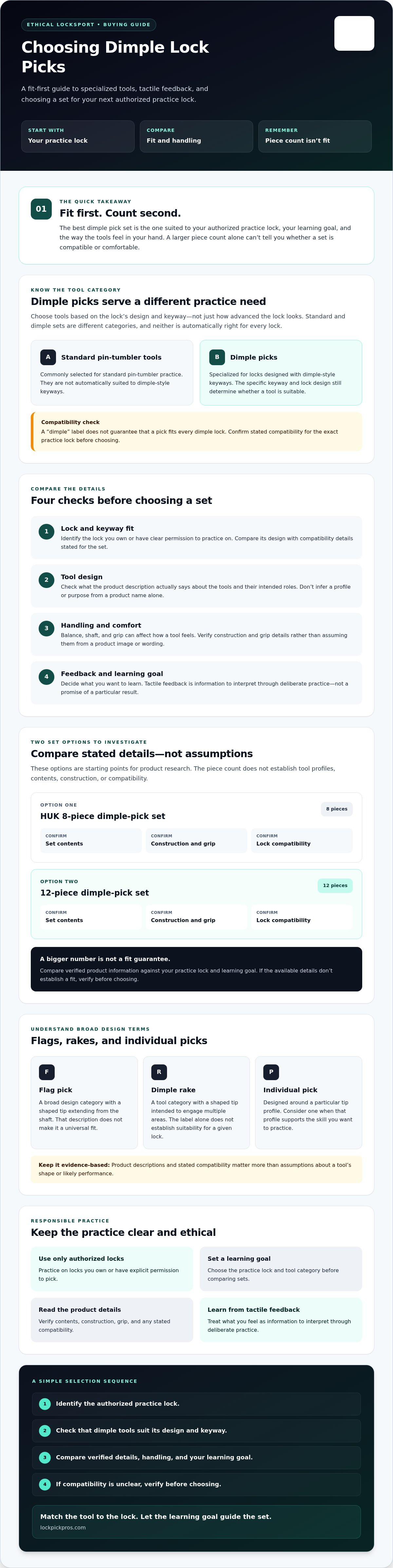
This guide explains what makes dimple picks distinct and how to compare sets by fit, handling, feedback, and intended use rather than piece count alone. You’ll also see two dimple-pick set options to investigate, without unsupported assumptions about their contents or compatibility. Use the guidance to decide whether specialized tools suit your next locksport step, and practice only on locks you own or have clear permission to pick.
Key Takeaways
- Choose the best dimple lock picks for your practice lock and learning goals, not by piece count alone.
- Understand how dimple picks differ from standard pin-tumbler tools, and confirm compatibility with the specific lock.
- Compare flags and rakes by their broad design, handling, and the product details that are actually stated.
- Review the two dimple-pick set options, then verify their contents and compatibility before choosing.
- Set a clear practice goal and work only on locks you own or have explicit permission to use.
What Are Dimple Lock Picks, and When Do You Need Them?
Dimple picks are specialized tools for locks designed around dimple-style keyways. Their relevance depends on the lock’s design and keyway shape, not simply on whether a lock looks advanced. For ethical locksport, start by identifying a practice lock you own or have permission to use. This is a buying and practice guide, not a lock-opening manual.
Dimple locks are a distinct practice category, so don’t assume a standard pin-tumbler set will suit them. The reverse is true as well: dimple tools aren’t automatically appropriate for standard pin-tumbler locks. For a general introduction to the hobby and its tools, see Lock picking.
How are dimple picks different from standard lock picks?
The main difference is the type of lock each tool category is intended for. Standard picks are commonly selected for standard pin-tumbler practice, while dimple picks are designed for locks with dimple-style keyways. That doesn’t mean every dimple pick fits every dimple lock. Keyway shape and lock design still matter, so check stated compatibility rather than relying on the category name alone.
If you’re still learning the basics, a guide to choosing a first beginner lock pick set can help you decide whether standard pin-tumbler practice is the right starting point. Standard and dimple sets serve different practice needs. A specialty set makes sense when your authorized practice lock calls for it.
What should a first-time dimple-pick shopper know?
A dimple pick is a specialized tool for locks designed with dimple-style keyways; whether it’s suitable depends on the specific lock and keyway. Before shopping, identify your practice lock and look for reliable product information about intended use and compatibility. A larger set isn’t automatically a better fit. Piece count alone can’t tell you how the tools are designed, how they’ll feel in your hand, or whether they suit your lock.
Lockpick Pros offers dimple-pick sets to investigate, including this dimple-pick set. Check the product page for details relevant to your practice lock before deciding. If the available information doesn’t establish a fit, pause and verify rather than guessing. That first check helps align your tool choice with your learning goal and ethical locksport practice.
Dimple Pick Designs: Compare Flags, Handling, and Tactile Feedback
Dimple-pick sets can include tools with different tip shapes and intended roles, but a product name or piece count alone won’t tell you which design suits your practice. Start with the lock you’re authorized to use, then compare the tool descriptions with its keyway and your learning goal. Don’t assume one profile works across all dimple locks.
What is a dimple flag pick used for?
A flag pick has a shaped tip that extends from the shaft, giving the tool a flag-like profile. It’s a broad design category for dimple-lock practice, not a universal fit. The lock’s keyway and internal design affect whether a particular profile is relevant. Pay attention to whether the tool feels controllable and whether you can interpret its feedback. A particular shape does not guarantee a result.
Handling is personal. A tool’s balance, shaft, and grip can affect comfort, but confirm those details on the specific product page rather than inferring them from an image or the word “professional.” Lockpick Pros offers a dimple-pick set to inspect. Verify its stated contents, construction, and intended compatibility before deciding whether it matches your practice lock.
Should you choose a dimple rake or individual picks?
A dimple rake is a tool category with a shaped tip intended to engage multiple areas, while an individual pick is designed around a particular tip profile. These broad descriptions don’t establish which tool is more effective or whether either is suitable for a given lock. Check the product information and match it to your authorized practice lock.
Consider what you want to learn. If your goal is to interpret feedback from a specific tool profile, an individual pick may better suit your practice plan. If you’re comparing designs, a set that clearly identifies its contents can make the options easier to assess. In either case, tactile feedback is information to learn from, not a promised outcome. Small changes in pressure or contact can feel different, and interpreting them takes deliberate practice.
- Check fit: Compare stated compatibility with your practice lock.
- Check handling: Look for verified details on grip and construction.
- Check your learning goal: Choose a design category that supports the skill you want to practice.
For locksport guidance and ethical learning, The Open Organisation Of Lockpickers is a useful community resource. Keep dimple tools separate from standard pin-tumbler picks when assessing fit. The Carbon Fiber Gen 2 Pro Series is a standard pick-set option, not a dimple-pick recommendation. The best dimple lock picks for your practice are those whose verified details align with your lock and learning goals.
How to Compare the Best Dimple Lock Picks for Your Practice
Start with what a product page actually confirms, not what its photos or name seem to suggest. Lockpick Pros lists two dimple-pick options. The available information identifies their advertised piece counts, but doesn’t establish the exact tool-by-tool contents, handling, materials, or fit for a particular lock. Treat those details as unknown unless the listing clearly states them.
- The Lifesaver dimple-pick set: The product name identifies a 12-piece set. Its specific lock compatibility, exact piece list, materials, grip details, and case information are unknown unless stated on the product page.
- The Operator dimple-pick set: The product name identifies an 8-piece set. Its specific lock compatibility, exact piece list, materials, grip details, and case information are unknown unless stated on the product page.
Which dimple-pick set fits your experience and practice goals?
Start with your goal, not a label such as beginner or advanced. A curious hobbyist might want to understand what a dimple set contains; an experienced picker might be looking for tools for a particular authorized practice lock. In either case, identify the lock type and keyway, then confirm that the listing describes a suitable match. The numbers in the set names don’t prove that either set fits your lock or suits your handling preferences.
Compare the product pages directly, and don’t treat a missing detail as a positive claim. If compatibility isn’t stated, consider it unverified. Stock status can change, so check the current listing before making a purchase decision.
What product details should you verify before choosing?
Use a checklist: confirm the item-by-item tool list, shapes, materials, handle information, any included case, and stated lock compatibility. Look for clear descriptions rather than judging quality or durability from appearance or promotional wording. If a detail matters to your practice and the page doesn’t provide it, seek clarification before choosing.
Piece count can describe a set, but it can’t tell you whether the tools fit your practice lock or support your learning goal. Compare verified information first. That’s a more dependable way to select the best dimple lock picks for your locksport practice than assuming a winner from the product names alone.
How to Practice with Dimple Picks Responsibly
Good locksport practice starts before you pick up a tool. Choose a dedicated practice lock that you own or have explicit permission to use, confirm its lock type, then check that your tools are intended for that kind of practice. Keep the goal focused on learning, and don’t attempt to open a lock you’re not authorized to handle.
How can you tell whether your practice setup is appropriate?
Use this checklist before each session:
- Confirm permission. Practice only on a lock you own or have explicit permission to use.
- Identify the lock type. Make sure the practice lock is designed for dimple tools rather than assuming a dimple set suits every keyway.
- Set a learning goal. Decide what you want to notice, such as whether the tool feels comfortable or what feedback you can distinguish.
- Inspect your equipment. Stop if a tool appears bent or damaged, or if the lock shows signs of damage. Don’t force either one.
A dedicated practice lock helps keep the activity clearly within your authorized locksport setup. If you’re unsure about the tool category or lock type, pause and verify before continuing.
How do you build skill without rushing to advanced tools?
Keep each session manageable. Choose one modest goal, then record what you noticed about comfort, fit, and tactile feedback. For example, note whether a tool was comfortable to hold and whether the feedback felt distinct or difficult to interpret. These observations can guide your next equipment choice without assuming a different or larger set will solve the problem.
Progress at a pace that matches your results. If the setup feels awkward, or you can’t confirm that the tool category matches the lock, revisit your equipment choice before moving to a more advanced practice lock. A lockpicking belt-level overview can also help you think about progression one stage at a time. Treat belt ranks as a guide to learning, not a reason to rush.
When comparing the best dimple lock picks, keep a simple practice log: record the lock type, tool used, comfort, noticeable feedback, and any signs of wear. Use locks only with clear authorization, and stop if anything appears damaged. This steady approach builds judgment alongside practical skill.
If your next goal is standard pin-tumbler practice rather than dimple-lock practice, explore the Carbon Fiber Gen 2 Pro Series pick set as a separate tool category.
Choose Dimple Lock Picks That Match Your Next Locksport Step
The best dimple lock picks for your practice match your authorized lock, learning goal, and handling preferences. Before choosing, check the lock type and keyway, review the set’s stated contents and compatibility, and confirm details that matter to you, such as tool shapes or handle materials. If a product page doesn’t state a feature, treat it as unknown rather than assuming it from the product name or appearance.
When should you choose a dedicated dimple-pick set?
Consider a dedicated set when the practice locks you own or have explicit permission to use are designed for dimple-specific tools. Lockpick Pros lists two options to inspect: The Lifesaver and The Operator. Compare the details on each product page with your lock and learning plan. A dimple set serves a different practice need from standard pin-tumbler tools, so it shouldn’t be treated as a replacement for them.
Piece count alone can’t establish fit, handling, or suitability. Look for a clear contents list and stated compatibility. If either is missing, verify the information before buying, or choose a practice goal that doesn’t depend on unconfirmed product details.
What is a sensible next step after comparing dimple picks?
Write down the features you can confirm, then compare them with what you want to practice. A useful decision might be as simple as confirming that your lock calls for dimple tools and that the product information supports the match. Practice only on locks you own or have explicit permission to use, and base your next choice on evidence rather than a promise that one set is best for everyone.
For standard pin-tumbler practice, keep the tool category distinct: the Carbon Fiber Gen 2 - Pro Series is a standard pick set, not a dimple-pick set. If you’re ready to inspect a dimple-specific option, review The Lifesaver dimple-pick set alongside your practice lock’s requirements. Check the current product details before deciding whether it fits your next locksport step.
Choose Your Next Locksport Step with Confidence
The best dimple lock picks match an authorized practice lock and a clear learning goal. Check the lock type, keyway, verified set details, and stated compatibility before choosing. Piece count alone can’t confirm that a set suits your practice.
Lockpick Pros offers dimple picks as a distinct category for locksport practice. Use only locks you own or have permission to use, and build skill at a steady pace.
For standard pin-tumbler practice, explore the Carbon Fiber Gen 2 Pro Series lock pick set. To compare a dimple-specific option, review the dimple-pick set details and check whether they match your authorized practice lock.
Frequently Asked Questions
What are dimple lock picks used for?
Dimple lock picks are specialized tools for practicing on locks designed with dimple-style keyways. They’re a separate tool category from standard pin-tumbler picks, and suitability depends on the specific lock design and keyway. Before choosing a set, identify an authorized practice lock and check whether the product information states compatibility. Dimple picks support locksport practice, not access to locks without permission.
Are dimple picks different from standard lock picks?
Yes. Dimple picks are intended for locks designed around dimple-style keyways, while standard picks are commonly used for standard pin-tumbler practice. The categories aren’t automatically interchangeable, and neither guarantees a fit for every lock of its type. Check the lock design and keyway, then compare them with the tool’s stated purpose. Choose equipment for locks you own or have permission to practice on.
How do I choose a dimple lock pick set?
Choose based on practice-lock fit and verified details, not piece count alone. Confirm the lock type and keyway, then review the listing for its stated tool contents, shapes, materials, handling details, and compatibility. Treat any feature that isn’t listed as unknown. The best dimple lock picks for your practice are those that match an authorized lock and a clear learning goal, not simply the largest set.
Can beginners use dimple lock picks?
Beginners can explore dimple picks if they have an appropriate practice lock and take time to understand the tool category. Start by confirming that the lock is designed for dimple-specific tools and that the set’s stated compatibility matches. If you’re still learning basic lockpicking concepts, standard pin-tumbler practice may be a more relevant starting point. Progress at a comfortable pace, using only locks you own or have permission to practice on.
Do dimple picks work with every dimple lock?
No. The label “dimple pick” doesn’t mean a tool is compatible with every dimple lock. Lock design and keyway shape affect whether a particular tool is relevant. Check the product page for explicit compatibility information and compare it with your authorized practice lock. If the listing doesn’t confirm a feature you need, treat it as unknown and verify before choosing.
What is the difference between a dimple flag pick and a dimple rake?
A dimple flag pick has a shaped, flag-like tip; a dimple rake is a different tool design within the dimple-pick category. These names describe broad design types, not a guarantee that a tool fits a particular lock or suits every picker. Compare the stated tool shapes and intended use with your practice lock and learning goal. Verify product details about handling or included pieces rather than assuming them.
Can I practice with dimple picks on any lock?
No. Use dimple picks only on a lock designed for that tool category, and practice only on locks you own or have explicit permission to use. A standard pin-tumbler lock may call for a different tool type, while dimple locks can also vary in keyway and design. Choose a dedicated practice lock, check that your tools suit it, and stop if the lock or tools appear damaged.