

What Happens If a Lock Pick Breaks in a Lock?
A broken pick doesn’t automatically mean the lock is ruined, but forcing the fragment can turn a small setback into a bigger problem. If you’re wondering what happens if a lock pick breaks in a lock, it depends on where the piece is lodged and whether the keyway or plug has been disturbed. The fragment may block a key or prevent movement, so pause before trying again.
It’s natural to worry that the lock is unusable or to wonder whether you should remove the piece yourself. This guide explains the likely effects, what to avoid, and how to choose a safe next step. It also covers how controlled movements, attention to tactile feedback, and an appropriate practice setup can help reduce the risk of repeat breakage. If the fragment won’t come out easily or the lock no longer works normally, stop and contact a qualified professional. Practice only on locks you own or have permission to pick.
Key Takeaways
- A fragment in the keyway may obstruct a key or affect the lock, but it doesn’t automatically mean the lock is ruined.
- Force, awkward positioning, and tool stress can contribute to breakage. A tight feel isn’t a cue to push harder.
- Inserting another pick or reaching for glue or sharp tools may make the situation worse.
- Use a calm next-step checklist: stop, assess the lock and urgency, then choose an authorized way forward.
- Build safer locksport habits with patient practice and locks you own or have permission to use.
What Happens If a Lock Pick Breaks in a Lock?
A broken pick may leave a fragment in the keyway. What happens next depends on its position and the lock’s condition. The lock isn’t automatically ruined, but seeing part of the fragment doesn’t tell you whether the lock will accept a key or operate normally.
A broken pick fragment is a piece of a lock pick left inside the keyway. It may obstruct a key or interfere with the lock’s operation. That’s a possibility, not proof that the pins, plug, or keyway are damaged. For a basic overview of the practice and its place in locksport, see Lock picking.
Can a broken pick damage the lock?
It can, but damage isn’t inevitable. The risk depends on the lock, where the fragment sits, and what happens afterward. Repeatedly turning the plug, pressing against the piece, or testing the lock over and over can add stress without clarifying the problem. Stop rather than forcing it. A lock that feels tight doesn’t necessarily need more force.
A fragment in a practice lock you own is a different situation from one in a lock securing a home, vehicle, or other property. With practice hardware, end the session and set the lock aside. If access is urgent or the lock protects property, avoid experimenting and seek appropriate help.
What might happen to the fragment?
The piece may remain in the keyway and obstruct a key or movement. A qualified professional can assess the situation based on the lock’s condition and what is visible. The visible end of the fragment doesn’t reveal what may be happening deeper inside, so don’t assume the mechanism is damaged, clear, or functional based on appearance alone.
This isn’t a lock-opening or fragment-extraction tutorial. Avoid inserting another pick or improvised tool to probe around the piece. More pressure may shift the fragment or make assessment harder. If the lock is yours or you have explicit permission to work on it, pause and choose a safe next step based on the lock’s role and the urgency of access.
Why Lock Picks Break and What the Lock Mechanism Changes
A pick can break when it’s pushed or twisted under more stress than it can handle. Excessive force, awkward positioning, or a thin pick bearing against resistance can all contribute. A tight feel doesn’t prove that more force is appropriate. Resistance may come from the lock’s mechanism, the tool’s position, or another issue that isn’t clear from feel alone.
A broken pick confirms that the tool has failed, not that the lock has been damaged. Damage depends on the lock and what happens to its parts afterward. A fragment in the keyway may affect use, but its presence alone doesn’t show that the pins, plug, or keyway are harmed.
How tension and pick movement affect breakage risk
A tension wrench is a tool that applies rotational force to the plug, allowing pins to be set and providing feedback to the picker. The plug is the part of a lock that turns when the correct key is used. The keyway is the opening where the key or a practice tool goes.
Uncontrolled pressure or abrupt movement can put unnecessary stress on a pick. If the tool flexes, twists, or feels trapped, pause rather than pushing through resistance. For beginners and experienced locksport hobbyists alike, feedback is a reason to assess the situation, not a signal to apply more force.
Why lock type and practice conditions matter
Locks vary in mechanism and keyway shape, so the space available and the demands placed on a tool can differ. A pick suited to one practice lock may not be appropriate for another. A tight-feeling lock isn’t a cue to force the tool. It’s a reason to stop and check whether the practice setup and tool choice are suitable.
Learning on a practice lock you own or have explicit permission to use gives you room to build careful habits without risking someone else’s property or access. A lockpick set for ethical practice is one option to consider when selecting tools for locksport. No pick set can rule out breakage, so focus on fit, controlled handling, and stopping if a pick appears distorted.
For context on how specialists may examine locks and tool marks, read about forensic examination of a lock. A broken fragment by itself doesn’t establish what happened inside a mechanism. If you’re concerned that the lock has changed or been damaged, leave it undisturbed and seek an appropriate assessment rather than trying to diagnose it through repeated testing.
Should You Try to Remove a Broken Pick From the Lock?
Usually, don’t try to remove a broken pick yourself. Inserting another pick, pressing on the fragment, or forcing the lock can shift the piece or put extra stress on the mechanism. The safest next step depends on who owns the lock, whether access is urgent, and whether the fragment is visible without touching it. If you’re unsure, stop and ask for help instead of experimenting.
What should you avoid doing?
Leave the fragment and lock alone. Don’t probe around it, push it farther into the keyway, or keep turning the lock to see whether it still works. Avoid heat, adhesives, drills, and improvised extraction attempts. These actions can affect the lock or make professional assessment harder. A visible piece doesn’t tell you what may be happening deeper inside.
Safer choices
- Stop using tools on the lock and avoid repeated tests.
- If it’s your lock, consider what it secures and whether access is urgent.
- If it belongs to someone else, contact the owner or authorized manager.
- Ask a qualified professional to assess the lock if the fragment isn’t readily accessible or the lock’s condition is uncertain.
Actions that increase risk
- Inserting another pick or a sharp tool to fish around the fragment.
- Using glue, heat, a drill, or another improvised method.
- Applying pressure or repeatedly turning the lock to test it.
When should you ask for professional help?
If the lock secures a home, vehicle, workplace, or other property, leave it undisturbed and seek a qualified locksmith’s assessment. Do the same if the fragment can’t be accessed without probing or you can’t tell whether the lock is operating normally. For context on professional standards in the trade, consult the professional locksmiths resource from ALOA.
If it isn’t your lock, don’t attempt a repair. Contact the owner or the person authorized to manage it, explain that a fragment is in the keyway, and let them decide what to do next. That avoids turning a broken tool into a bigger access or security problem.
If you’re asking what happens if a lock pick breaks in a lock, remember that trying to remove it isn’t automatically the best next move. For an important lock or an uncertain situation, professional assessment is safer than trial and error.
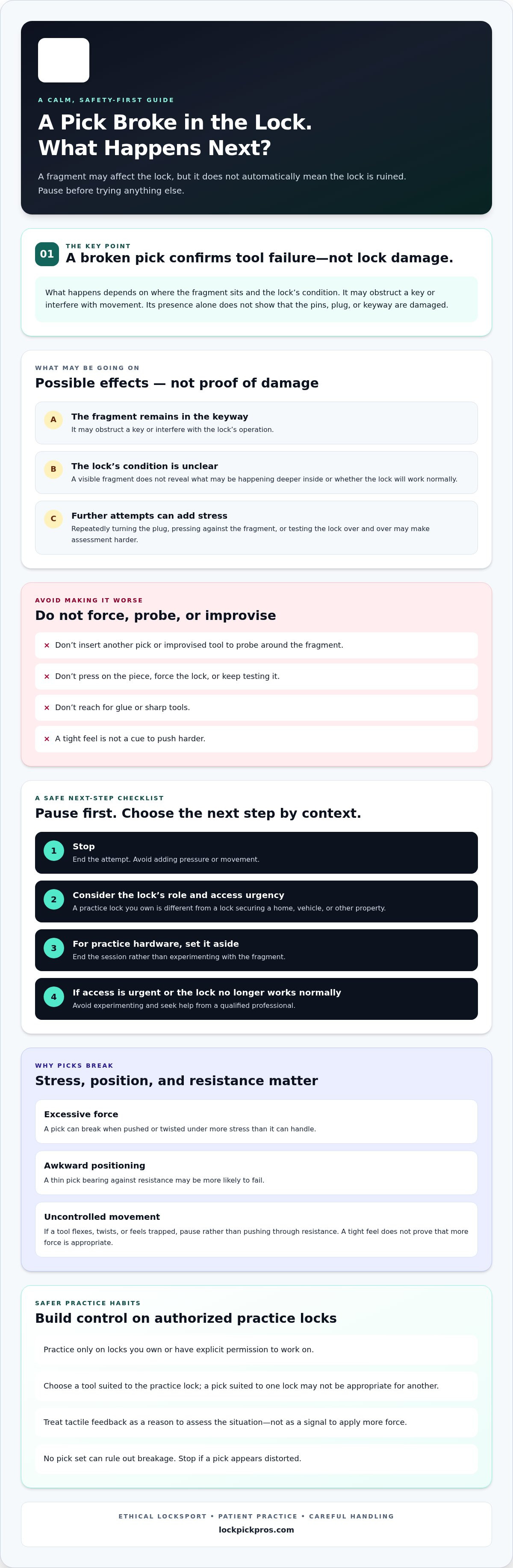
What to Do After a Lock Pick Breaks: Safe Next Steps
Pause before doing anything else. The safest response to what happens if a lock pick breaks in a lock starts with reducing pressure on the lock, not trying a new tool. Follow this sequence:
- Stop. Don’t keep picking, turning, or testing the lock.
- Set aside the other tools. Avoid pushing anything into the keyway or probing around the fragment.
- Assess the situation from the outside. Is the lock yours? Is access time-sensitive? Can you see the fragment without touching or moving it?
- Choose an authorized next step. For a lock that matters or a situation you can’t assess, contact the owner or responsible manager and seek help from a qualified locksmith.
Safety summary: Don’t force or probe the lock. Stop, assess, and get appropriate help if access or security matters.
If the lock is a practice lock
If it’s your practice lock, end the session and leave the fragment and mechanism undisturbed until they can be assessed safely. Make a brief note of which pick you were using and what you were doing just before it broke. That can help you review your practice habits later without testing the lock again. Resume only with authorized training hardware that’s in suitable condition.
A break is a reason to pause, not a reason to abandon locksport. Once the issue is addressed, return to practice with controlled movements and stop if a tool bends or feels stressed.
If the lock secures property or access
If the lock protects a home, vehicle, workplace, or other property, stop attempting entry. If it isn’t your lock, contact the owner or authorized manager right away. They can decide how to handle access and arrange an assessment.
For a time-sensitive access issue, a fragment that isn’t readily visible, or any uncertainty about the lock’s condition, contact a qualified locksmith. Don’t attempt extraction yourself or assume the lock is working because part of the fragment can be seen.
For future ethical practice, use training locks you own or have explicit permission to use. The Carbon Fiber Gen 2 Pro Series is one pick-set option for locksport practice. A suitable tool choice supports learning, but careful handling and stopping when something feels wrong remain essential.
How to Reduce Pick Breakage During Ethical Locksport Practice
Good practice starts with choosing a lock you own or have explicit permission to work on. Select practice hardware that suits your experience, then take your time. A lock that feels resistant isn’t a cue to push harder. Pause and pay attention to feedback from the tool instead.
Build careful habits with suitable practice hardware
Use controlled movements and focus on tactile feedback rather than speed. If a pick feels trapped, stressed, or distorted, stop and inspect it outside the lock. Pick-warp is deformation of a thin pick that causes it to twist or bow under high spring tension. Set a warped tool aside rather than continuing with it. Patient practice can help you notice changes in how a pick feels before they become a bigger issue.
Choose a practice lock that lets you learn without risking someone else’s property or access. Keep a simple note of which tool you used and how it felt during practice. This can help you spot patterns in your technique and make thoughtful adjustments next time.
If you’re wondering what happens if a lock pick breaks in a lock, remember that careful habits can’t guarantee a pick won’t break. They can help you recognize when it’s time to pause instead of applying more pressure.
Choose tools for practice, not as a guarantee against breakage
A suitable pick set is one part of a responsible practice setup, not a promise that breakage won’t happen. Tool choice, handling, and the lock all matter. Check tools for visible bends or damage before practice, and set aside any pick that appears distorted.
The Carbon Fiber Gen 2 Pro Series is one option for ethical locksport practice. Its mention isn’t a claim that its material or design prevents breakage or guarantees a particular result. Keep the focus on authorized locks, careful handling, and stopping when a pick feels wrong.
Explore the Carbon Fiber Gen 2 Pro Series as an option for your practice setup.
Practice with Care and Keep Building Your Skills
A broken pick fragment may obstruct the keyway, but it doesn’t automatically mean the lock is ruined. Stop rather than forcing or probing it. If the lock secures property, access is urgent, or you’re unsure about its condition, contact the owner or a qualified locksmith.
For ethical locksport practice, use locks you own or have permission to work on. Patient movements and attention to tactile feedback can help you notice when a pick is under stress. Set aside any tool that appears bent or distorted, and choose practice hardware suited to your experience.
Lockpick Pros sells equipment for ethical locksport, including the Carbon Fiber Gen 2 Pro Series. Explore the Carbon Fiber Gen 2 Pro Series as an option for practice. Keep practicing ethically and focus on building your skills one step at a time.
Frequently Asked Questions
Can a broken lock pick damage the lock?
Yes, a broken pick can contribute to damage, but breakage alone doesn’t prove the lock is damaged. The outcome depends on the lock, where the fragment sits, and what happens afterward. Pressing, turning, or testing the lock repeatedly may add stress or shift the fragment. Stop manipulating it and have the lock assessed if its condition is uncertain, especially if it protects property or access.
What should I do if a lock pick breaks inside a lock?
Stop immediately, set aside your other tools, and don’t turn or test the lock. Consider whether it’s your lock, whether access is urgent, and whether the fragment is visible without touching it. If the lock is yours and used for practice, pause the session. If it secures property or belongs to someone else, contact the owner or responsible manager and choose an authorized next step.
Can I still use a lock after a pick breaks in it?
Possibly, but don’t assume the lock is usable just because the fragment is visible or the keyway looks clear. A piece may obstruct a key or affect movement, and appearance alone can’t confirm the mechanism’s condition. Avoid inserting a key or repeatedly turning the lock to find out. If the lock is important or behaves differently, stop and arrange a professional assessment.
Should I try to pull a broken lock pick out myself?
Usually, it’s safer not to try. Another tool, sharp object, adhesive, heat, or pressure can push the fragment farther in or complicate assessment. Even if part of the piece appears accessible, you may not be able to tell what it’s contacting inside the lock. Leave it undisturbed. For a practice lock, set it aside; for an important lock, seek qualified help.
Can a broken pick get pushed farther into the keyway?
Yes. Pressing on the fragment or probing around it with another tool may move it deeper or change its position. That’s one reason to stop rather than attempt improvised removal. Don’t use glue or sharp tools, and don’t keep turning the lock to test it. If you can’t assess the situation without touching the fragment, leave the lock alone and seek appropriate help.
Why do lock picks break during practice?
Excessive force, awkward positioning, or stress on a thin pick can contribute to breakage. A lock that feels tight doesn’t mean more pressure is the right response. During ethical locksport practice, use locks you own or have explicit permission to work on. Move patiently, pay attention to tactile feedback, and stop if a pick feels stressed, trapped, bent, or distorted instead of pushing through resistance.
When should I call a locksmith after a pick breaks?
Contact a qualified locksmith if the lock secures a home, vehicle, workplace, or other property, if access is time-sensitive, or if the fragment isn’t readily accessible. Professional assessment is also sensible when you’re unsure whether the lock is damaged or will operate normally. If it isn’t your lock, notify the owner or authorized manager first. Don’t attempt entry or extraction without permission.