

Is It Weird to Have Lock Picks? A Locksport Beginner’s Guide
What if a set of lock picks says more about your curiosity than your intentions? It’s understandable to wonder, “is it weird to have lock picks?” The tools can look mysterious, and people unfamiliar with locksport may mistake a hands-on hobby for something more concerning. Context matters: ethical hobbyists treat lockpicking as a skill-based challenge and practice only on locks they own or have permission to pick.
Locksport rewards patience, careful observation, and attention to tactile feedback. A practice session is a chance to learn how a lock works, not to enter somewhere without consent. If someone asks about your picks, a clear explanation helps: you’re learning locksport, practicing on authorized locks, and building a technical skill.
This beginner’s guide explains how to approach the hobby responsibly, what separates ethical practice from unauthorized entry, and how to choose a first practice setup. You’ll also find practical ways to get started, build confidence one skill at a time, and connect with the locksport community.
Key Takeaways
- If you’re asking “is it weird to have lock picks,” consider how you practice and explain the hobby, not just what the tools look like.
- Describe locksport plainly: name the hobby, state your practice boundaries, and share what you enjoy learning.
- A purpose-made practice lock and a dedicated practice space help keep hobby sessions separate from everyday property access.
- Before starting, ask yourself: Are you curious about mechanisms, committed to respecting consent, and ready to practice responsibly?
Is It Weird to Have Lock Picks? The Short Answer for Curious Beginners
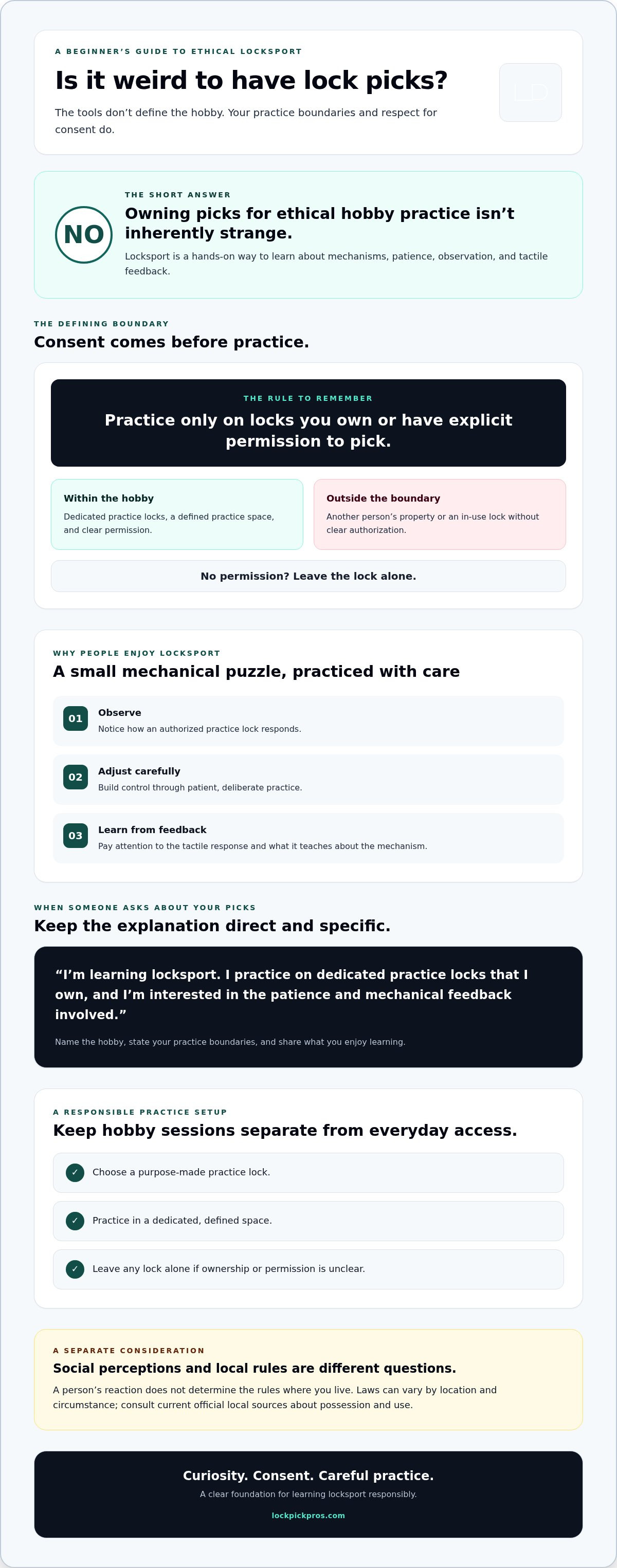
No. If you’re asking, “is it weird to have lock picks,” owning them for ethical hobby practice isn’t inherently strange. Locksport is a skill-based pastime where people learn about lock mechanisms through careful practice on locks they own or have permission to use. Curiosity about how a mechanism works doesn’t, by itself, tell anyone what a person intends to do.
Locksport describes the hobby and its emphasis on responsible practice. A plain-language definition worth remembering is: Ethical locksport is the practice of learning lockpicking as a hobby, using only locks you own or have clear permission to pick.
Why someone might be interested in lock picks
For hobbyists, the appeal often lies in solving a small mechanical puzzle. Progress takes patience: notice how a lock responds, make careful adjustments, and learn from the feedback. That tactile element makes practice hands-on and precise, rather than simply reading about how locks work.
Deliberate practice also gives the activity clear boundaries. A beginner might work with a purpose-made practice lock in a set place, focusing on control and observation. The goal is to understand a mechanism and improve a skill, not to enter a space or test an in-use lock without permission.
What owning picks does, and doesn’t, say about someone
A tool alone doesn’t establish a person’s purpose or conduct. The surrounding context matters: what the owner says, how they practice, and whether they respect other people’s property. Explaining that the picks are for locksport and that practice is limited to authorized locks can make the interest easier to understand without sounding defensive.
For example: “I’m learning locksport. I practice on dedicated practice locks that I own, and I’m interested in the patience and mechanical feedback involved.” That’s direct, specific, and honest. Mentioning a dedicated practice setup makes the hobby concrete without requiring a demonstration.
Keep the legal question separate from assumptions about character. Rules can vary by location and circumstance, so check current official local sources for guidance on possession and use where you live. Ethical practice starts with consent, and responsible hobbyists keep that boundary clear.
Locksport Is a Practice Hobby, Not a Reason to Suspect Someone
Locksport is built around learning, not covert entry. A practice session is a chance to develop patience, notice how a lock responds, and improve control in a setting where permission is clear. That distinction matters when people ask, “is it weird to have lock picks?” The tools don’t define the activity; the way someone chooses to use them does.
The hobby’s responsible-practice culture is also reflected by The Open Organisation Of Lockpickers (TOOOL), which shares information about locks and lockpicking. Clear boundaries help keep practice separate from any attempt to access property without permission.
The consent rule that keeps practice responsible
Consent is the boundary: practice only on locks you own or have explicit permission to pick. If you don’t know who owns a lock or whether it’s available for practice, leave it alone. That applies even if the lock looks abandoned, is easy to reach, or resembles a practice model.
Keep hobby equipment distinct from real-world access. Use dedicated practice locks in a defined practice space, and don’t experiment on another person’s property or an in-use lock. If a lock protects a door, cabinet, or other property someone relies on, treat it as off-limits unless you have clear authorization to practice on it. A simple rule removes guesswork: no permission, no picking.
These habits give the hobby a clear purpose: skill-building with authorized practice equipment. They also make locksport easier to talk about openly, because your practice boundaries are specific and consistent.
How legality differs from social perception
Feeling awkward about owning picks and understanding the rules where you live are separate questions. A friend’s surprise doesn’t determine what local law says, and good intentions don’t replace checking the rules that apply to your circumstances. Laws can vary, so consult current official sources for your location rather than relying on a general online statement.
For a responsible beginner setup, dedicated practice locks and tools selected for your goals can help keep sessions focused on learning. If you’re choosing equipment for standard pin-tumbler practice, the Carbon Fiber Gen 2 Pro Series is one option to explore. Whatever tools you choose, keep permission at the center of every practice session.
How to Explain Your Lock Picks Without Making the Hobby Sound Suspicious
A clear explanation doesn’t need to be a long defense. If someone asks about your picks, name the hobby, state your practice boundary, then say what interests you about it. That keeps your answer calm and specific. If you’ve wondered, “is it weird to have lock picks,” a straightforward explanation can help others understand the hobby without asking them to share your interest.
A straightforward way to describe locksport
You might say: “I’m interested in locksport, a hobby focused on understanding locks and practicing with dedicated locks I own or have permission to use. I enjoy the problem-solving and learning how the mechanisms work.” Adjust the wording to fit your actual interest. A technical book about the hobby of locksport also presents it as a subject people can study and practice.
A practice lock can make the explanation more concrete. It shows that you have equipment set aside for learning, rather than an in-use lock or someone else’s property. You don’t need to demonstrate anything. Simply explaining what the practice lock is for may answer the question.
For readers curious about the equipment beginners use, this beginner lock pick set guide offers a place to explore the basics. Choose tools for your intended practice, and keep your explanation aligned with how you actually use them.
When someone remains uncomfortable
Unfamiliar tools can prompt questions. That doesn’t necessarily mean someone is accusing you of anything. Listen, answer plainly, and give them room to feel differently. Don’t pressure anyone to handle the picks, watch a demonstration, or approve of the hobby.
Shared spaces call for consideration, too. If a roommate or family member would rather not have picks left out, agree on a suitable place to store them and practice. Respecting that boundary reinforces the care that guides ethical locksport: be clear about your purpose, your practice setup, and other people’s comfort.
If you’re ready to choose a set for authorized practice, you can explore the Carbon Fiber Gen 2 Pro Series as one equipment option.
What Beginners Can Do to Keep Lock Picks in the Hobby Lane
A responsible start is simple: choose dedicated practice equipment, set aside a place to use it, and keep hobby sessions separate from access to everyday property. If you’re still asking, “is it weird to have lock picks,” a clear practice setup helps show what the tools are for. It also gives you a consistent space to focus on learning without involving locks someone relies on.
Choosing a beginner-friendly way to practice
Purpose-made practice hardware creates a controlled setting. You know the lock is there for learning, so you can focus on the process without interfering with an in-use lock. Keep practice locks and picks together in a designated area, and don’t experiment on locks whose ownership or permission is unclear.
Choose beginner equipment for the skills you’re building, rather than assuming you need an advanced set from day one. A beginner pick set is one option to explore, such as The Trainee 2.0 beginner pick set. For an overview of typical starter tools, see what belongs in a beginner lock pick set.
Make the boundary part of your routine: practice only on locks you own or have explicit permission to use, put the tools away when you’re finished, and leave in-use locks alone. Those habits keep the hobby focused on learning and make your practice setup easier to explain.
Learning with a community and at your own pace
Some locksport communities use a belt ranking system to organize skill progression. Belt levels can offer a framework for choosing practice challenges as your confidence grows, but they aren’t a measure of personal worth or a requirement for enjoying the hobby. You can move at your own pace, repeat foundational practice, or skip rankings altogether.
A guide to lock picking belt levels explained can help you understand how the progression is commonly structured. Treat any ranking as a learning aid, not a reason to rush toward harder locks. Careful practice, attention to tactile feedback, and respect for consent matter more than a label.
As your practice develops, you can compare tools suited to standard pin-tumbler locks. Explore the Carbon Fiber Gen 2 Pro Series as one option for continuing your ethical locksport progression.
Is Locksport Right for You? Choose a Responsible Next Step
Locksport may suit someone who enjoys patient, hands-on problem-solving and wants to learn how small mechanical systems respond to careful practice. It may be less appealing if slow progress feels frustrating or if the consent boundary feels difficult to follow. There’s no need to decide based on whether the hobby seems unusual to someone else. A better question than “is it weird to have lock picks?” is whether you’re interested in learning and ready to practice responsibly.
A quick self-check before getting started
Before choosing equipment, ask yourself:
- Does learning how a lock mechanism works sound interesting, even when progress takes time?
- Am I willing to practice only on locks I own or have explicit permission to use?
- Can I treat each session as practice, without expecting a particular result every time?
If those answers fit, start by learning basic terminology and deciding what kind of practice feels engaging. The goal is to notice feedback, build patience, and improve through repetition. Results aren’t guaranteed, and taking time to understand the hobby before buying tools is a perfectly reasonable first step.
Pick a first step that fits your interest
Read beginner resources, learn the ethical boundaries, and consider whether you’d enjoy working with dedicated practice hardware. A beginner set is an optional tool choice, not a requirement for belonging in the locksport community. Belt rankings can provide a path for those who like structured milestones, but participation and pace are personal.
The free Black Belt Challenge is described as a community progression option. Before joining, check its official page for current participation details and terms; availability and program information should be confirmed directly rather than assumed. You can also begin privately, learn at your own pace, and decide later whether community milestones appeal to you.
If you’ve decided that locksport’s careful, hands-on learning is a good fit, explore the Carbon Fiber Gen 2 Pro Series as one pick-set option for ethical practice.
Start Your Locksport Journey with Clear Boundaries
So, is it weird to have lock picks? Not when they’re part of ethical locksport, a hands-on hobby grounded in learning, consent, and practice on locks you own or have permission to use. Clear boundaries and dedicated practice equipment help keep the focus on building a skill responsibly.
For a community-focused next step, you could look into the free Black Belt Challenge, progress one belt at a time, and share picks-in-action content as you build your skills. The challenge promotes a $5,000 bounty for reaching its social reach goal. Check the challenge page for current participation details.
As your practice develops, choose tools that fit your experience and goals. Explore the Carbon Fiber Gen 2 Pro Series as one option for ethical practice. Keep consent at the center, learn at your own pace, and enjoy the challenge of building a new skill. To get started with equipment made for beginners, explore Lockpick Pros’ beginner lockpick sets and practice locks.
Frequently Asked Questions
Is it weird to own lock picks?
Not necessarily. If you’re asking “is it weird to have lock picks,” locksport offers one hobby context: people use dedicated equipment to learn about lock mechanisms through patience, problem-solving, and tactile feedback. What matters is how the tools are used. Practice only on locks you own or have permission to use. If someone asks, explain the hobby and your practice boundaries plainly rather than acting secretive.
Is lockpicking a normal hobby?
Locksport is a hobby community focused on learning about locks and practicing with appropriate equipment. As with other specialized interests, it may be unfamiliar to people who haven’t encountered it before. Beginners can make the activity easier to understand by describing what they’re learning and using purpose-made practice locks. Keep consent clear: only practice on locks you own or have explicit permission to use.
Can you own lock picks for a hobby?
Possession and carrying rules can vary by location, so don’t assume one answer applies everywhere. If you’re concerned about legality, check current official sources for the relevant jurisdiction. That question is separate from responsible hobby practice: use picks only on locks you own or have explicit permission to practice on. Avoid unknown locks, in-use locks, and other people’s property unless you have clear authorization.
Why would someone have lock picks?
Someone may own picks to explore locksport, practice a technical hobby, or learn how lock mechanisms work. The tools alone don’t explain a person’s intent. A clear account of the hobby, dedicated practice hardware, and firm consent boundaries give useful context. For example, a hobbyist might describe learning to notice mechanical feedback during practice. Picks should never be tested on property unless the person owns the lock or has explicit permission.
How do I explain having lock picks to someone?
Keep your explanation simple and honest. You could say, “I’m interested in locksport, a hobby where I learn about locks and practice only on locks I own or have permission to use.” If it helps, mention that you use practice locks and enjoy the patience and tactile feedback involved. Listen if the other person has concerns. You don’t need to ask them to handle, test, or approve of your tools.
Are lock picks illegal to have?
There isn’t a safe universal answer because rules may differ by jurisdiction and circumstance. Check current official sources for the location relevant to you, and don’t rely on a broad online claim as legal advice. Keep the ethical boundary clear regardless: practice only on locks you own or have explicit authorization to use. If the rules remain unclear, seek qualified guidance for your specific situation.
What should a beginner use lock picks on?
Start with a purpose-made practice lock or a lock you own and have set aside for learning. Don’t practice on an active lock, someone else’s property, or a lock whose use you don’t control. Beginner-oriented resources and equipment can help you understand the basics. Focus on careful practice and feedback, not speed or guaranteed success. Lockpick Pros offers beginner lockpick sets and practice locks for ethical hobbyists.