

Feedback Training for Lock Pickers: Build Better Tactile Awareness
What if the faint click you feel isn’t a pin setting at all, but your pick shifting in your hand? That uncertainty is familiar to new and experienced hobbyists alike. Feedback training for lock pickers helps turn confusing sensations into observations you can examine, rather than guesses you have to trust. It takes patience, but you don’t need perfect instincts to begin.
Practice can feel frustrating when each attempt seems different and it’s hard to tell whether you’re learning anything. A more deliberate approach gives each session a clear purpose. You’ll explore how to pay attention to what you notice, keep useful records, and decide what to adjust when feedback feels hard to read. Improvement isn’t about rushing or forcing a result; it’s about building awareness through steady practice.
This guide will help you shape a repeatable routine using locks you own or are authorized to practice on. It also considers how your surroundings and tools fit into that routine, and how to keep progressing as your observations become more consistent. Start with curiosity, stay ethical, and let each session add another small step to your locksport journey.
Key Takeaways
- Build tactile awareness by treating faint sensations and sounds as observations to interpret, not signals to guess at.
- Notice how handling, tension wrench pressure, and your surroundings affect the feedback you perceive.
- Use feedback training for lock pickers as a repeatable practice routine: focus on one observation at a time and record what you notice.
- If feedback seems unclear, change one practice condition at a time to identify what helps you read the cues more consistently.
- Set up focused practice with an authorized lock, a tension wrench, a comfortable pick, and notes; use Lockpicking Bootcamp videos as a self-guided resource.
What Feedback Training for Lock Pickers Actually Develops
Faint or confusing sensations are common during early locksport practice. A small change in resistance can be hard to distinguish from a shift in your grip, and a sound may not have an obvious source. That uncertainty is part of learning to observe. It doesn’t mean you lack the ability to improve; it means there’s more than one possible explanation to consider.
In this context, feedback is the tactile or auditory information you notice while practicing with a lock you own or are authorized to use. The broad subject of lock picking includes tools and techniques, but feedback awareness is narrower: it concerns the signals you perceive and how carefully you assess them. A change in pressure, a slight vibration, or a faint sound is an observation. The cause is an interpretation, and it may remain uncertain.
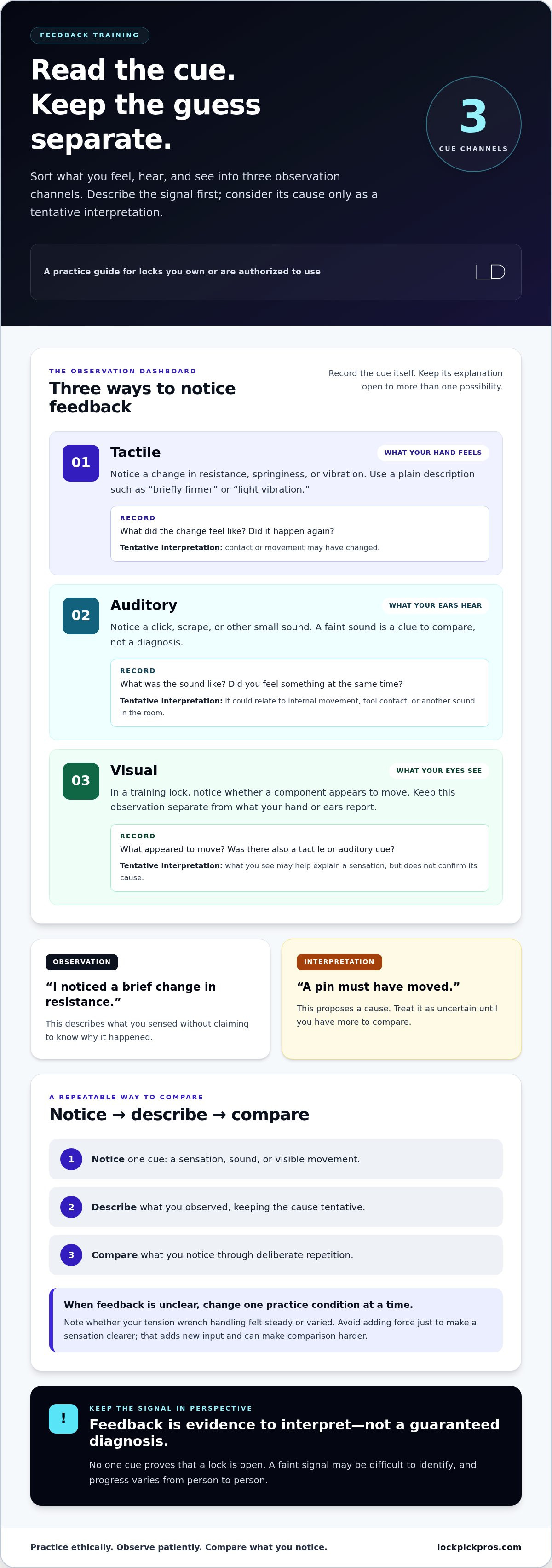
Feedback awareness is the practice of noticing and describing small sensations and sounds, then comparing those observations through deliberate repetition. The distinction matters. “I noticed a brief change in resistance” reports what you sensed. “A pin must have moved” proposes a cause. Keeping those statements separate leaves room to learn from a cue without treating a guess as proof.
What Does Lock Feedback Feel and Sound Like?
During practice, you might notice pressure changing through the tool, a feeling of movement, or a small sound. Think of each as a clue to describe, not a diagnosis. Sensations reach your hand through the pick and tension wrench, and the tool’s contact with the lock can contribute to what you feel. A quiet lock, a faint signal, or an uncertain sensation doesn’t automatically show that you made an error. It may simply be difficult to identify what you noticed.
Useful descriptions stay specific without claiming more than you know: “a short vibration,” “resistance seemed to change,” or “a faint click.” That language gives you something to compare later. A confident label can feel satisfying, but if the same cue has several plausible causes, it’s better to preserve that uncertainty than to build a conclusion on a single impression.
Why Feedback Is a Skill, Not a Shortcut
Learning develops through careful attention and comparison, not through one sensation that always means the same thing. Patient observation helps you notice which signals recur and which may come from incidental tool movement or a change in handling. Your interpretations can become more informed with practice, but they still depend on the lock and conditions. No one cue proves that a lock is open, and progress varies from person to person.
Ethical locksport makes the practice setting clear: work only with locks you own or have authorization to use. Specialty tools can also be part of a hobbyist’s equipment choices. For example, the color-handled Kaba dimple pick set is a distinct tool option, not a substitute for learning to observe. The skill comes from attention and repeated practice, with each cue treated as information to consider rather than a shortcut to certainty.
How to Separate Tactile, Auditory, and Visual Cues
When several things happen at once, it’s easy to blend them into one impression. Instead, sort what you notice by channel: what your hand feels, what your ears hear, and what your eyes can see. Keep the categories separate in your notes. This simple distinction makes later comparisons clearer, especially when a sensation and a sound occur at nearly the same moment.
Feedback is evidence to interpret, not a guaranteed diagnosis. Use this table as a reminder to record the observation first and treat the explanation as tentative. It’s designed for practice locks you own or are authorized to use, and it doesn’t assign a definite cause to any cue.
- Tactile: You notice a change in resistance, springiness, or vibration. Record: what the change felt like and whether it happened again. Tentative interpretation: contact or movement may have changed.
- Auditory: You hear a click, scrape, or other small sound. Record: its quality and whether you felt something at the same time. Tentative interpretation: it could relate to internal movement, tool contact, or another sound in the room.
- Visual: You see a component move in a training lock. Record: what appeared to move and whether a tactile or auditory cue accompanied it. Tentative interpretation: the sight may help explain a sensation, but doesn’t confirm its cause.
Your tension wrench is part of the observation. Changes in the pressure you apply can affect the sensations that reach your hand, so note whether your handling felt steady or varied. Don’t prescribe a force level to yourself based on one attempt. For this exercise, the useful question is whether a cue changes when your handling changes, not whether you can assign a universal meaning to that cue.
Tactile Cues: Notice Changes Without Overinterpreting
Use plain descriptions such as “more springy,” “briefly firmer,” or “light vibration.” Tool contact may feel different from movement inside the lock, but the distinction can be subtle. If you can’t tell which you sensed, mark it as uncertain. Pause before continuing, and avoid adding force just to make the sensation clearer. That can introduce new input and make a fair comparison harder.
Sound and Visual Observation: Supporting Evidence
Sound is a secondary cue. A faint click may help you compare sessions, but nearby noise can mask it or make its source difficult to judge. Practice in a quieter setting when possible, and note whether a sound recurs alongside a similar tactile impression.
A clear training lock or a metal cutaway lock can connect visible movement with a sensation you notice. The view is useful as a reference, but it changes the experience: an enclosed lock won’t provide the same sightline. Visual access can support learning without replacing attention to what you feel. Community organizations such as The Open Organisation Of Lockpickers also provide context for locksport learning and practice.
For a consistent tool choice while developing your observation habits, consider the Carbon Fiber Gen 2 Pro Series. Its carbon-fiber handles transmit vibrations from pins to the picker. That can make vibration available to notice, but it doesn’t identify the source for you. Feedback training for lock pickers still depends on comparing what you observe and keeping conclusions tentative.
A Repeatable Feedback Training Routine for Lock Pickers
A useful practice session has one job: help you notice and record what you perceive. Keep the setup consistent, avoid rushing, and work only with a practice lock you own or are authorized to use. This feedback training for lock pickers is about observation, not speed or applying more force. Progress means making more consistent observations, not reaching a guaranteed opening time.
Start with a Baseline and One Observation Goal
Choose a familiar practice lock and note how clear its feedback seems before you begin. Then choose one goal, such as noticing a change in resistance or vibration. Keep the lock, tools, and surroundings comparable between sessions so your notes can reveal patterns rather than one-off sensations.
- Set up the same way. Use your authorized practice lock, tension wrench, and comfortable pick. Choose a quiet spot where you can focus. Record the lock and tools you’re using so you can compare like with like later.
- Write a baseline. Before practice, describe how easy or difficult it is to notice feedback. Use your own scale, such as “hard to distinguish,” “somewhat clear,” or “easy to notice.” The scale isn’t a score of skill; it’s a reference point for your observations.
- Choose one cue to notice. Focus on a single quality, such as a change in resistance, springiness, or vibration. Don’t try to classify every sensation at once. If something feels unclear, pause and describe it neutrally instead of adding force or guessing at its cause.
- Repeat comparable observations. Keep your handling and environment as consistent as you can. Notice whether a similar sensation appears again, changes, or disappears. Repetition helps you distinguish a recurring cue from a one-time shift in your grip or tool contact.
- Complete a short practice log. Record the lock, tool, perceived cue, tentative interpretation, and your confidence in that interpretation. For example: “Practice lock A; pick B; brief vibration; possible internal movement or tool contact; low confidence.” Keep observation and explanation in separate fields.
- Review before changing the setup. Look for repeated cues and mark anything that remains uncertain. Change only when you have a useful comparison to make. If several conditions change at once, it becomes harder to tell what affected your observations.
Review Your Notes Before Increasing Difficulty
Stay with the current lock until its handling feels familiar, not until every cue has a certain explanation. When you’re ready to choose another practice lock, use the community’s lock picking belt levels explained progression as a difficulty reference. Belt ranks can help organize a learning path, while your log shows which observations still need practice.
Consistent records make improvement easier to recognize, even when a session doesn’t produce a clear result. If you want a tool option for a steady practice setup, the Carbon Fiber Gen 2 Pro Series has carbon-fiber handles that transmit vibrations from pins to the picker. Tools can shape what you notice, but careful repetition is what helps you learn to describe and compare it.
What to Change When Lock Feedback Feels Weak or Confusing
Unclear feedback can come from several sources, and changing everything at once makes it hard to identify which one matters. An unfamiliar lock may feel different from the one you’ve practiced with. Inconsistent handling can make sensations vary between attempts, while background noise can mask faint sounds. Some locks also provide less noticeable cues. None of these possibilities, on its own, proves that you’ve made a mistake.
Use a simple troubleshooting rule: change one practice condition, then record whether your observations become clearer. Keep practice limited to locks you own or are authorized to use. For example, if the room is noisy, move to a quieter space but keep the lock and tools the same. If sensations still seem inconsistent, return to a familiar lock before changing your equipment.
Distinguish a Difficult Practice Lock from a Practice Habit
When your observations vary, try a familiar, owned practice lock as a reference point. If cues seem easier to notice there, the newer lock may simply be less talkative or unfamiliar. Treat that as a practice challenge, not evidence of failure. Avoid labeling a lock easy, secure, or vulnerable based only on how much feedback you feel; sensation alone doesn’t establish those qualities.
Choose Tools for Comfort and Clear Observation
A comfortable handle may help you keep a steadier grip during a longer practice session. Tool design can also affect how vibrations reach your hand, but no pick can guarantee clearer feedback or better results. Consider the handle feel and your notes together: do the same sensations become easier to describe when your grip feels relaxed and consistent?
The Carbon Fiber Gen 2 Pro Series includes real carbon-fiber handles, pro-grade stainless-steel picks, 16 picks, and 6 tensioners. Carbon-fiber handles transmit vibrations from pins to the picker, which may make subtle signals easier to notice. The tool supports observation; practice is still needed to distinguish a pin-related sensation from tool contact or a change in handling. For more on carbon fiber lock pick benefits, consider how handle feel and vibration transmission fit your own practice setup.
For a useful comparison, keep your familiar lock and one observation goal constant, then change just one factor: the room, the pick, or your grip. Note what changed and whether the cue was easier to describe. That small experiment is more informative than switching tools, locks, and surroundings all at once. If you’re ready to try a set with carbon-fiber handles and pro-grade picks, explore the Carbon Fiber Gen 2 Pro Series as an option for your locksport practice.
Build a Feedback Practice Setup and Keep Progressing
A good setup makes it easier to focus on one thing: what you can consistently notice. Use a practice lock you own or are authorized to use, a tension wrench, a comfortable pick, a quiet space, and a notebook or simple log. Keep the setup familiar while learning. If a cue feels unclear, record that instead of treating the session as a pass or fail.
In each note, track the lock, the tool, the cue you perceived, your tentative interpretation, and how confident you feel about that interpretation. Over time, this record can help you spot which sensations repeat and which conditions make them harder to notice. The goal of feedback training for lock pickers is better observation, not expecting a tool or practice session to produce a guaranteed result.
Match Practice Equipment to Your Learning Stage
Beginners can start with a manageable setup and add tools as their practice needs change. A familiar practice lock and a comfortable pick are enough to begin recording observations. As you build consistency, a broader selection of picks and tensioners can help you compare handling while keeping other practice conditions steady.
The Carbon Fiber Gen 2 Pro Series includes 16 stainless-steel picks and 6 tensioners. Its real carbon-fiber handles transmit vibrations from pins to the picker. Every purchase includes access to Lockpicking Bootcamp video tutorials, a self-guided resource for learning alongside practice. All picks and kits are backed by a lifetime warranty.
Turn Practice into Ethical Locksport Progress
Move through belt levels at a pace guided by your observations. If you can describe cues more consistently with a familiar setup, you may be ready to choose a new practice challenge. If your notes still show uncertainty, stay with the current lock and keep building a clearer baseline. Practice only on locks you own or are authorized to use.
The free Black Belt Challenge offers a community path for ethical hobbyists. Participants progress through belt ranks, share their locksport progress using Lockpick Pros tools, and may earn reward picks through the share-to-earn program. Treat it as motivation to keep practicing and documenting your learning, not as a promise of a particular rank or reward.
Build a steady routine first, then choose tools that suit the way you practice. Build your feedback practice with the Carbon Fiber Gen 2 Pro Series, and keep your next session focused on careful observation, consistent handling, and ethical locksport.
Make Your Next Practice Session Count
Let your next session build on what you’ve noticed so far. Choose one cue to focus on, keep your handling steady, and write down what you observe. With feedback training for lock pickers, progress comes from paying attention and refining your practice over time, not from chasing a quick result. Keep all practice to locks you own or are authorized to use.
If you’re ready to set up with a tool set suited to focused locksport practice, the Carbon Fiber Gen 2 Pro Series includes real carbon-fiber handles, pro-grade stainless-steel picks, 16 picks, and 6 tensioners. All picks and kits are backed by a lifetime warranty. A tool can support your observations, while your careful practice builds the skill.
Build your feedback practice with the Carbon Fiber Gen 2 - Pro Series, and keep taking your locksport journey one thoughtful session at a time.
Frequently Asked Questions
Can beginners learn to recognize feedback when lock picking?
Yes. Beginners can learn by noticing small differences before trying to explain them. For example, describe a sensation as “brief resistance change” rather than deciding immediately what caused it. A useful first goal is to use the same neutral words from session to session. This builds a personal reference for comparing practice, even when the lock’s response is subtle or the reason for a cue remains uncertain.
Is tactile feedback more useful than sound when practicing?
Neither cue is always more useful. A sound can draw attention to a moment, while a tactile sensation may help you compare how that moment felt. Background noise, tool contact, and your position can affect what you notice. Treat sound as supporting information, not a verdict. If a click and a sensation occur together, record both separately before considering whether they may be related.
How long does it take to improve feedback awareness?
There isn’t a fixed timeline for improving feedback awareness. People begin with different levels of familiarity, and locks can vary in how clearly they communicate. Measure progress by whether you can describe and compare cues more consistently across practice sessions, not by how quickly a lock opens. A single successful attempt or difficult session won’t tell the whole story, so look for patterns over time.
Can a practice lock give too little feedback for a beginner?
Yes. A less talkative lock can make it harder to tell what a sensation means, especially when you’re still learning how your tools feel. That doesn’t mean you’ve failed. Set it aside temporarily and compare your observations on a familiar practice lock. If the familiar lock is easier to read, return to the quieter one later as a separate challenge rather than changing several things at once.
Do carbon-fiber handles help lock pickers feel feedback?
They can affect how vibrations are felt through the grip, but they won’t interpret a cue or guarantee better results. Comfort matters, too: if a handle feels natural in your hand, it may be easier to keep your grip consistent while you practice. Focus on whether a tool helps you describe sensations more clearly over repeated sessions, rather than expecting a material choice to replace careful observation.
Should I practice on a clear lock or a metal cutaway lock?
Either can be useful for learning, depending on what you want to observe. A clear training lock makes internal movement visible, while a metal cutaway lock gives you a view through a real metal body. Try one as a visual reference, then practice with an enclosed lock so your observations aren’t dependent on seeing inside. Use training locks you own or are authorized to practice on.
How can I tell whether I am making progress with feedback training?
Look for clearer descriptions, not just successful openings. For example, you might notice that you can tell a repeated sensation from an accidental bump more reliably, or explain what you’re unsure about instead of guessing. The phrase feedback training for lock pickers is about building that awareness through practice. Review notes from separate sessions and check whether your observations are becoming more consistent, even if uncertainty remains.
Is it ethical to practice lock picking on any lock?
No. Keep practice to locks you own or have clear authorization to use, and don’t pick locks that are in use. A lock that happens to be accessible isn’t automatically appropriate for practice. Choose dedicated training hardware or a spare lock set aside for locksport. This keeps practice focused on learning and respects other people’s property and the purpose of locks in everyday use.