

How to Pick a File Cabinet Lock: Safe, Responsible Options
What if the safest answer to how to pick a file cabinet lock is not to pick it at all? A missing key can put important papers just out of reach, and forcing the lock may damage the cabinet or its contents. Before trying anything, confirm that you own the cabinet or have permission to access it.
If you’re locked out, start with low-risk options: look for a spare key, identify the cabinet, and follow the owner’s authorized process for access or a replacement key. This guide will help you weigh those next steps, protect the cabinet, and recognize when to stop rather than risk damage.
You’ll also learn how a real lockout differs from ethical locksport. Picking is a skill to practice on locks you own or are authorized to use, not a shortcut for opening a cabinet in service. For hands-on learning, use a practice lock and suitable tools, and build your feel for tension and feedback in a controlled setting.
Key Takeaways
- Before deciding how to pick a file cabinet lock, confirm you own the cabinet or have permission to access it.
- Record visible cabinet and lock details before choosing a next step. Similar-looking locks can use different keys or mechanisms.
- Start with a spare key or the cabinet owner’s authorized process for access or a replacement key. Avoid force and improvised tools.
- Use a simple checklist to guide your next move, and stop if an attempt could harm the cabinet or its contents.
- Keep locksport practice separate from a real lockout. Build skills on locks you own or are authorized to use, with suitable practice tools.
Locked Out of a File Cabinet? Start With Safe, Authorized Options
Being unable to reach a passport, work file, or personal keepsake can throw off your whole day. If you’re wondering how to pick a file cabinet lock, pause before trying to open it. First, make sure you own the cabinet or have clear permission from the person or organization responsible for it. A cabinet in a shared office, rental, or workplace may belong to someone else, even if you use the documents inside.
Keep the first steps simple and low risk:
- Look for a spare key where keys are usually stored, or ask the person responsible for the cabinet.
- Note any visible brand, model, or identifying details so you can follow the appropriate replacement-key process.
- If the contents are urgent or the lock remains inaccessible, use the owner’s authorized access procedure rather than forcing the lock.
This article won’t teach readers to bypass a real cabinet lock. The aim is to help you choose a responsible route, protect what’s inside, and know when to stop. Locksport is a separate activity: the Locksport overview describes it as a hobby focused on locks and their mechanisms. Practice belongs on locks you own or have permission to use, not on a cabinet securing documents or property.
First, confirm access and identify the immediate need
Before taking action, establish who owns the cabinet and who can authorize access. If it’s at work, follow the organization’s process and involve the person responsible for the cabinet. If it belongs to a family member or another individual, get their permission first. Then decide whether the contents are needed immediately or can wait while you arrange authorized access. This distinction can prevent a stressful deadline from pushing you toward a risky attempt.
Protect the surroundings, too. Keep papers, nearby furniture, and the cabinet’s finish clear of improvised attempts. If you’re documenting the situation for the owner, note the cabinet’s identifying details and describe what happened without altering the lock.
Why forcing the cabinet is a poor first move
Force can damage more than the lock. A cabinet may bend, its finish may be scratched, or contents inside may shift or get crushed. If a key, handle, or lock resists unexpectedly, stop rather than adding pressure. Repeated attempts can turn a straightforward key or access issue into damage that complicates the situation.
Keep locksport learning separate from a real lockout. For example, someone curious about specialty mechanisms can study with suitable practice equipment, such as a dimple lockpick set for practice, on an authorized practice lock. That’s skill-building, not a method for opening a file cabinet. When the cabinet itself is the priority, use a spare key or the owner’s authorized access process.
How File Cabinet Locks Differ: Identify the Lock Before Choosing a Solution
A file cabinet lock secures a cabinet or drawer to limit access to its contents. The mechanism may be a cam lock, a pin-tumbler lock, or another design, depending on the cabinet. A cam lock is common in furniture, while pin-tumbler locks use spring-loaded pin pairs. These are broad categories, not a diagnosis: a lock’s appearance alone doesn’t confirm its internal design or the right key.
Lock identification means recording visible details to help the owner follow the correct support or replacement-key route. It doesn’t mean testing, manipulating, or opening the lock. That distinction matters if you’re weighing how to pick a file cabinet lock. Recognizing a possible lock type can help you describe the problem, but it can’t establish that a particular method is suitable or safe.
What a cam lock does in a cabinet
A cam lock uses a rotating component to secure a cabinet or drawer. Its role is straightforward, but the cabinet’s construction and lock configuration can vary, so two locks that look similar may not use the same key or replacement part. If you can identify the cabinet, use its make, model, or official instructions to find the appropriate authorized access route rather than relying on appearance alone.
What to record when identifying a cabinet lock
Gather details without inserting anything into the keyway or applying force. A clear description helps the person responsible for the cabinet choose the right next step. If the cabinet is in a workplace or shared space, follow the owner’s process before pursuing a replacement key.
- Write down the cabinet’s make, model, or any manufacturer label you can see.
- Look for a key code or other identifying mark near the lock, if visible without moving or dismantling anything.
- Describe the lock’s location and visible shape, and note whether you have an original key that no longer works.
- Keep the details together so they’re ready when following the authorized access or replacement-key process.
A key code can be useful identifying information, but don’t assume it guarantees a match. Use the cabinet’s official instructions and the details you’ve gathered to determine the appropriate next step. For additional context on authorized, non-destructive approaches to secured storage, see Emergency Entry Methods for Secured Storage.
Keep practical lockout decisions separate from locksport. A real cabinet lock protects property; locksport practice belongs on a lock you own or have permission to use. If you want to build picking skills away from the cabinet, the Carbon Fiber Gen 2 Pro Series includes 16 stainless-steel picks and 6 tensioners and is priced at $119.97 USD. All picks and kits are backed by a lifetime warranty. It’s equipment for ethical practice, not a guaranteed solution to a cabinet lockout.
File Cabinet Lockout Options Compared: Spare Key, Manufacturer, or Qualified Help
Choose the next step by balancing urgency, risk, and how well you can identify the cabinet. A spare key is a simple first step. Cabinet details can help the owner follow the official replacement-key process. If the lock is damaged or the cabinet is valuable, use the access procedure established by the person or organization responsible for it. None of these routes requires experimenting on an unfamiliar lock.
Use this comparison for authorized access only. Don’t improvise with force or tools. If an option begins to damage the cabinet or leaves you unsure what to do next, stop and use the owner’s authorized process.
| Option | Effort | Risk of damage | When it fits |
|---|---|---|---|
| Check for a spare key | Low, if keys are stored in a known place | Low when you locate and use the correct key normally | Start here if you or the authorized owner may have a spare. |
| Follow the official replacement-key process | Some preparation may be needed to identify the cabinet | Low, since you’re seeking an authorized route rather than altering the lock | Useful when you can provide a make, model, label, or visible key code. |
| Use the owner’s access procedure | Requires coordinating with the person responsible for the cabinet | Depends on the lock and cabinet; following an established process avoids guesswork | Consider this if the lock is stuck, damaged, unfamiliar, or the cabinet is costly to replace. |
When a spare key or manufacturer information is the best next step
Check secure, familiar places before taking further action: a designated key cabinet, an authorized administrator, or the person who manages the office furniture. Avoid trying keys at random if they don’t fit smoothly. If no spare is available, gather the cabinet’s make and model, any manufacturer label, and a visible key code. Keep proof of ownership or authorization available when following the official replacement-key process, especially for shared or workplace property.
When to stop and seek qualified assistance
Stop if the lock appears damaged or jammed, the cabinet is unfamiliar, or a mistake could cause expensive damage. Follow the access procedure set by the cabinet’s owner or the organization responsible for it. Share the identifying details you’ve gathered and explain whether the contents are time-sensitive. Don’t attempt to force the lock while waiting for an authorized next step.
Picking tools belong in locksport practice, not as a promised way to open a particular cabinet. Practice only with a lock you own or are authorized to use, and keep that learning separate from an active lockout. The Carbon Fiber Gen 2 Pro Series practice kit is intended for ethical locksport practice, not as a guaranteed cabinet-opening solution.
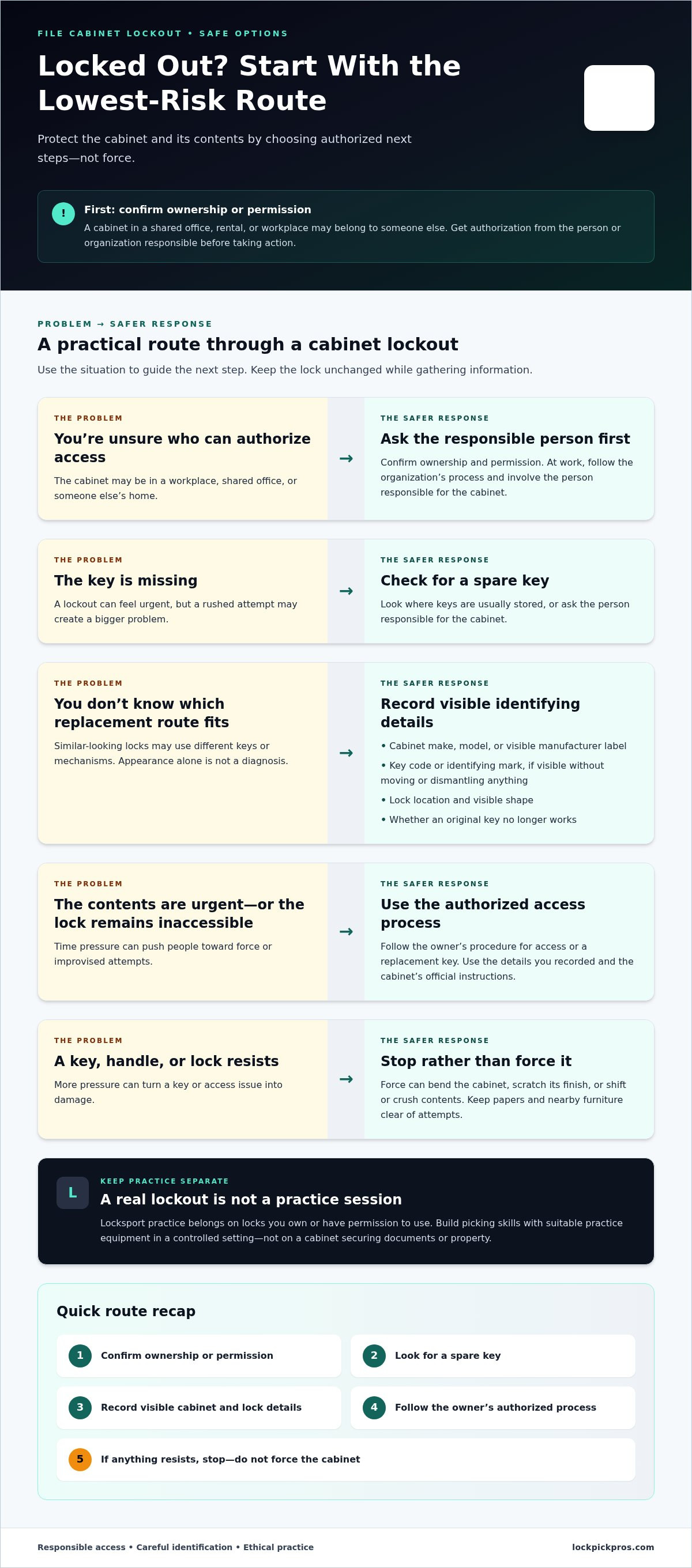
What to Do Next: A Safe File Cabinet Lockout Checklist
A clear decision path can keep a frustrating lockout from turning into a damaged cabinet or a harder repair. Before acting, separate the immediate need for the contents from the urge to try something quickly. If the documents can wait, take the time to identify the cabinet and follow an authorized route. If they’re urgent, arrange access through the person responsible for the cabinet instead of experimenting on an unfamiliar lock.
A simple decision path for an authorized owner
Move through these steps in order. If you can’t establish authorization, stop at the first step. If an option starts to risk damage, don’t press on to the next attempt.
- Confirm authorization and identify the need. Establish that you own the cabinet or have clear permission to access it. Note what you need and whether the contents are time-sensitive.
- Check for a spare and gather cabinet details. Look in the usual secure key-storage place or ask the person responsible. Record the cabinet’s make, model, manufacturer label, and any visible key code.
- Choose a non-destructive route or stop. Use the information to follow the official replacement-key process or the owner’s authorized access procedure. If the lock remains inaccessible, avoid force and leave the cabinet unchanged.
This order helps you make a decision based on ownership, urgency, and the details you can actually verify. Keep notes together, especially if someone else manages the cabinet. A short description of the issue, such as “key missing” or “key no longer turns,” is more useful than guessing at the lock’s internal design.
Keep locksport practice separate from a real lockout
Locksport is for building skill on a practice lock you own or are authorized to use. A practice session lets you learn tactile feedback in a controlled setting; it doesn’t diagnose an installed cabinet lock or establish that picking is an appropriate way to regain access. If you’re curious about how to pick a file cabinet lock, keep that curiosity separate from a real lockout and don’t test tools on a cabinet holding documents or belongings.
Stop and use the owner’s authorized access procedure if the lock is jammed, visibly damaged, unfamiliar, or attached to a cabinet or contents that would be costly to harm. Avoid further attempts if a key or handle behaves unexpectedly. Protect the cabinet and let the person responsible decide how to proceed.
For ethical locksport practice on an authorized practice lock, explore the Carbon Fiber Gen 2 Pro Series.
Learn Ethical Locksport With Practice Locks and the Right Tools
A file cabinet lockout and locksport practice call for different choices. Locksport is a way to build patience and learn how lock mechanisms respond, using a practice lock you own or are authorized to use. It isn’t a reason to experiment on a cabinet that’s securing documents or belongings. Keep that boundary clear, and let the cabinet’s owner or an appropriate authorized process handle an actual access problem.
For a beginner, progress can be gradual. Start with a practice lock suited to your experience, follow learning materials at a comfortable pace, and focus on what you notice during practice. Tactile feedback is the small change in feel transmitted through the tool as you work. A calm, repeatable session can help you learn to recognize that feedback without putting a real cabinet or its contents at risk.
Start learning with practice equipment and instruction
The Lockpicking Bootcamp video series is included with every purchase, giving learners instructional material to use alongside their practice equipment. Set aside time to learn one concept at a time. If a practice lock feels unfamiliar, pause and review the material rather than carrying that uncertainty over to an installed cabinet lock. Choosing a first beginner lockpick set is about matching equipment to your learning stage, not buying tools in the hope they’ll solve a specific lockout.
A practice lock gives you a place to build familiarity and track your progress. Keep practice to locks you own or have clear permission to use. Don’t practice on locks that are in service or protecting property. This keeps the activity focused on skill-building and makes the difference between locksport and a real access problem unmistakable.
Choose tools for learning, not as a promised lockout fix
The Carbon Fiber Gen 2 Pro Series is intended for locksport and practice. The set includes 16 stainless-steel picks and 6 tensioners, with a lifetime warranty, and costs $119.97 USD. The picks have 2.5 mm carbon-fiber handles, a 0.48 mm to 0.5 mm profile thickness, a 38 mm profile length, and a 1 mm to 2 mm profile height. It isn’t a guaranteed way to open a particular file cabinet. Cabinets can use different lock designs, and a tool set can’t establish which mechanism is installed or what response is appropriate. For a real lockout, follow an authorized access route instead of testing tools on the cabinet.
Purchases include access to the Lockpicking Bootcamp video series. The 30-day return / 100% satisfaction guarantee applies, and all picks and kits are backed by a lifetime warranty. These policies support a considered purchase, but they don’t change the intended use: learn on a practice lock and keep that activity separate from an actual cabinet lockout.
Ready to build ethical locksport skills with practice equipment? Choose the Carbon Fiber Gen 2 Pro Series and keep your learning separate from any real file cabinet lockout.
Make Your Next Step a Safe One
A file cabinet lockout can be a useful reminder to plan ahead. Once access is restored through an authorized route, consider keeping a spare key in a secure, known place and noting the cabinet’s identifying details for future reference. That small bit of preparation can make the next lockout less stressful.
If the question of how to pick a file cabinet lock has sparked an interest in locksport, give that curiosity a proper practice setting. Choose a practice lock you own or have permission to use, learn at your own pace, and treat each session as skill-building rather than a way to open a cabinet in service. Ethical practice starts with respecting the purpose of every lock.
Ready to develop your locksport skills with equipment intended for practice? Choose the Carbon Fiber Gen 2 Pro Series for ethical locksport practice. Build confidence through practice and enjoy steady progress.
Frequently Asked Questions
Can I pick a file cabinet lock without a key?
It may be possible to open some locks without their keys, but that doesn’t make picking the right choice for a real cabinet. If you’re asking how to pick a file cabinet lock, keep hands-on practice to a lock you own or have permission to use. For a cabinet you’re authorized to access, start with a spare key or the owner’s authorized process. If the contents are urgent, arrange access through the person responsible rather than experimenting.
What type of lock is commonly used on a file cabinet?
Cam locks are common on file cabinets, and some cabinets use pin-tumbler locks. Other configurations, including gang or bar locks, may also appear. The lock category can help you describe the cabinet, but it doesn’t identify the exact mechanism or key. For example, a multi-drawer cabinet may have a different locking arrangement from a small single-drawer unit. Use the cabinet’s make and model to guide the authorized access process.
Will trying to open a file cabinet lock damage it?
It can. Applying force or trying unfamiliar methods may damage the lock, cabinet finish, drawer alignment, or items inside. Damage isn’t always obvious at first: a drawer that later sticks or a lock that no longer turns normally can signal a problem. Avoid repeated attempts, especially if the cabinet is shared or valuable. For practice, use a dedicated practice lock instead of a cabinet in service.
Is it legal to own lockpicking tools in the United States?
Lockpicking tools are legal in most areas when they aren’t used for illegal purposes, but laws vary by location. Before buying or carrying tools, review the rules that apply where you live and travel. Keep their use ethical: practice only on locks you own or have explicit permission to use. Never use picks to access another person’s cabinet, belongings, or property without authorization.
Can beginners learn lockpicking safely?
Yes. Beginners can learn through locksport by starting with a practice lock they own or are authorized to use, then building familiarity at a comfortable pace. Set up a dedicated practice area and keep the practice lock separate from locks that protect property. If a session becomes frustrating, take a break and return later. The goal is steady skill development, not opening a lock that’s currently in use.
Can lockpick tools guarantee access to a locked file cabinet?
No. A lockpick set can’t guarantee access to a particular file cabinet. Cabinets may use different lock designs, and the condition of an individual lock can affect what happens. Tools intended for locksport are learning equipment, not a promise that a cabinet will open. If you need the files, use an authorized route based on the cabinet and the urgency instead of relying on picks as a lockout fix.
What should I do if the file cabinet lock is jammed or damaged?
Stop trying to operate it and avoid taking the lock or drawer apart. Note what changed, such as whether the key stopped turning or the drawer became difficult to close, and keep the cabinet undisturbed. If it’s in a shared space, inform the person responsible for it. For important contents or a cabinet that may be costly to repair, follow the owner’s established access procedure.