

How to Use Essential Lock Bypass Tools and Understand Pressure Plates
Essential lock bypass tools are designed for particular mechanisms, not every lock. Pressure-plate methods may apply to older three-wheel or four-wheel combination padlocks, while decoding focuses on identifying a combination. The right approach depends on the lock’s construction and the purpose of the authorized task.
Bypassing and decoding may seem similar because both involve learning how a lock responds. In ethical locksport, they have different goals, and understanding the difference helps you choose suitable practice equipment without treating any tool as a universal solution. Work only on locks you own or have permission to examine.
This guide explains the difference between bypassing and decoding, how pressure-plate tools relate to tactile feedback, and how to recognize the lock types discussed here. It also offers a responsible way to choose practice equipment and decide when to stop. Keep each session focused on the mechanism, the setting, and the permission you have.
Key Takeaways
- Learn how pressure-plate bypass tools use mechanical feedback, and what that feedback can tell you during practice.
- Recognize the difference between bypassing a mechanism and decoding its combination before choosing an approach.
- Understand why some older combination padlocks may be more susceptible to bypass methods than others.
- Keep practice ethical by working only on locks you own or have permission to examine, and choose practice hardware suited to your skill level.
Difference between bypassing and decoding
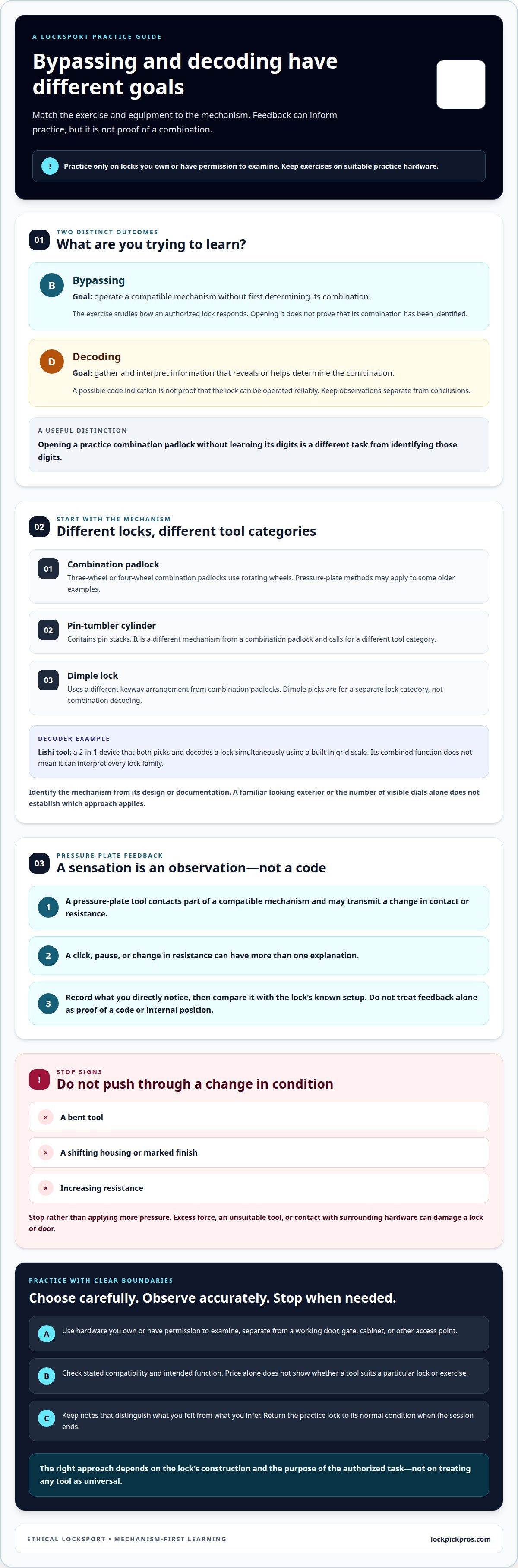
Bypassing and decoding describe different goals. Bypassing aims to open an authorized lock without identifying its combination. Decoding aims to find information that reveals or helps determine the combination. Knowing which outcome you’re pursuing helps you choose a suitable exercise, record results accurately, and interpret tool feedback.
- Define the goal before choosing equipment. In an authorized practice session, decide whether you’re studying a mechanism’s response or learning how its code is represented. Bypassing means operating a compatible mechanism without first determining its combination. Decoding means gathering and interpreting information about the code. For example, opening a practice combination padlock without learning its digits is a different task from identifying those digits.
- Classify the lock by mechanism. A three-wheel or four-wheel combination padlock uses rotating wheels, while a pin-tumbler cylinder contains pin stacks. These mechanisms call for different tool categories and produce different feedback. The number of wheels or visible dials alone doesn’t tell you which method applies. Identify the mechanism from the lock’s design or documentation, and practice only on hardware you own or have permission to examine.
- Understand what a decoder is intended to do. A lock decoder helps determine information about a compatible lock’s combination or internal positions. A Lishi tool is a 2-in-1 device that both picks and decodes a lock simultaneously using a built-in grid scale. That combined function differs from a tool intended only to bypass a mechanism. Don’t assume that a decoder designed for one lock family can interpret another.
- Record observations without overstating them. During practice, separate what you directly notice from what you infer. A change in resistance or a click is an observation, not proof that you’ve identified a code. For example, note that a practice mechanism felt different at a particular point, then compare that observation with the lock’s known setup. This builds careful judgment without confusing feedback with a decoded result.
- Consider possible damage before continuing. Excess force, an unsuitable tool, or contact with surrounding hardware can damage a lock or door. A bent tool, shifting housing, marked finish, or increasing resistance is a reason to stop. Don’t apply more pressure to overcome these signs. On a working door, damage can affect both the lock and frame, so keep experiments to suitable practice hardware.
- Keep specialty tools in their own category. Dimple locks use a different keyway arrangement from combination padlocks, so dimple picks aren’t combination decoders. For example, the 8-piece dimple lock tool set is for a separate lock category. Match equipment to the mechanism and the authorized learning goal instead of treating every tool as interchangeable.
When using essential lock bypass tools, restrict your focus to controlled practice equipment rather than a working entry point. Stop if the mechanism’s condition changes, and document the issue before deciding whether it’s safe to continue. Opening a lock doesn’t prove that you’ve discovered its combination, just as a possible code indication doesn’t prove that the lock can be operated reliably. Keep these outcomes separate in your notes and when choosing what to practice next. This helps you judge whether a tool suits your goal, rather than assessing it only by whether something moved.
When comparing equipment, check its stated compatibility and intended function before purchase. Assess product descriptions against the lock’s design. Price alone doesn’t show whether a tool can decode a particular mechanism or suit a specific exercise. Choose a practice setup with a known combination and a clear way to confirm the result, so you can distinguish an observed change from a reliable decoding outcome. If you’re studying only how an authorized mechanism responds, decoding features may not be necessary. Work only on hardware you own or have permission to examine, and return the lock to its normal condition when practice ends.
How pressure-plate bypass tools work
A pressure-plate tool is designed to contact part of a compatible lock mechanism and provide tactile feedback. How it works depends on the lock’s construction. Learn about that interaction using authorized practice hardware. Don’t treat the tool as universal or assume that feedback reveals a combination.
- Start with a clear practice objective. Choose a lock you own or have explicit permission to examine, then decide what you’re studying: the tool’s fit, the mechanism’s response, or how feedback changes during careful handling. Keep the exercise observational. Essential lock bypass tools are mechanism-specific, so don’t use an unknown lock as a test subject or assume that a familiar-looking exterior means the tool is compatible.
- Inspect the practice lock externally. Note its type, condition, and any visible damage before handling it. Make sure the lock is separate from a door, gate, cabinet, or other access point. This gives you a baseline and helps distinguish existing wear from changes during practice. If you’re unsure of the lock type or don’t have authorization, don’t proceed with a bypass exercise.
- Learn what tactile feedback can tell you. A pressure plate may transmit a change in contact or resistance through the tool. That sensation describes an interaction, not necessarily the state of the entire lock. A click or pause can have more than one explanation. Record each sensation as an observation, not proof that a mechanism has moved to a particular position.
- Keep a practice log. Record the lock type, starting condition, tool category, and sensations you notice during an authorized session. Describe observations plainly, such as “resistance changed” or “contact felt uneven.” Don’t turn those notes into a claim that you’ve found a code or opened the lock. A consistent log helps you compare sessions without relying on memory or guesswork.
- Separate pressure-plate exercises from pick practice. A pressure-plate tool and a tension wrench with a pick serve different practice purposes. Don’t substitute one category for another based only on appearance. For pin-tumbler practice, the Carbon Fiber Gen 2 Pro Series is a separate pick-set option. Use equipment suited to the lock mechanism and your stated learning goal.
- Stop when the lock or tool changes unexpectedly. End the exercise if the tool deforms, the housing shifts, resistance rises sharply, or the lock shows fresh marks. Don’t push harder to repeat an unclear sensation. Set the equipment aside, inspect the practice lock, and record what happened. This keeps the session focused on understanding how the equipment interacts with the lock, not forcing it open.
Lawful-use disclaimer
Use lock tools only for a clearly authorized purpose, such as practicing on your own lock or carrying out an approved service request. The steps below focus on responsible decisions, not bypass instructions.
-
Following Lawful-Use Guidance
Confirm ownership or clear permission before handling a lock. For a workplace door, for example, get approval from the person responsible for the property and record the agreed task. Possessing a tool doesn’t mean you have permission to use it. Rules can vary by location and circumstances, so don’t assume one general statement covers every situation. Secure the tool when it isn’t being used for an authorized practice session or job.
-
Identifying Tools Used by Licensed Locksmiths
Identify each tool’s purpose before using it. A tension wrench and pick are for pin-tumbler mechanisms; a decoder is intended to read information about a compatible lock; bypass tools apply only to the mechanisms they’re designed for. For an authorized lockout, a locksmith may choose among these categories based on the lock and assigned task. A credential, tool, or uniform alone doesn’t prove permission to work on specific property.
- Document the authorization. Before work begins, record who approved the task, which lock is involved, and what outcome is permitted. Permission to inspect a practice padlock, for example, doesn’t automatically cover a nearby cabinet or door. Keep the scope clear, and pause if the request changes. Written instructions can help prevent misunderstandings between a property representative and a technician, but they should accurately describe the authority granted.
- Match the tool to the stated task. A tool intended for a combination padlock may not suit a keyed cylinder or wafer lock. Identify the lock type first, then choose equipment designed for that mechanism. Don’t try improvised methods on a door or installed hardware. If the lock’s design differs from the assignment, stop and clarify the permitted scope rather than testing unrelated tools.
- Protect the property during work. Inspect the lock, surrounding frame, and finish before beginning. With permission, photograph existing marks to distinguish prior wear from damage caused during an authorized task. Keep tools controlled, avoid force if resistance changes, and stop if the housing shifts or the door surface is marked. These steps support a clear record and help prevent avoidable damage to the lock or its surroundings.
- Keep records and equipment secure. After completing an authorized task, record the result and return keys, tools, or access devices according to the agreed procedure. Store bypass tools so they’re not mistaken for general-purpose hardware, and don’t leave them unattended near an access point. For a locksport session, use a practice lock kept separate from working doors. Clear records help show which equipment was used and for what approved purpose.
Lock types that may be vulnerable
Lock design matters more than appearance when assessing bypass risk. The method discussed here applies to older three-wheel or four-wheel combination padlocks, not every lock that looks similar.
- Classify the mechanism first. Identify whether the lock uses combination wheels, pin tumblers, wafers, or rotating discs. A combination padlock operates differently from a pin-tumbler cylinder, so don’t assume one tool category suits both. Record the lock type to guide an authorized security review. If the mechanism is unclear, don’t test bypass methods on an installed lock.
- Flag older combination padlocks for review. The bypass method covered in this article is intended for older three-wheel or four-wheel combination padlocks. That describes a category, not a guarantee that every example can be bypassed. Construction and condition still matter. If a lock protects property, treat its age and mechanism type as reasons to review its suitability, not as permission to test it without authorization.
- Separate wheel locks from keyed cylinders. A three-wheel or four-wheel combination padlock uses rotating number wheels, while a pin-tumbler cylinder uses internal pin stacks. These mechanisms raise different security questions. Don’t apply assumptions about a combination lock to a door cylinder. For a security assessment, record the mechanism and consult the lock’s documentation or an authorized professional rather than experimenting on a working entry point.
- Recognize specialty mechanisms. A wafer lock uses flat metal plates rather than pins, while a disc-detainer lock uses rotating discs. Their internal designs differ, so don’t assume a bypass approach for an older combination padlock applies to them. Note the mechanism type, the lock’s role, and whether it protects an active access point. Keep any examination within a clearly approved scope.
- Assess the setting, not just the lock. A practice padlock on a bench is different from a lock securing a storage unit, gate, or door. Consider what it protects, who relies on it, and whether testing could interrupt access or damage surrounding hardware. For example, a lock on a shared gate may affect other people even if its mechanism appears simple. Use a dedicated practice lock to develop your skills.
- Choose practice equipment by mechanism. For learning pin-tumbler behavior, use a practice lock designed for that purpose rather than applying combination-lock techniques. A pin-tumbler pick set supports practice with that distinct mechanism; it is not a combination-padlock bypass tool. Keep practice separate from real access hardware, and stop if a lock binds or shows damage.
- Turn observations into a security decision. Record the lock type, condition, and purpose. If an older combination padlock protects something important, consider replacing it with a suitable lock for that use. Don’t publish identifying details about an active lock or demonstrate a bypass on property without explicit permission. A responsible assessment identifies potential exposure while protecting people and property.
Lockpick Pros: Beginner Lockpick Sets
Lockpick Pros is a natural next step when you’re ready to practice ethical locksport with purpose-built equipment. Beginner Lockpick Sets help new pickers get started, while Practice Locks provide dedicated hardware for learning tactile feedback without experimenting on working access points. For a starter option, explore The Trainee 2.0. As your skills develop, Advanced Lockpick Sets and Everyday Carry (EDC) Tools can support different practice and carrying needs. Choose equipment for the mechanism you’re studying, and use it only on locks you own or have permission to examine. For questions or to explore the available options, visit lockpickpros.com.
Build Your Next Practice Session
Turn your interest in essential lock bypass tools into a focused locksport practice plan. Choose a lock you own or have permission to examine, set a clear learning goal, and record what you notice. Keep bypass practice separate from pin-tumbler picking, so each session builds your understanding of one mechanism at a time.
If you want to develop conventional pin-tumbler skills alongside your study of bypass methods, explore the Carbon Fiber Gen 2 Pro Series. Use suitable practice hardware, work patiently, and stop if a tool or lock shows signs of strain. Progress comes from careful observation and responsible practice, not force.
Learn at a pace that feels right for you, and make every session ethical.
Frequently Asked Questions
When is it legal to use lock bypass tools in the United States?
In most areas, lock tools are legal when they aren’t used for illegal purposes, but rules vary by location. Use them only on locks you own or have clear permission to examine. Practicing on your own spare padlock, for example, is different from trying a tool on a neighbor’s gate. Always check your local laws before purchasing or carrying tools in public.