

Top of Keyway Tension Wrench: Fit, Feel, and Selection
The tension wrench that feels easiest to place may not leave your pick enough room to work. A top of keyway tension wrench applies rotational force near the top of the keyway, which can create more space for your pick than bottom-of-keyway tension. But thickness and fit matter: a wrench that sits poorly can make tension feel uneven and feedback harder to read. If you’re unsure which style suits your practice locks, that’s a common step in building locksport skills.
This guide explains how top-of-keyway tension compares with bottom-of-keyway tension, when TOK can be useful, and what to consider when matching a wrench to a lock’s keyway. You’ll also learn how to notice fit, clearance, and tactile feedback as you practice. Start with locks you own or have permission to pick, and treat each attempt as a chance to develop consistent control.
Key Takeaways
- Learn when a top of keyway tension wrench may give your pick more working clearance, and how keyway shape affects fit.
- Practice with light, steady rotational pressure on a lock you own or are authorized to use, then pay attention to plug movement and tactile feedback.
- Compare TOK and bottom-of-keyway tension by wrench position, pick clearance, seating, and the control each setup offers on your practice locks.
- Choose a wrench by testing how it seats, how much room it leaves for your pick, and how comfortable it feels in your hand.
- Build a considered locksport setup around fit and feedback, then refine your technique through ethical practice.
What Is a Top of Keyway Tension Wrench & When Is It Useful?
A top of keyway tension wrench is a small tool that applies rotational force to a lock plug from the upper edge of the keyway. The position is its defining feature: with bottom-of-keyway tension, the wrench applies force from the lower edge instead. Neither position is automatically the right choice for every lock. The keyway’s shape, the room available for a pick, and the feel you can control all matter.
During ethical locksport practice, the tension wrench holds a light rotational load on the plug while the picker works with the pins. Changes in resistance or slight movement can offer tactile clues about what’s happening inside. Learning to notice those signals takes patience; forcing the wrench can mask feedback rather than clarify it. For background on the tools and terms involved, see Lock picking techniques and tools.
How does top-of-keyway tension work?
The wrench rests near the top of the keyway and applies controlled rotational force to the plug. That steady force creates the conditions for pin movement to be felt through the tools. As you practice on a lock you own or are authorized to use, notice whether resistance changes and whether the plug gives subtle feedback. Keep the pressure light and consistent. The goal is to read the lock, not to overpower it.
When can a TOK wrench help with pick clearance?
Placing tension near the top may leave more space in the lower part of the keyway for a pick to move. This can be useful when a bottom-positioned wrench crowds the working area. But clearance depends on the actual keyway geometry, including its opening and internal shape. A TOK wrench may fit one practice lock comfortably and feel awkward in another, so assess the lock rather than assuming the position will always help.
Fit is part of the learning process. A wrench should seat securely enough to give you controlled feedback, without taking up room you need for the pick. Try different tension positions on your own practice locks and pay attention to comfort and consistency. If you’re building a considered locksport setup, explore the Carbon Fiber Gen 2 Pro Series as a precision-tool option, without assuming a particular wrench profile or kit component.
With practice, you’ll develop a clearer sense of how wrench position affects your access and control. Choose the setup that suits the lock in front of you, and keep every practice session within ethical locksport: use only locks you own or have permission to pick.
How to Use TOK Tension While Learning Tactile Feedback
Good tension practice is less about finding a fixed pressure and more about applying a steady, controllable touch. With a top of keyway tension wrench, begin gently on a lock you own or are authorized to use. Too much pressure can make small changes harder to feel, while inconsistent pressure makes it difficult to compare one attempt with the next. There’s no single tension level that suits every lock or picker.
A simple practice sequence for consistent tension
Keep each attempt focused on the same basic routine. That makes it easier to notice what your hands are doing and how the lock responds.
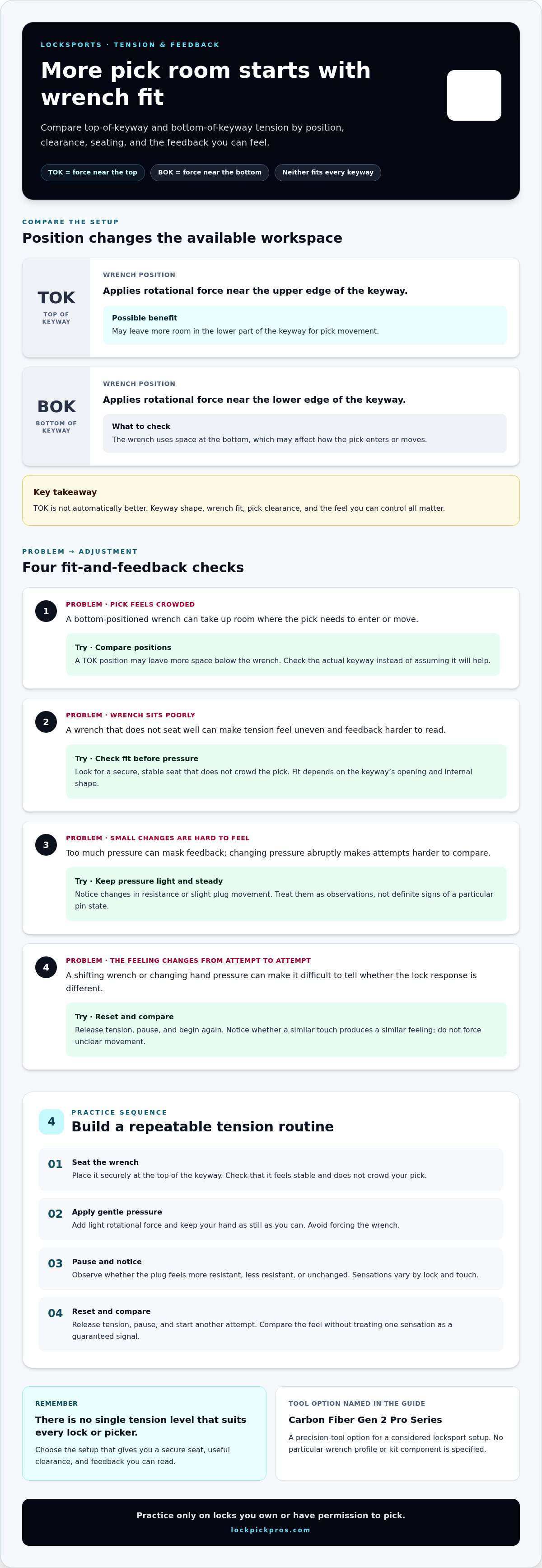
- 1. Seat the wrench. Place it securely at the top of the keyway before applying pressure. Check that it feels stable and doesn’t crowd your pick.
- 2. Apply gentle pressure. Add light rotational force, then keep your hand as still as you can. Avoid forcing the wrench or changing pressure abruptly.
- 3. Pause and notice. Pay attention to whether the plug feels more resistant, less resistant, or unchanged. Treat these as observations, not definite signs of a particular pin state.
- 4. Reset and compare. Release the tension, pause, and begin another attempt. Notice whether a similar touch produces a similar feeling. Don’t force the tools if movement feels unclear.
What feedback should a beginner notice?
Feedback is what you feel through the tools, such as a small change in resistance or movement. These sensations vary with the lock’s condition, its keyway geometry, and your touch. A change doesn’t always mean the same thing, so avoid treating any one sensation as a guaranteed signal. A short session focused on repeatable control can teach more than rushing through repeated attempts.
Try to keep your grip relaxed. If your hand tightens or the wrench shifts, pause and reset instead of adding force. The goal is to learn which sensations you can reliably notice on that particular practice lock. For another perspective on how tension affects practice, read Practical lock picking techniques and tension control.
As your feel develops, compare notes across sessions: Was the wrench seated the same way? Did the pressure stay steady? Did the plug feel different? A precision-focused setup can support that kind of deliberate practice. Explore the Carbon Fiber Gen 2 Pro Series as one option for building your locksport toolkit.
TOK vs. Bottom-of-Keyway Tension: Compare Fit, Clearance, and Control
Top-of-keyway (TOK) and bottom-of-keyway (BOK) tension describe where the tension wrench applies rotational force inside the keyway. The best position depends on how the wrench sits and how much room your pick needs in a particular practice lock. Neither method marks a higher skill level, and neither is the right choice for every keyway.
| Consideration | TOK tension | BOK tension |
|---|---|---|
| Wrench position | Applies force near the top of the keyway. | Applies force near the bottom of the keyway. |
| Pick clearance | May leave more space below the wrench for pick movement. | Uses space at the bottom, which may affect how the pick enters or moves. |
| Fit | Depends on the opening and the way the wrench seats at the top. | Depends on the available space and seating near the bottom. |
| Learning focus | Notice how the upper placement affects access and feedback. | Compare the feel and pick access with the wrench placed below. |
What differences matter when comparing tension positions?
Position changes the space each tool occupies, which can affect your pick’s path and your hand’s control. A top-positioned wrench might clear the area where you want to work, while a bottom-positioned one may sit more naturally in another keyway. These are possibilities, not guarantees. Judge each setup by what you can comfortably control on the lock in front of you.
How does keyway fit affect the choice?
A tension wrench should sit securely without obstructing the pick movement you intend to practice. Its thickness and profile influence how it fits the opening, but a single measurement won’t tell the whole story. The keyway’s shape and the wrench’s seating both matter. Compare options using locks you own or are authorized to use, and notice whether the wrench shifts, crowds the pick, or feels stable under light pressure.
Choose a tension position by matching keyway fit with the pick clearance you need, not by assuming one style is always better. TOK and BOK are tools for different setups, not steps on a fixed locksport ladder. Testing both positions across your own practice locks can help you identify which gives you clearer access and more consistent control on each one.
How to Choose a TOK Wrench for Your Practice Locks
Choose a top of keyway tension wrench by testing how it fits your actual practice locks, not by relying on one measurement or a general rule. A wrench that seats well in one keyway may sit loosely or crowd the pick in another. Use only locks you own or are authorized to use, and assess the wrench with the pick you plan to practice with.
A practical fit checklist before choosing
- Check the opening. Does the wrench reach the top of the keyway without forcing or awkward positioning?
- Check the seating. Does it rest securely, or does it shift during gentle, steady pressure?
- Check pick clearance. Can your pick enter and move through the working area without bumping into the wrench?
- Check hand comfort. Can you hold the setup without straining or repeatedly changing your grip?
- Repeat the test. Try short practice sessions and see whether the fit and feedback feel consistent across attempts.
Thickness and profile are useful selection considerations because they affect how a wrench sits in a particular opening. They aren’t a substitute for testing fit, though. Keyway shape and your chosen pick’s path also influence whether the setup feels workable. Avoid assuming a particular wrench profile or specification is included with a pick set unless the product details state it.
Choosing tools as your locksport skills progress
Your next tool choice can follow your practice goals. If you’re working with a wider variety of authorized practice locks, assess each keyway separately and note where the wrench seats well, where it interferes with your pick, and where your hand can maintain steady control. Keep that fit question distinct from broader pick-set selection: a new learning goal doesn’t automatically require a particular wrench feature or kit.
Material can also be part of your overall setup. A carbon fiber handle is described as transmitting vibrations from pins to the picker, but handle material and wrench fit are separate considerations. Choose based on the feedback and comfort you want to explore, without assuming a product contains a specific tension wrench or profile.
For a precision-focused locksport setup, explore the Carbon Fiber Gen 2 Pro Series. Compare its product details with your practice goals, then evaluate wrench fit on the locks you own or have permission to pick.
Build a TOK Setup That Supports Your Locksport Progress
A useful setup is the one that fits the practice lock and lets you maintain controlled, repeatable feedback. The top of keyway tension wrench isn’t a shortcut or a measure of skill. It’s one option to test alongside other tension positions, based on the keyway and the pick movement you want to practice. Keep sessions focused on control rather than speed or guaranteed results.
A short decision guide before your next practice session
- Match the placement to the keyway. Check whether the wrench sits securely at the top without crowding the opening.
- Consider the pick’s path. Confirm that the wrench leaves workable space for the movement you’re practicing.
- Notice the feel. Use gentle, steady pressure and pay attention to whether the setup feels comfortable and controlled.
- Compare across sessions. Record which wrench position and fit give you feedback you can recognize consistently on each authorized practice lock.
These observations help separate a learning goal from a product feature. For example, wanting to improve tactile feedback doesn’t mean a particular wrench profile is required. Fit can vary from one lock to another, so use the practice locks you own or have permission to work with as your guide.
Keep building skill with the right learning resources
As your locksport practice grows, you may work with a wider variety of keyways or focus on improving consistency. Reassess fit when your practice changes instead of assuming one setup will suit every lock. A brief note after each session can help: record the lock, wrench position, available pick clearance, and whether the feedback felt easy to track.
For broader tool context, carbon fiber handles are described as transmitting vibrations from pins to the picker. That’s a separate consideration from tension wrench fit, and no specific wrench profile or kit component should be assumed. The Carbon Fiber Gen 2 Pro Series can be a next step to consider as you shape a precision-focused locksport setup.
Keep progressing one practice session at a time. Choose tools by fit and controllable feedback, and practice only on locks you own or are authorized to use. Explore the Carbon Fiber Gen 2 Pro Series as you continue developing your ethical locksport skills.
Keep Refining Your TOK Practice
The right tension setup comes down to the lock in front of you. A top of keyway tension wrench is one option to test, with fit, pick clearance, and controllable feedback guiding your choice. TOK and bottom-of-keyway tension are options, not a ranking of skill. Keep refining your touch through ethical practice on locks you own or are authorized to use.
Ready for a structured next step? Join the free Black Belt Challenge, progress one belt at a time, and share your locksport journey. For a precision-focused addition to your setup, explore the Carbon Fiber Gen 2 Pro Series. Lockpick Pros offers a lifetime warranty, satisfaction guarantee, and hassle-free return policy.
Keep practicing ethically, celebrate each new skill, and enjoy the progress ahead.
Frequently Asked Questions
What is a top of keyway tension wrench?
A top of keyway tension wrench applies rotational force to a lock plug from the upper part of the keyway. In locksport, it lets a picker maintain tension while feeling for changes in resistance or plug movement. Its usefulness depends on how it fits the practice lock and whether it leaves room for the pick. It’s one tensioning option, not a tool every picker needs or a promise of easier picking.
Is a top of keyway tension wrench better than a bottom of keyway wrench?
Neither position is best for every lock. Top-of-keyway tension may leave more working room lower in some keyways, while bottom-of-keyway tension may suit other setups. Compare whether each wrench sits securely and allows controlled pick movement. A keyway’s shape can change which position feels practical, so assess the locks you own or are authorized to use instead of treating one style as a higher skill level.
How do you use a top of keyway tension wrench?
Seat the wrench at the top of the keyway, then apply light, steady rotational pressure while practicing on a lock you own or are authorized to use. Avoid forcing or shifting the wrench. Pause to notice changes in resistance, then reset between attempts. Focus on repeatable control and tactile feedback, not speed. Locks can feel different, so don’t expect one pressure level to suit every practice session or keyway.
What thickness top of keyway tension wrench should I choose?
There’s no single thickness that suits every keyway. Choose a wrench that can sit securely while leaving useful space for your pick. Consider the shape and openings of your actual practice locks, and don’t force a tool that doesn’t fit. Product listings may state dimensions for a specific wrench, but those measurements don’t automatically apply to other tools or locks. Assess fit in the locks you’re authorized to practice on.
Can a beginner use a top of keyway tension wrench?
Yes, beginners can practice with a top-of-keyway tension wrench on a suitable lock they own or have permission to use. Start with a light, steady touch and take time to notice how the wrench and lock feel together. Distinguishing feedback from movement caused by changing pressure takes practice. Short sessions focused on consistency can help build control. Keep the activity ethical and choose practice locks suited to your learning goals.
Can I use a TOK tension wrench with any lock?
No single wrench profile fits every keyway. The opening’s shape, available space, and how securely the wrench seats all affect whether it’s suitable. Treat TOK tension as one option to assess with your own practice locks, rather than assuming universal fit. Never force a wrench into a keyway. Practice only on locks you own or are authorized to use, and choose a setup that allows comfortable, controlled movement.
What should I look for when buying a top of keyway tension wrench?
Focus on secure seating, room for your pick, and comfortable control during practice. Think about the keyways you work with and whether the wrench lets you maintain consistent pressure without crowding the pick. Check dimensions and materials on the specific product listing rather than assuming specifications. A suitable fit can support clear, repeatable feedback, but no wrench can ensure success on every lock. Test choices only with authorized practice locks.