

When to Use a Half Diamond Pick: A Practical Locksport Guide
The most versatile pick in your kit isn’t always the best one for the practice lock in front of you. Knowing when to use a half diamond pick means matching its hybrid shape to your goal, rather than expecting one tool to handle every session.
If you’re unsure how a half diamond differs from a hook or a rake, you’re not alone. Each profile offers a different feel and role, and choosing without a clear purpose can make practice frustrating or put unnecessary strain on a pick. The good news: you can make a thoughtful choice by considering the lock you own, the skill you’re working on, and the feedback you want to feel.
This guide explains the half diamond’s general role in ethical locksport, compares it with hooks and rakes, and offers practical pointers for selecting a pick for an owned practice lock. You’ll also learn why a half diamond can be a useful all-round option, when a more specialized profile may suit your session better, and how to build your tool selection as your skills progress. Keep practice focused on locks you own or have clear permission to pick, and enjoy the steady challenge of learning through touch.
Key Takeaways
- Learn when to use a half diamond pick by matching its profile to your practice goal, not treating it as a one-size-fits-all tool.
- Compare half diamond, hook, and rake shapes to understand how each can feel and fit differently in a practice lock.
- Use a simple checklist to choose an owned or authorized practice lock and set a clear learning goal.
- Build tactile awareness through deliberate practice, paying attention to the small feedback each pick shape provides.
- Let your skills and belt progression guide future tool choices; a half diamond can be one useful option in a growing toolkit.
When to Use a Half Diamond Pick in Ethical Locksport
A half diamond is a lockpick with a short, angled tip that forms part of a diamond-like profile. In locksport, it’s a versatile option for practice because the tip can make contact with pins in a different way than a long, narrow hook. Still, no pick shape is right for every lock or every learning goal. Keyway space, lock design, and the picker’s touch all affect how a tool feels and fits.
Definition: A half diamond is a pick profile, not a skill level: its compact, angled tip is one tool option for ethical practice, and its usefulness depends on the lock and the picker.
Think of it as a choice to test, not a required step on a belt ranking path. A half diamond may suit a session focused on exploring a general-purpose profile, while another shape may feel more appropriate for a different practice lock. The broader Lock picking overview provides background on the hobby and its tools, but your own practice should stay limited to locks you own or have explicit permission to work on.
What does a half diamond pick look like?
Its working end is compact and angled, with a sloped face rather than the more pronounced upturned tip associated with a narrow hook. The shaft connects that tip to the handle, where the picker holds and guides the tool. The labels below identify the basic parts without depicting a lock or showing a picking technique.
Tip → compact, angled working end
Shaft → narrow section between tip and handle
Handle → section held by the picker
What should a beginner expect from this pick?
Expect a learning curve, not instant results. A practice lock’s internal feel can vary, and the same pick may communicate differently from one session to the next. Tactile feedback means small sensations carried through the tool; it’s information to notice and interpret, not a promise that a practice attempt will succeed.
Keep sessions patient and focused. Notice whether the pick feels comfortable to guide and whether its profile suits your practice lock. If you’re still choosing your first set, compare the tools included and the kind of practice you want to do before settling on one shape. The The Trainee 2.0 beginner set is one place to start exploring entry-level tools. As your experience grows, you can compare pick profiles with more confidence and choose based on fit, feedback, and a clear learning goal.
How the Half Diamond's Shape Affects Fit and Feedback
A pick’s profile changes how its tip meets the inside surfaces of a practice lock. The half diamond’s angled end presents a broader contact shape than a narrow hook, so its movement and feel may differ as it travels through a keyway. That difference isn’t automatically an advantage. Internal layout, available space, and the picker’s control all influence the experience.
Fit matters more than the tool’s label alone: a profile is useful only when it sits comfortably in the practice lock and gives you feedback you can interpret.
How keyway fit shapes the practice experience
The keyway is the opening and internal path into a lock. Its shape and any obstructions can affect how comfortably a tool profile fits. On a lock you own or are authorized to use for locksport, pay attention to whether the tool feels constrained or awkward to guide. Stop if it catches or feels forced. This is an assessment of practice compatibility, not a reason to push a tool past resistance or alter a lock.
A narrow or obstructed keyway may make a compact profile feel different from a more open one. That doesn’t establish a universal rule about which pick will fit; locks and pick designs vary. For a controlled comparison, use the same practice lock and pick up one tool at a time, without forcing movement. Note whether the profile feels free to move or seems to crowd the available space. Keep those observations tied to your practice setup, not to real-world entry.
Reading feedback without overclaiming
Tactile cues are small sensations transmitted through the tool, such as a change in resistance or a faint movement. Treat them as information to notice, not proof of what is happening inside. A sensation can be difficult to interpret, especially early in practice, and a different lock may feel different even with the same pick. No profile or material guarantees the same experience for every picker.
Short, focused sessions can make it easier to notice patterns. Choose one owned or authorized practice lock, pause between attempts, and record which sensations felt consistent and which were unclear. Avoid changing several variables at once; otherwise, it’s harder to tell whether a different feel came from the lock, the pick, or your handling. This patient approach supports the ethical, learning-focused spirit promoted by The Open Organisation Of Lockpickers (TOOOL).
If you’re comparing profiles as your practice develops, the Carbon Fiber Gen 2 Pro Series pick set is one option to consider for continued locksport practice. Use any new tool as a chance to observe fit and feedback, not as a promise of a particular result. Those careful observations will make the shape comparisons in the next section more meaningful.
Half Diamond vs. Hook and Rake Picks: Which Fits Your Practice?
Pick shapes are easier to compare by their profiles and the kind of practice they support, not by treating one as a universal choice. A half diamond has a compact, angled tip. A hook has a narrower tip that curves upward. A rake has a series of peaks or waves along its working end. These differences affect how each tool feels and fits, but they don’t determine a picker’s skill or guarantee a result.
| Profile | General practice role | Fit considerations |
|---|---|---|
| Half diamond | A versatile shape for comparing contact and movement during general practice. | Its angled tip may feel comfortable where there’s room for the profile to move. |
| Hook | A focused profile for learners exploring more precise contact. | The narrow, curved tip may suit some keyways better than a broader profile. |
| Rake | A multi-peak profile for comparing how a different tip shape feels in practice. | Its outline and width affect how it fits, so the lock’s design matters. |
When a half diamond may be a useful option
Consider a half diamond when your learning goal is to compare an angled profile with the narrower feel of a hook or the repeated peaks of a rake. On an owned or authorized practice lock, you can assess whether the tip fits comfortably and whether its contact feels clear to you. It may be a reasonable profile to try when the keyway doesn’t crowd its shape. Another pick may feel clearer on a different lock or for another skill focus. The question of when to use a half diamond pick is best answered by the practice objective and fit, not by the name printed on the tool.
When a hook or rake may suit the session better
A hook’s curved end creates a distinct profile for focused practice, while a rake’s repeated peaks give it a different contact pattern. These are shape descriptions, not instructions for using a tool to open a lock. If you want to learn more about choosing a hook, look for the related guide on using a hook pick correctly. This comparison is about tool selection and ethical practice, not lock defeat.
Choose one authorized practice lock and a simple observation goal, such as noting which profile feels easiest to guide without force. Keep the comparison neutral: a comfortable fit is useful information, but it doesn’t prove that a profile is better overall. For background on why careful tool choice matters, the Office of Justice Programs discusses toolmarks associated with lock-picking tools. Ethical locksport keeps practice within clear permission and purpose.
As you compare shapes, a Carbon Fiber Gen 2 Pro Series pick set is one option for continued practice. Let the lock, your learning goal, and the feedback you can interpret guide your next tool choice.
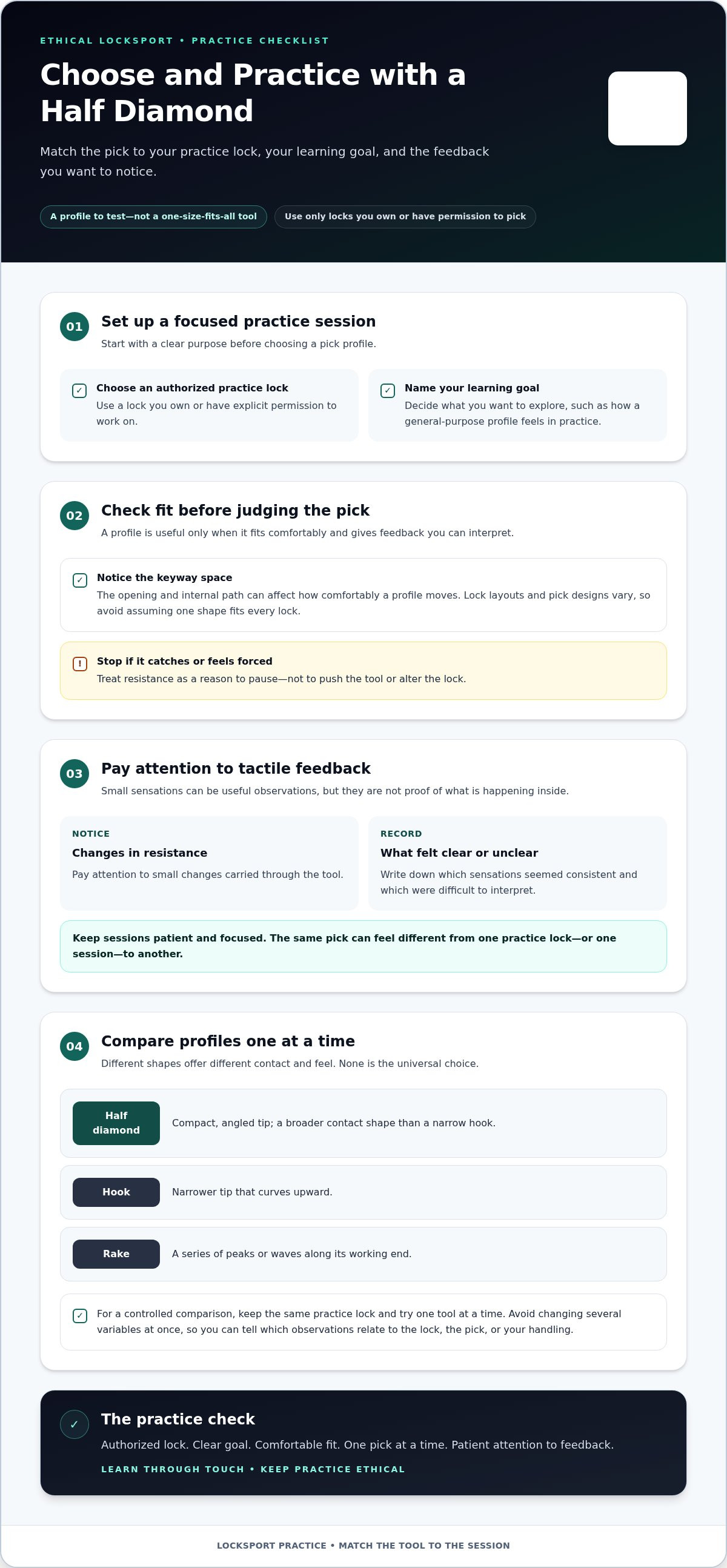
How to Choose and Practice with a Half Diamond Pick Responsibly
A useful practice session starts before a pick reaches a lock. Choose a lock set aside for locksport, decide what you want to observe, and treat comfort and feedback as the measures of fit. This keeps tool selection focused on learning rather than on forcing a result. If you’re working out when to use a half diamond pick, let your practice goal and the lock’s design guide the decision.
A beginner-friendly practice checklist
Keep the session simple. Use the checklist below to assess whether this profile feels appropriate for your practice setup. The goal is to notice fit and comfort, not to follow a method for opening a lock.
- Select a dedicated practice lock. Use one you own or have explicit authorization to use for locksport. Choose a familiar practice lock so you can focus on the tool’s feel rather than introducing several unknowns at once.
- Set a modest learning goal. For example, focus on whether the half diamond feels comfortable to guide, or compare its feel with another pick profile. Keep the goal observational and specific.
- Check for comfortable fit. The tool should not need to be forced or bent to sit in the keyway. If it binds or feels crowded, stop and choose a more suitable practice tool or lock.
- Notice feedback over time. After a short session, record which sensations felt understandable and whether those cues seemed consistent. Compare notes across sessions rather than judging a profile from one attempt.
Ethical use and basic tool care
Permission comes first. Practice only on locks you personally own or are explicitly authorized to use for locksport. If you’re unsure what rules apply to your situation, check the relevant local requirements before practicing. Keeping that boundary clear helps protect the hobby’s respectful, community-minded spirit.
Before each session, inspect the pick for visible bends, cracks, or other signs of wear. Stop if it bends, binds, or appears damaged; don’t force it through a lock. Put tools away in an organized place after practice so they remain easy to inspect and less likely to be damaged or misplaced. A pause to check your equipment is part of careful practice, not lost time.
Keep your notes practical: name the practice lock, record the profile you tried, and describe whether the fit and feedback felt clear or uncertain. That record can help you spot preferences without assuming one pick will suit every lock. It also gives you a better basis for choosing tools as your locksport skills grow.
If you’re building a set for continued, ethical practice, explore the Carbon Fiber Gen 2 Pro Series as one tool-set option to consider.
Build Your Locksport Toolkit as Your Skills Progress
A half diamond can remain one option in your toolkit, but it isn’t a required upgrade. Let your practice goals guide what you add. As your experience grows, you may find another profile better suited to a particular lock or skill. Build a considered set, one useful choice at a time.
Match tools to a learning goal
Before adding a pick, identify the skill you want to practice and choose an owned or explicitly authorized practice lock suited to that goal. Consider comfort and whether the tool’s feedback is easy for you to interpret. A guide to lockpicking belt levels can help put each milestone in context, but a belt represents progression, not a product recommendation. No pick set guarantees a rank or outcome.
The Carbon Fiber Gen 2 Pro Series is one pick-set option to consider for continued practice. Choose tools to support your learning goals, not as a shortcut to a belt rank.
Continue the challenge one practice milestone at a time
The free Black Belt Challenge offers a community path for progressing through belt ranks. Joining starts an email sequence, and participants can earn reward picks as they advance and share their progress using Lockpick Pros tools. Posting picks-in-action content also contributes to the social reach goal, tied to a $5,000 bounty.
Take the next step at your own pace: join the challenge, work toward one belt milestone, choose tools that suit your practice, and share your progress. Keep your participation ethical and focused on locks you own or have explicit permission to use. Each thoughtful session moves your skills forward.
Choose Your Next Practice Milestone
Let your next practice session answer a useful question: what do you want to understand better? You might compare how a familiar, authorized practice lock feels with different pick profiles, or focus on choosing tools that feel comfortable to handle. A few clear notes can help turn those observations into a thoughtful next step. That’s a practical way to decide when to use a half diamond pick without assuming it belongs in every session.
As your locksport skills develop, let curiosity guide your toolkit. Add a tool when it supports a learning goal, not simply because you’re moving toward another belt. Lockpick Pros focuses on precision tools for ethical lockpickers, including the Carbon Fiber Gen 2 Pro Series as an option for continued practice.
Explore the Carbon Fiber Gen 2 Pro Series and choose tools that fit the practice you want to do next. Keep learning one milestone at a time, and enjoy the progress you earn through patient, responsible locksport.
Frequently Asked Questions
Is a half diamond pick suitable for a beginner?
Yes, a beginner can try one as part of learning how different pick profiles feel. Before practice, hold it alongside another profile and notice which handle position feels natural to you. The question of when to use a half diamond pick can then be tied to a specific learning goal, such as comparing tool comfort, rather than expecting the shape itself to make practice easier.
Can a half diamond pick fit every practice lock?
No. A pick’s compatibility depends on the lock’s mechanism and keyway, so one profile won’t suit every practice lock. A pin-tumbler lock and a lock built around a different mechanism present different conditions for tool fit. Identify the kind of practice hardware you have before choosing a pick, and don’t assume that a tool that feels suitable in one lock will suit another.
What should I do if a half diamond pick feels difficult to control?
Pause and practice holding the tool away from the lock. Over a clear tabletop, adjust your grip until you can keep the handle steady without squeezing hard. You can also compare how the pick rests in your hand with another profile. If control still feels uncertain, set that pick aside for the session and return to it another time rather than forcing progress.
Can a half diamond pick be used with a wafer lock?
It can be suitable for some wafer-lock practice, but it isn’t a universal match. A wafer lock uses flat plates rather than the pin arrangement found in a pin-tumbler lock, and designs can differ. Use a half diamond only with a wafer practice lock you own or are explicitly authorized to use. If the mechanism or tool fit is unclear, choose a practice setup intended for that lock type.
How should I store and care for a half diamond pick?
Give the pick its own protected space in a case or sleeve so its tip doesn’t rub against other tools. After handling, a soft, dry cloth can remove fingerprints before storage. Keep it away from loose items that could press against the tip, and avoid trying to reshape it if it becomes bent. A consistent place for each profile also makes it easier to find the right tool for a session.
Do I need a half diamond pick to progress in locksport?
No. A half diamond isn’t a required step in locksport progression. Belt advancement reflects demonstrated skill, not ownership of one particular pick. Build a toolkit around the practice locks and learning goals you choose, and add profiles only when they serve a clear purpose. A simple record of the skills you’re working toward can help keep tool choices intentional without turning each new milestone into a shopping list.
What is the difference between a half diamond pick and a hook pick?
A half diamond has an angled, compact end, while a hook’s end curves upward into a narrower point. To distinguish them when sorting a set, look at the tip’s outline against a plain background: the half diamond has a sloped face, and the hook has a curved rise. Those profiles offer different points of contact, so neither shape should be treated as the default for every practice goal.