

How to Hold Lock Picks Correctly: The Ultimate Guide to Grip and Feedback
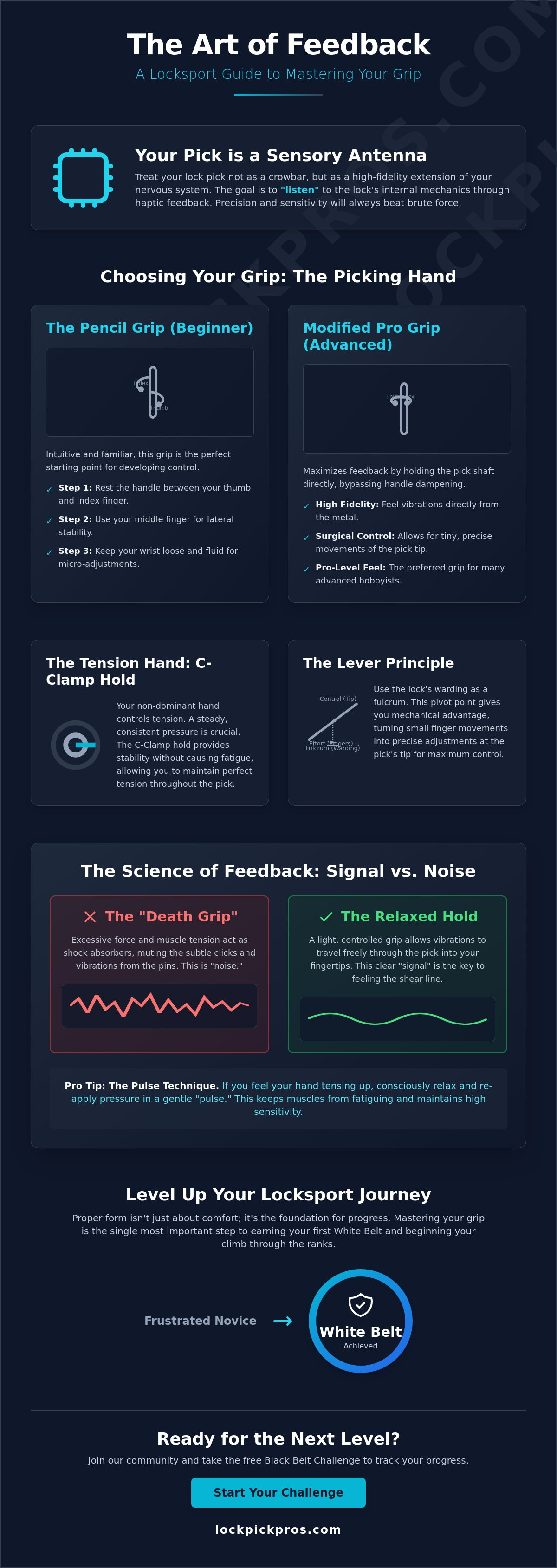
Your lock pick isn't a crowbar; it's a high precision sensory antenna designed to translate the tiny clicks of a pin stack into a language your brain can understand. If you've spent ten minutes wrestling with a practice lock only to end up with hand cramps and a bent pick, you're not alone. Most beginners struggle with excessive force because they haven't learned the "science of feedback" yet. Learning how to hold lock picks correctly is the single most important step in moving from a frustrated novice to a skilled hobbyist.
We know how it feels when the pins seem completely silent and your fingers start to fatigue. This guide will help you master the fundamental grips used by locksport professionals to increase sensory feedback and start your journey toward your first belt rank. We'll explore the mechanics of the fulcrum, the benefits of the modified pen grip, and how to develop the light touch required to feel the shear line with total confidence.
Key Takeaways
- Learn why treating your pick as a sensory antenna is the secret to feeling pin movement and mastering haptic feedback.
- Discover how to hold lock picks correctly by mastering the differences between the intuitive Pencil Grip and the high-performance Modified Professional Grip.
- Master the ergonomics of your non-dominant hand using the C-Clamp hold to maintain steady tension without hand fatigue.
- Identify the signs of a Death Grip and use the Pulse technique to keep your muscles relaxed for long practice sessions.
- Understand how proper form accelerates your journey through the locksport belt ranks, starting with your first White Belt milestone.
The Science of Feedback: Why Your Grip is Your Most Important Sensor
Think of your lock pick as a sensory antenna. It isn't just a piece of stainless steel or carbon fiber; it's a high-fidelity extension of your nervous system. When you insert a pick into a keyway, the tool translates the microscopic movements of pins and springs into vibrations you can feel in your fingertips. If you want to master the art of locksport, learning how to hold lock picks correctly is your first real challenge. Without the right grip, you're essentially trying to listen to a whisper in a crowded room with earplugs in.
Ethical lockpickers understand that precision always beats power. In the world of locksport, we treat every cylinder as a puzzle to be solved rather than an obstacle to be defeated. This mindset shifts your focus from "forcing the lock open" to "interpreting the feedback." Haptic feedback is the primary communication between the lock and the picker. It tells you when a pin is binding, when it has reached the shear line, or if you've accidentally overset it. If you use too much force, you create "noise" that drowns out these critical signals.
Understanding the Shear Line through Touch
Your grip directly dictates how much information reaches your brain. When you hold a pick with a "death grip," your muscles tense up and act as shock absorbers, soaking up the very vibrations you need to feel. This mutes the distinct "click" of a set pin. A light, relaxed hold allows those tiny mechanical events to travel through the pick shaft and into your skin. Proper grip tension is a delicate balance. It must be firm enough to control the pick tip with surgical accuracy, yet loose enough to remain sensitive to the pin's resistance. Mastering lock picking techniques starts with this haptic awareness.
The Lever Principle in Locksport
Physics plays a massive role in every successful open. Your pick operates as a lever, and the warding inside the lock serves as your fulcrum. By resting the shaft of the pick against a piece of warding, you create a pivot point that gives you incredible control over the tip's movement. Your finger placement on the handle acts as the effort point of this lever. If your fingers are too far back, you lose control; if they're too far forward, you lose leverage.
To maximize this mechanical advantage, many hobbyists upgrade to tools with superior tactile properties. High quality equipment, such as the Carbon Fiber Gen 2 Pro Series, is designed to be lightweight and rigid, ensuring that no feedback is lost in a flexible handle. When your grip and your tools work in harmony, the lock begins to feel transparent.
- The Signal: Micro-vibrations from pin movement.
- The Noise: Muscle tension and excessive pick pressure.
- The Goal: A relaxed hand that "hears" the internal mechanics of the lock.
Choosing Your Style: The Pencil Grip vs. The Modified Professional Grip
Finding the right physical connection to your tool is the next step in your locksport journey. While there are many ways to approach a keyway, most enthusiasts gravitate toward two primary styles. Understanding how to hold lock picks correctly often starts with the familiar and evolves into the precise. Before you start tensioning, make sure you've checked out our guide on how to choose your first practice lock to ensure you have the right hardware for your skill level.
Mastering the Pencil Grip
The Pencil Grip is the most intuitive starting point for White Belt beginners. It feels natural because it mirrors the way we've been taught to write since childhood. This familiarity helps reduce the initial intimidation of handling specialized tools. Consistency is key here.
- Step 1: Place the handle in the "crook" of your hand, nestled between the thumb and the base of your index finger.
- Step 2: Secure the handle with your middle finger. This provides vital lateral stability, preventing the pick from wobbling as you navigate the warding.
- Step 3: Keep your wrist loose. Rigidity is the enemy of progress; a fluid wrist allows for the micro-adjustments needed to find that elusive shear line.
The Professional Modified Grip
As you progress, you might find that traditional handles dampen the vibrations you're trying to feel. This is where the Professional Modified Grip shines. Many experts, as noted in MIT's detailed guide to lock picking, suggest placing the index finger directly on the pick's metal spine. By bypassing the handle material, you create a direct line of communication from the pin to your nerve endings. This style is exceptionally effective when paired with high-feedback tools like The Trainee 2.0. It offers superior sensory range, though it may take a few sessions to build the necessary finger dexterity.
The material of your pick handle also dictates which grip works best. Steel handles are durable but can be heavy, sometimes requiring a firmer Pencil Grip for stability. Carbon fiber is a game changer for the locksport community. Because it's so rigid and lightweight, it transmits energy much more efficiently. This allows you to use a lighter touch with the Modified Grip without losing control. If you're looking to upgrade your tactile experience, the Carbon Fiber Gen 2 Pro Series offers a perfect balance of strength and sensitivity for those pursuing higher belt ranks.
The Tension Hand: Ergonomics of the Non-Dominant Hand
The pick hand usually gets all the glory, but in the locksport community, we know that tension is 90% of the game. You can have the most expensive carbon fiber tools in the world, but if your non-dominant hand is out of position, you'll never truly master how to hold lock picks correctly. Your tension hand provides the resistance that allows the pins to bind. It acts as the "brakes" and "gas" of the lock cylinder. If you're struggling to feel anything, the problem usually isn't your pick; it's how you're managing the tension wrench.
One of the most common complaints from new pickers is that their hand cramps after just five minutes of practice. This almost always stems from a "death grip" on the lock body. When you squeeze the lock too hard, you're using small muscle groups that aren't designed for sustained endurance. Instead, focus on the "C-Clamp" hold. Secure the lock body in your palm and use the natural arch of your hand to provide stability. This allows you to relax your grip while maintaining a solid base for your pick to work against.
Securing the Lock Body
For those starting with padlocks, cradling the lock in your palm is a foundational skill. While using a vise is popular for high-security locks, hand-holding builds a much deeper connection to the feedback. You'll feel the entire lock body vibrate when a pin sets. Just be careful to avoid "finger-blocking." This happens when your grip accidentally puts pressure on the back of the cylinder or the plug, preventing it from turning even when the pins are correctly set. Keep your fingers on the outer housing only.
Tension Wrench Finger Placement
Your index finger is your most precise tool for controlling rotation. For Top of Keyway (TOK) tension, which is preferred for intermediate and advanced locks, you should only use the "weight of a feather." Rest the tip of your index finger on the very end of the wrench. This maximizes your leverage and sensitivity. If you're using Bottom of Keyway (BOK) tension, common in many beginner practice locks, you can sometimes use your middle finger or even your knuckle to hold steady pressure.
Always aim to maintain a 90-degree angle between the tension wrench and the pick shaft. This spatial relationship ensures that your tools don't collide inside the keyway. It also keeps your hands in a neutral, ergonomic position. By aligning your hands this way, you reduce the risk of fatigue and keep the "communication lines" open between the pins and your brain. Remember, a relaxed hand is a sensitive hand. If you feel tension building in your forearm, stop, shake out your hands, and reset your form.
Avoiding the Death Grip: Troubleshooting Common Fatigue
Fatigue is the primary reason most beginners quit a practice session before they've made any real progress. If you find yourself sweating over a simple four pin cylinder, your grip is likely the culprit. Learning how to hold lock picks correctly isn't just about getting the lock open; it's about being able to practice long enough to actually learn the skill. Your initial pick set selection significantly impacts your ergonomic comfort. A handle that is too thin or poorly shaped will force your hand into a cramped position, whereas a well designed tool encourages a light touch. If you are just starting out, make sure you have the right tools for the job by reading our guide on How to Choose Your First Beginner Lock Pick Set: The Ultimate 2026 Guide.
The "Pulse" technique is a favorite among the locksport community to combat this. Every 30 seconds, consciously release all tension from both your pick and tension hands for a split second. Shake your fingers out and reset your grip. This prevents your muscles from locking into a static position, which is where the "Death Grip" begins. This simple reset clears the sensory "noise" and allows you to refocus on the haptic feedback coming from the pins.
Signs You Are Gripping Too Hard
White knuckles are the most obvious warning sign, but there are more subtle markers to watch for. If you can't feel "counter-rotation" when you hit a spool or serrated security pin, you're likely over-tensioning. Physical markers like sore thumb pads or deep indentations on your index finger mean you're using force to compensate for a lack of technique. Pick durability is directly linked to grip lightness. If you find yourself frequently bending picks, you are definitely holding them too tightly.
Ergonomic Exercises for Pickers
To maintain peak performance during long locksport sessions, try the "Finger-Tip Tap." Briefly lift your fingers off the pick handle and tap them against the metal to regain tactile sensitivity. Simple wrist rotations between locks can also prevent the onset of carpal tunnel symptoms. Handle thickness also matters; if you have larger hands, using a pick with a thin, bare metal handle will cause you to cramp much faster than one with an ergonomic grip. Proper tool selection is the first step toward pain free practice.
If you're ready to move past the frustration of hand cramps, upgrading to tools designed for feedback can make a world of difference. To experience maximum sensitivity with minimal effort, we recommend the professional-grade Carbon Fiber Gen 2 Pro Series. These picks are engineered to transmit every click directly to your fingertips without requiring a heavy hand.
Leveling Up: Earning Your White Belt with the Right Form
Mastering the physical mechanics of your tools is the gateway to the official locksport belt ranking system. In our community, progression is more than just a hobby; it's a journey of skill refinement. By applying what you've learned about how to hold lock picks correctly, you'll find that the transition from a frustrated beginner to a White Belt holder happens faster than you expect. Proper form ensures that every minute of practice translates into muscle memory, preparing you for the technical challenges of higher tiers like the Yellow and Orange ranks.
The leap from a White Belt to a Yellow Belt is where your grip truly gets tested. While White Belt locks usually feature standard pins, Yellow Belt locks introduce security pins like spools. These require you to feel "counter-rotation," a subtle backward movement of the plug that you'll miss entirely if you're using a heavy-handed grip. Upgrading to the Carbon Fiber Gen 2 Pro Series rewards a refined touch, as the rigid material transmits these tiny feedback signals with incredible clarity.
Your First White Belt Session
To earn your first rank, you must master the fundamentals on a foundational cylinder. Here is the technical breakdown for your first session using The Trainee 2.0 practice lock:
- The Hardware: This lock features a 5-pin stack consisting entirely of standard pins. There are no security pins, making it the perfect environment to practice identifying binding order without the "noise" of false sets.
- Step 1 (Tension): Insert a Bottom of Keyway (BOK) tension wrench. Apply light, consistent pressure. You only need enough force to stop the pins from falling back down once they are set.
- Step 2 (Pick Choice): Select the Short Hook from your set. This tool provides the best reach for individual pins in a standard 5-pin keyway.
- Step 3 (The Process): Gently probe from pin 1 to 5. Find the "binding" pin that feels stiff. Lift it until you hear a clear click, then search for the next binding pin.
- Step 4 (Documentation): Record your "pick-in-action" content. Documenting your first successful open allows you to join our community bounty program and claim your rewards.
The Path to Black Belt Mastery
As you progress toward advanced ranks, your grip will continue to evolve into a more delicate, surgical style. Expert pickers often switch to ultra-thin, high-precision tools like the Gen 2 Pro Max Stealth Edition. These tools require a "feather-touch," where the slightest pressure from your index finger can mean the difference between a set pin and a dropped stack. Remember that with great skill comes great responsibility. Ethical lockpickers only pick locks they own or have explicit permission to use.
The ultimate goal for many in our community is the Black Belt. We invite you to join our free Black Belt Challenge. This program guides you through each tier, encouraging you to upgrade your tools as your skills sharpen. By sharing your progress and hitting social reach goals, you can earn rewards while helping us grow the sport. Start today, refine your grip, and join the elite ranks of the locksport world.
Master Your Grip and Start Your Ranking Journey
Mastering the physical connection between your hand and the lock is the first real victory in locksport. You've learned that your pick is a sensory antenna, not a tool for force. By balancing the ergonomics of your tension hand with a relaxed, professional grip, you've set the stage for rapid progression. Understanding how to hold lock picks correctly is what separates those who struggle from those who consistently feel the satisfying click of a set pin.
Now it's time to put that theory into practice. Our Pro Series tools feature precision carbon fiber engineering designed to maximize the haptic feedback you need for higher belt ranks. These tools are used by ethical lockpickers worldwide; we also offer a satisfaction guarantee on all Pro Series equipment to ensure you have the best experience possible. Are you ready to earn your first belt?
Join the Black Belt Challenge and Get Your First Pro Set. We can't wait to see your "picks-in-action" posts as you climb the ranks. Keep practicing, stay relaxed, and enjoy the challenge of the open.
Frequently Asked Questions
Is there a specific way to hold a lock pick for left-handed people?
Lefties should mirror the standard professional grips, using their left hand for the pick and their right hand for tension. Most lock cylinders rotate clockwise for opening; therefore, left-handed pickers often find Top of Keyway tensioning more ergonomic. This setup allows for a natural pulling motion with the right index finger while the left hand executes the precise picking movements. The core principles of feedback remain identical regardless of your dominant hand.
Why do my fingers start to go numb while I'm picking a lock?
Finger numbness is a clear indicator of the "Death Grip" or poor ergonomics during a session. When you squeeze the handle too hard, you compress the nerves and restrict blood flow to your fingertips. This kills your ability to sense haptic feedback. Use the Pulse technique mentioned earlier; reset your hand every 30 seconds to keep your muscles relaxed and your senses sharp for the pins.
Can holding a lock pick incorrectly cause the tool to snap?
Yes, improper grip is the leading cause of bent or snapped tools in the locksport community. If you don't understand how to hold lock picks correctly, you'll likely use the pick as a pry bar rather than a lever. This puts immense stress on the thin neck of the tool. A light, refined grip ensures you're only applying enough pressure to lift the pins, not fight the warding.
How much pressure should I actually be applying with my tension wrench?
You should apply the absolute minimum pressure required to bind a single pin. This is often described as the weight of a feather or the pressure needed to hold a piece of paper against a wall. For Top of Keyway tension, your finger should just barely rest on the wrench. If your tension finger is turning white, you're using far too much force for a standard pin stack.
Should I hold the pick handle or the metal shaft for better feedback?
Holding the metal spine of the pick provides the most direct haptic feedback. This Modified Professional Grip allows vibrations to travel directly into your skin without being dampened by handle materials. However, if you're using high quality Carbon Fiber Lockpicks, the handle material is rigid enough to transmit those signals effectively. Beginners often start with the handle for better stability before moving their finger to the shaft for advanced locks.
What is the best grip for raking vs. single pin picking (SPP)?
Raking requires a looser, more fluid Pencil Grip to allow the pick to bounce over the pins. You want the tool to move rapidly with minimal resistance to scrub the pins into place. Single Pin Picking demands the surgical precision of the Modified Grip. By placing your index finger on the metal spine, you can navigate individual pin states and feel the specific click of a set pin with much higher accuracy.
How do I know if my grip is too tight while I'm practicing?
Your grip is too tight if you can't feel the plug move or if your hand begins to ache within minutes. Look for physical signs like indented skin on your fingers or a lack of counter-rotation when picking security pins. If the pick feels stuck or heavy inside the keyway, try the Finger-Tip Tap. Lightening your hold will immediately increase the amount of information you receive from the lock.
Does the material of the pick handle change how I should hold it?
Handle material significantly impacts your tactile experience and grip choice. Bare metal picks are thin and can be slippery; they often require a firmer hold that leads to faster fatigue. In contrast, Carbon Fiber Lockpicks are designed to be lightweight and extremely rigid. This material choice allows you to maintain a very light touch while still receiving crystal clear feedback from the pins, making it easier to maintain proper form.