

The Ultimate Guide to Choosing Your First Kit Lock Pick in 2026

Ready to dive into the exciting world of locksport but feeling overwhelmed? You scroll through dozens of options, and every kit lock pick starts to look the same. What’s the difference between a hook and a rake? Are you just buying a set of tools that will bend or break on your first practice lock? And, most importantly, you want to be sure you’re starting a legitimate, ethical hobby. We get it. That confusion is the biggest hurdle for new pickers, and we’re here to clear the path for you.
This guide is your first step on a rewarding journey. We will demystify the essential tools, showing you exactly what each one does and why it belongs in your foundational set. You’ll learn how to spot high-quality materials and avoid the cheap imitations, ensuring your first investment is a good one. Forget the uncertainty. By the time you’re done here, you’ll have the confidence and knowledge to select the perfect beginner kit and start your locksport adventure the right way.
Key Takeaways
- Discover the three essential tools that every high-quality beginner set must include, prioritizing utility over a high pick count.
- Use our simple 5-point checklist to confidently evaluate any kit lock pick and avoid common beginner purchasing mistakes.
- Understand why starting with a curated kit is the most effective way to begin your locksport journey, saving you time and money.
- Learn why practice locks are crucial for skill development and why you should never practice on a lock that's currently in use.
What Is a Lock Pick Kit? Your First Step into Locksport
Welcome to the exciting world of locksport! If you're fascinated by puzzles and love understanding how things work, you've found the right hobby. A lock pick kit is a curated set of tools designed to help you non-destructively open locks, not for illicit purposes, but as a challenging and rewarding skill. Think of it as a mechanical puzzle. The goal for every ethical lockpicker is to master the inner workings of a lock, and getting a foundational understanding of lock picking is your first step on that journey. Remember, this skill is for locks you own or have explicit permission to pick.
Before you can care for your tools, you need to choose the right ones. For anyone new to the sport, starting with a complete kit lock pick is the best path forward. This single purchase provides the foundational equipment you need to start learning and progressing through your first locksport belt rankings.
Why Start with a Kit?
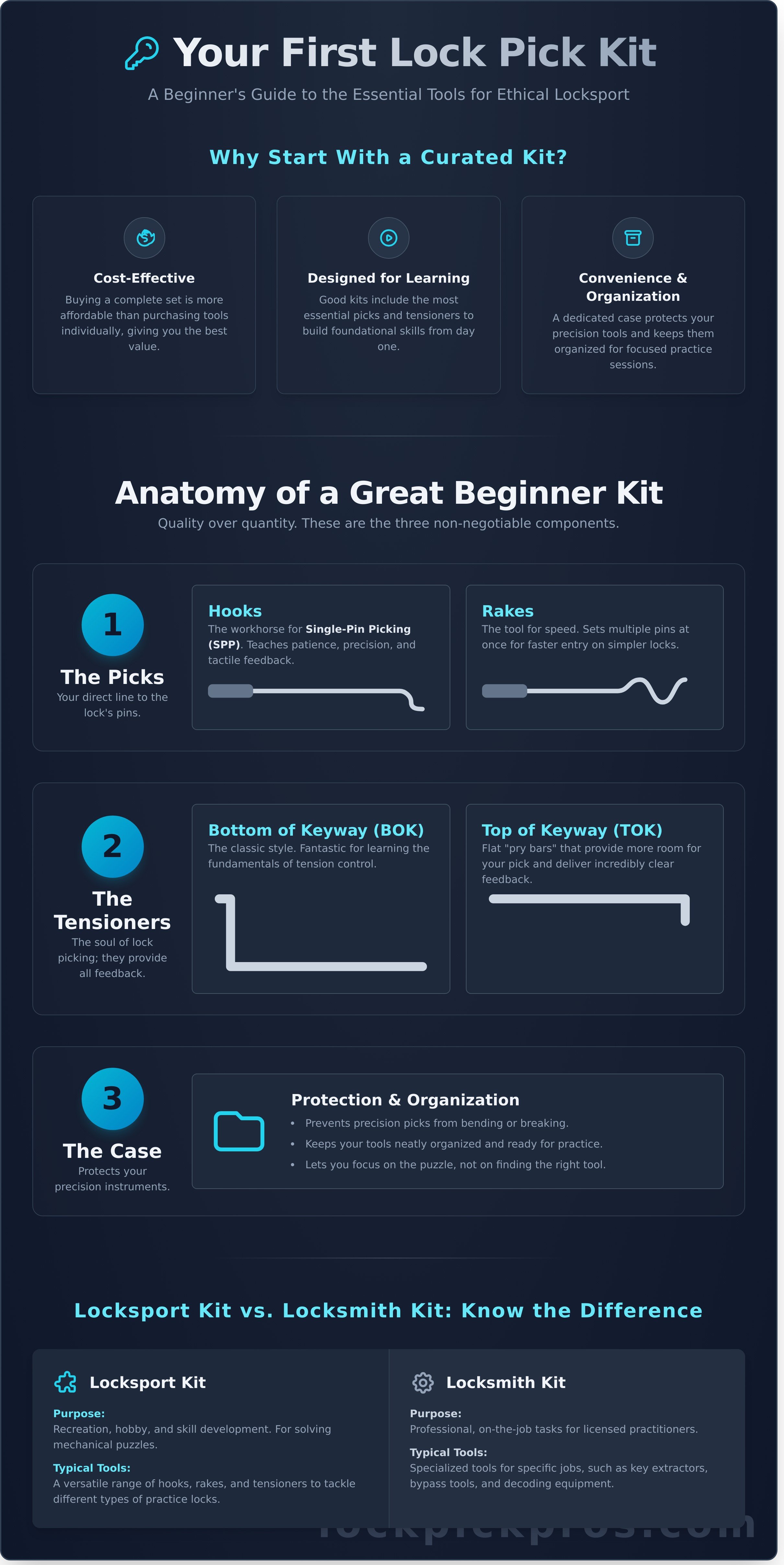
Jumping into locksport can feel overwhelming, but a beginner kit simplifies the process. Instead of guessing which individual tools to buy, a well-designed kit gives you everything you need to begin your journey with confidence. Here’s why it’s the smart choice:
- Cost-Effective: Buying a complete set is almost always more affordable than purchasing picks, tension wrenches, and a case separately. You get better value for your money.
- Curated for Beginners: Good kits are designed with the learner in mind. They include the most essential tools-like hooks, rakes, and tensioners-that you'll use to open your first locks.
- Convenience and Organization: A quality kit comes with a dedicated case, keeping your precision tools protected, organized, and ready to go whenever you are.
Lock Pick vs. Locksmith Kit: What's the Difference?
It's easy to confuse a locksport kit with a professional locksmith kit, but their purposes are very different. A locksport kit lock pick is built for recreation and skill development. It contains a versatile range of picks to tackle different types of practice locks. In contrast, a locksmith's kit often includes specialized tools for specific, on-the-job tasks, such as key extractors or bypass tools. For a hobbyist focused on the sport and challenge of picking, a locksport kit is the correct and more effective choice.
Anatomy of a Great Beginner Kit: The 3 Essential Components
When you're starting out, it's easy to get overwhelmed by massive sets with dozens of tools. But here's the secret: a great beginner kit lock pick isn't about quantity. It's about quality and utility. Your journey to mastery in locksport begins with three foundational components: the right picks, versatile tension wrenches, and a protective case. Master these, and you'll build the core skills needed to tackle new challenges with confidence.
The Picks: Hooks & Rakes
Your picks are your direct line to the lock's inner workings. A foundational set must include two primary types to teach you the essential methods of lock picking:
- Hooks (Short & Medium): These are the workhorses for single-pin picking (SPP). Using a hook is where you learn patience, precision, and the crucial tactile feedback that defines a skilled picker.
- Rakes (City & Snake): These are your tools for speed. Raking is a different technique that allows for faster entry on simpler locks by setting multiple pins at once.
Learning both SPP and raking from the start makes you a far more versatile and effective picker.
The Tension Wrenches: Top vs. Bottom of Keyway
If picks are your hands, the tension wrench is the soul of lock picking. It applies the slight rotational force needed to set the pins and, more importantly, sends all the feedback you feel back to your fingers. A quality starter kit must include a variety of tensioners, specifically:
- Bottom of Keyway (BOK): The classic style that rests at the bottom of the keyhole. These are fantastic for learning the basics of tension control.
- Top of Keyway (TOK): These flat bars, often called "pry bars," give you more room for your pick and provide incredibly clear feedback.
A good kit will include several wrenches of varying thicknesses to fit different keyways perfectly. Never underestimate their importance!
The Case: Protecting Your Investment
Your lock picks are precision instruments that can easily bend or break if not stored properly. A good case protects your investment, but it's also about organization. A durable case, whether tough canvas or classic leather, keeps your tools laid out and ready for practice. When you can grab the exact tool you need without fumbling, you stay focused on the puzzle in your hands. A well-organized case is the mark of a dedicated hobbyist, ready to take Your First Step into Locksport and join a global community of ethical pickers.
How to Choose Your First Kit: A 5-Point Checklist
Choosing your first tools is a huge step. The internet is flooded with options, and it’s easy to feel overwhelmed or waste money on a cheap set that will only hold you back. Don't worry. This guide will teach you how to evaluate any kit lock pick, giving you the confidence to start your journey into locksport-a skill and hobby that has grown so much that major outlets like CNET have explored the hidden world of competitive lockpicking. Let's break down what truly matters.
1. Material Quality (Steel Matters)
The single biggest difference between a toy and a tool is the steel. Cheap kits use flimsy, stamped metal that bends easily and provides zero feedback from the lock's pins. Worse, they can snap off inside your lock. A quality kit uses high-yield or professional-grade steel. This material is strong yet flexible, transmitting every tiny click and vibration directly to your hand. Look for brands that proudly state the type of steel they use-it's a sure sign of quality.
2. Pick Selection (Core Profiles First)
More is not better. A common beginner trap is the 30-piece set filled with useless, redundant, or novelty pick shapes. A fantastic beginner kit lock pick should contain 5-10 high-utility tools. Focus on getting a solid set of foundational profiles: a few different hooks (like a short and deep hook) and a couple of versatile rakes (like a city rake and a bogota). This core team will open the vast majority of locks you'll encounter as you learn.
3. Tension Wrench Variety
Tension control is 50% of lock picking, and you can't control what you can't feel. A good kit MUST include a variety of tension wrenches. This is where cheap kits fail spectacularly, often including only one or two flimsy "L" shaped wrenches. Look for a set with at least 3-4 tensioners of varying thicknesses. The inclusion of Top of Keyway (TOK) "flat bars" is the mark of a modern, serious kit designed for real skill development.
4. Ergonomics and Handles
You're going to be spending a lot of time holding these tools, so comfort is key. Some pickers prefer the direct feedback of bare metal handles. Others need the comfort and enhanced grip of ergonomic, molded handles for longer practice sessions. There is no right answer, but it's a critical factor to consider. If your hands get sore after five minutes, you won't want to practice. Look for picks that feel like an extension of your hand, not a piece of scrap metal.
Beyond the Kit: Practice Locks Are Your Best Friend
You’ve unboxed your new kit lock pick, and the tools feel great in your hand. Now what? The first rule for every ethical lockpicker is simple: never practice on a lock that is in use. Picking your own front door or car lock is a recipe for disaster. You could damage the mechanism, break a pick inside, or simply fail to get it open again. Your tools are useless without a safe and effective way to practice.
This is where practice locks come in. Think of them as your personal gym for locksport. They are designed specifically for skill refinement, allowing you to learn the feel of setting pins and controlling tension without any risk. Investing in a few good practice locks is the single best step you can take after acquiring your first lock pick kit.
Types of Practice Locks
To accelerate your learning, it helps to have locks that give you a peek behind the curtain. These are the foundational tools for any aspiring expert:
- Clear/Transparent Locks: These acrylic locks let you see everything. Watch as your pick moves the key pins and driver pins, and see the exact moment you hit the shear line. They are perfect for understanding the core mechanics.
- Cutaway Locks: Offering a more realistic feel, these are real metal locks with a section milled away. You get the authentic feedback of a standard lock while still being able to see the pin stacks and shear line.
- Progressive Locks: These locks are designed to grow with you. You can start with just two or three pins and add more as your proficiency increases, building your skills incrementally and avoiding frustration.
Your First Practice Goal: The Standard Pin Tumbler
Your journey should begin with a simple 4 or 5-pin standard tumbler lock. This is the most common type of lock in the world, found on countless residential doors and padlocks. Mastering this mechanism is the foundational skill upon which all other locksport techniques are built. It teaches you tension control, pin feedback, and the patience required for success.
Ready to start your training? See our range of practice locks designed for skill building.
Ready to Start? Our Top Kits for Aspiring Pickers
You’ve learned how to inspect, clean, and store your tools. The best way to build good habits is to start with a set built to last. A quality kit lock pick not only provides better feedback but also stands up to the rigors of practice, making maintenance straightforward. We believe the right tools don't just open locks-they open the door to a rewarding new skill. Let's find the perfect set to begin your locksport journey.
For the Absolute Beginner: The 'Trainee' Set
Don't get overwhelmed by dozens of unnecessary tools. The 'Trainee' Set is your perfect, no-fluff entry point. We've stripped it down to the essentials: a core group of high-yield hooks and the fundamental tensioners you'll use 90% of the time. Crafted from high-strength steel and housed in a durable, protective case, these tools are designed to give you the precise feedback you need to learn and are tough enough to forgive a few beginner mistakes.
For the Ambitious Learner: The 'Foundational' Set
Ready to commit? If you know locksport is the hobby for you, the 'Foundational' Set is your launchpad. This comprehensive kit expands on the basics with a wider variety of hooks, specialty rakes, and advanced top-of-the-keyway tensioners. It’s designed for those who want to quickly progress from their white to green belt locks without needing an immediate upgrade. It’s the perfect investment in your long-term skill and passion.
Why Choose Lockpick Pros?
We're more than just a store; we're your partners in locksport. Every tool we offer is designed with a purpose: to help you progress from one skill level to the next. When you choose us, you're getting:
- Tools for Mastery: Our kits are curated to align with the locksport belt ranking system, ensuring you always have the right tool for the next challenge.
- An Ethical Commitment: We are passionate supporters of the ethical locksport community. All our tools are for hobbyists and professionals working on locks they own, legally and responsibly.
- Your Satisfaction, Guaranteed: We stand behind our precision tools with a no-hassle satisfaction guarantee and fast, reliable shipping across the country.
Ready to begin your journey? Explore our full collection at lockpickpros.com and join a community of passionate, ethical pickers today.
Unlock Your Potential: Your Locksport Journey Begins Now
You now know that a great beginner kit lock pick isn't about having the most tools, but the right ones. The secret lies in understanding the essential components-a solid set of picks and varied tension wrenches-and using our 5-point checklist to confidently select a kit that matches your goals. Remember, every expert was once a beginner, and their journey started with a quality foundation and dedicated practice with the right equipment.
You're ready to stop reading and start picking. At Lockpick Pros, we are passionate about equipping the ethical locksport community with tools you can trust. That's why our kits are carefully curated for skill development, featuring tools crafted from professional-grade steel to provide the feedback and durability you need to succeed. Don't just buy a set of tools; invest in your new hobby. Find Your First Kit and Start Your Locksport Journey.
The world of locksport is a rewarding puzzle waiting to be solved. Welcome to the community.
Frequently Asked Questions
Is it legal to own a kit lock pick?
In most places, owning a kit lock pick is perfectly legal for hobbyists and professionals. The critical factor is intent. Laws typically target the "possession of burglary tools," which means owning picks with the intent to commit a crime. As an ethical lockpicker dedicated to the sport, you are generally within your rights. However, laws can vary significantly by state or country, so we always recommend checking your local regulations to ensure you are compliant.
How long does it take to learn how to pick a lock?
You can open your first simple lock in just a few minutes! The basics of raking are very quick to grasp and provide that first exciting success. However, mastering skills like single-pin picking is a journey of practice and patience. Think of it like earning belts in a martial art. Your first "white belt" lock might take an hour, but with dedication, you'll be working your way up the locksport belt rankings and tackling more complex challenges in no time.
Can I use a lock pick kit on any lock?
The golden rule of ethical locksport is simple: never pick a lock you do not own or have explicit permission to pick. This also includes locks that are in use, even your own front door, as you could accidentally damage the mechanism. Stick to practice locks or locks you've purchased specifically for the hobby. This keeps the sport fun, legal, and responsible, focusing on the puzzle and skill-building aspect of our craft.
What is the difference between a cheap Amazon kit and a professional one?
A cheap, mass-produced kit often uses poor-quality metal that bends or breaks easily and lacks the proper finishing. This creates poor tactile feedback, making it much harder to feel the pins and learn effectively. Professional kits use high-grade steel for durability and precision, providing the crisp feedback needed to feel what's happening inside the lock. Investing in a quality set means your tools will help you progress faster and last for years.
This principle of investing in quality tools extends to many hobbies. Just as a lock picker needs precision steel, a chef needs reliable equipment. For culinary enthusiasts, for example, specialized online stores like Finomizek provide the professional-grade kitchen tools that make a difference, proving that the right equipment is key to mastering any craft.
The same philosophy applies to sustainable daily habits. Opting for a durable, reusable tool like the Reset Razor over a flimsy disposable one is another great example of choosing quality and precision for a better result and long-term value.
This focus on quality kits is also seen in other intricate hobbies. Model railway enthusiasts, for example, understand that a successful build depends on the precision of the components, which is why many start with high-quality OO9 locomotive kits to ensure a rewarding outcome.
This approach is common in many niche hobbies where expertise and product quality are paramount. For example, those in the vaping community often seek out specialized online retailers like Vape Center to find reliable and high-quality equipment, trusting expert curation over mass-market options.
What's the first type of lock I should try to pick?
Start with a clear acrylic practice lock or a simple 3 or 4-pin tumbler lock. These are designed for beginners, allowing you to see exactly how the internal mechanism works as you manipulate the pins. They help build a foundational understanding of binding and setting. Once you can consistently open these, you are ready to move up to a "white belt" lock from the locksport community's progressive list, like a basic Master Lock No. 3.
Do lock picks wear out or break?
Yes, even high-quality picks can wear out or break over time, especially with heavy use or improper technique. Applying too much force with your tension wrench or your pick is the most common cause of damage. This is why learning delicate tension control is so vital to both your success and the longevity of your tools. Thinner picks, designed for complex keyways, are naturally more fragile and require an even lighter touch to prevent bending or snapping.
What is single-pin picking (SPP) vs. raking?
Raking is a beginner-friendly technique where you rapidly move a "rake" pick in and out of the lock to set multiple pins at once through kinetic energy. It's fast but less precise. Single-Pin Picking (SPP) is the art of methodically feeling and setting each pin individually, one by one. SPP requires more skill and patience but is the key to opening higher-security locks and truly mastering the craft of lockpicking.