

How to Use a Lock Bypass Tool: A Technical Guide
What if you could open that stubborn padlock without ever touching a single pin? It sounds like magic, but in the world of locksport, it's simply a matter of understanding mechanical vulnerabilities. We've all felt that specific frustration when a high-security lock refuses to yield, even after an hour of perfect tension and precise picking. You're ready to progress toward your next belt rank, but the pins aren't cooperating. Learning how to use a lock bypass tool allows you to stop fighting the internal logic of the cylinder and start exploiting the physical design flaws that the manufacturer overlooked.
You're going to master the mechanical shortcuts that separate a standard picker from a true locksport expert. This technical guide explains exactly which bypass tool matches specific lock types, ensuring you don't damage your favorite practice locks with improper technique. We'll walk through the mechanics of common padlocks and show you how to execute these shortcuts with precision. By the end of this article, you'll have the confidence to audit any lock's physical security and take a significant step forward in your journey toward mastery.
Key Takeaways
- Understand why bypassing targets a lock's physical output rather than its internal pin logic.
- Identify the correct tool for the job, focusing on padlock shims for spring-loaded latches and knife tools for geared mechanisms.
- Master the exact mechanical steps for how to use a lock bypass tool to successfully defeat common security vulnerabilities.
- Learn how to document your bypass techniques to earn community rewards and progress through the belt ranking system.
Lock Bypassing vs. Picking: Understanding the Core Difference
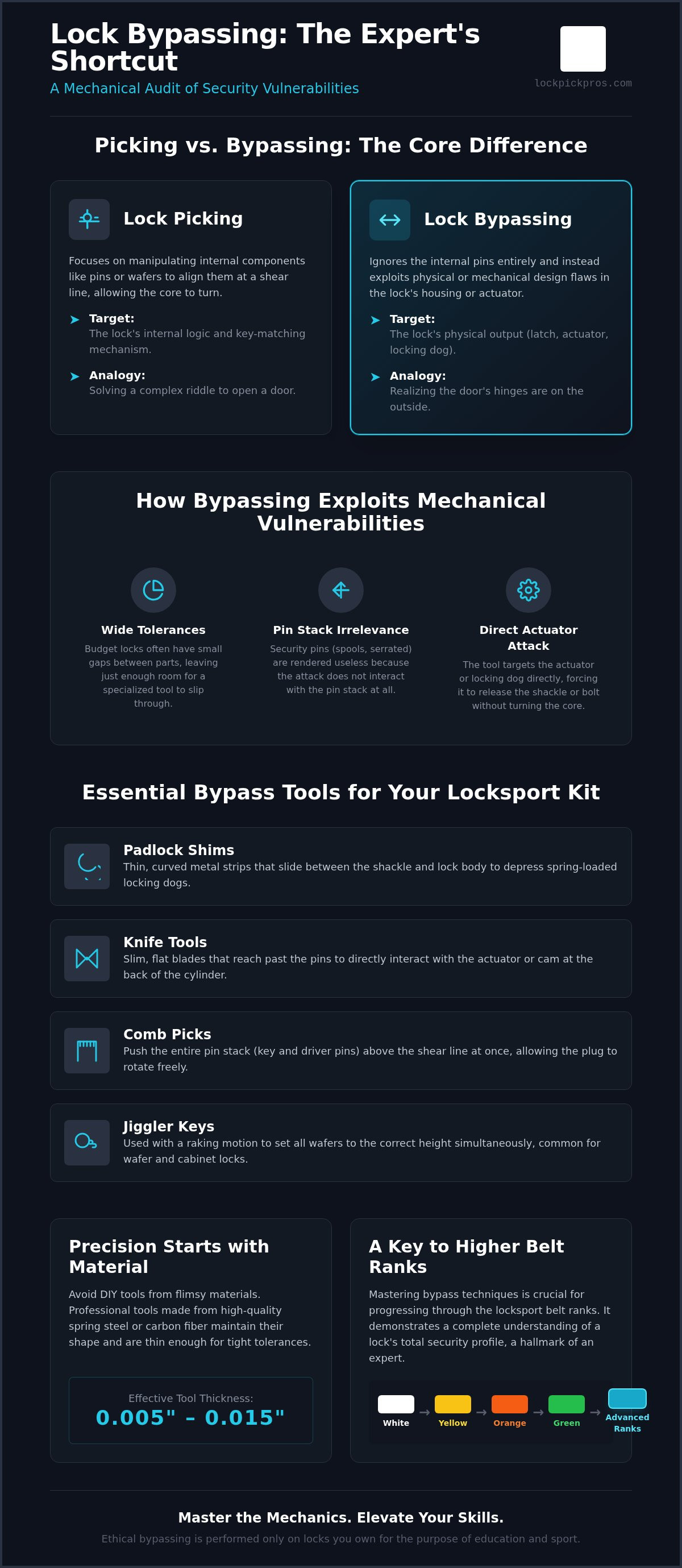
Lock bypassing is often misunderstood by newcomers as a "cheat code" for lockpicking. In reality, it's a sophisticated mechanical audit that every serious locksport enthusiast should master. While traditional picking focuses on manipulating internal pins or wafers to reach a shear line, bypassing ignores the "logic" of the lock entirely. Instead, you target the physical components that hold the lock shut. If picking is like solving a complex riddle to open a door, bypassing is like realizing the hinges are on the outside. Understanding how to use a lock bypass tool is a game-changer for your kit because it shifts your focus from the security of the cylinder to the security of the entire device.
Ethical lockpicking is built on a foundation of respect for the craft and the property of others. Bypassing techniques should only ever be performed on practice locks or equipment you own. This skill isn't about defeating security for illicit gain; it's about identifying the engineering flaws that make certain locks vulnerable. When you learn how to use a lock bypass tool, you develop a deeper appreciation for high-quality manufacturing and the evolution of security design. It's a critical part of becoming a well-rounded hobbyist who understands the mechanical "why" behind a lock's failure.
Why Bypassing Works: Mechanical Vulnerabilities
Most budget padlocks are built with wide manufacturing tolerances. These small gaps between the plug and the housing provide just enough room for a specialized tool to slip past the pins. In these cases, security pins like spools or serrated drivers become completely irrelevant. You aren't interacting with the pin stack at all. You're exploiting a physical shortcut directly to the actuator or the locking dog. High-security locks often include internal shields or much tighter tolerances specifically to prevent these attacks. Hunting for these vulnerabilities is a rewarding challenge that forces you to think like an engineer rather than just a picker.
The Role of Bypassing in the Belt Ranking System
Mastering these techniques is a key part of your progression through the community belt ranks. While early tiers like the White belt focus on foundational picking with sets like The Trainee 2.0, moving toward expert-level status requires a broader technical range. Demonstrating a successful bypass on a recognized lock can be a requirement for specific rank advancements. Using professional tools like those found in our Carbon Fiber Gen 2 Pro Series ensures you have the precision needed for these technical demonstrations. This mastery proves you understand the lock’s total security profile, which is a hallmark of a dedicated hobbyist on their journey of mastery.
Essential Bypass Tools for Every Locksport Kit
Building a versatile kit means looking beyond standard hooks and rakes. One of the first things you'll learn when studying how to use a lock bypass tool is that every mechanism has a specific physical weakness. Successful hobbyists don't just rely on one method; they carry a variety of tools to match the lock's design. Whether you're dealing with a spring-biased latch or a geared actuator, having the right tool makes the difference between a successful open and a frustrated afternoon.
- Padlock Shims: These are the bread and butter of bypass attacks. They consist of thin, curved metal strips designed to slide into the gap between the shackle and the lock body to depress the spring-loaded locking dog.
- Knife Tools: These thin, flat blades are designed to reach through the keyway and past the pin stack. They interact directly with the cam or actuator at the back of the lock to turn it without needing the correct key.
- Comb Picks: These tools feature multiple "teeth" that push the entire pin stack, both the key pins and driver pins, into the bible at once. This clears the shear line and allows the plug to rotate freely.
- Jiggler Keys: Often used for wafer locks found in cabinets or older vehicles, these tools use a raking and jiggling motion to set all wafers to the correct height simultaneously.
If you're looking to round out your collection with high-performance gear, consider the Carbon Fiber Gen 2 Pro Series for tools that stand up to repeated practice sessions.
Selecting Professional-Grade Materials
Precision starts with the right material. While you might see videos of people making shims from soda cans, these DIY versions often fail or get stuck. Professional tools use high-quality spring steel or carbon fiber. These materials maintain their shape while remaining thin enough to navigate tight tolerances. Most effective bypass tools fall between 0.005 and 0.015 inches in thickness. This range is the "sweet spot" for slipping past security shields without snapping the metal. High-quality tools provide the feedback you need to feel when you've successfully engaged the internal mechanism.
Specialty Tools for Advanced Tiers
As you climb the belt ranks, you'll encounter more complex security features that require specialized equipment. The Pro Series Expansion is designed for these advanced scenarios. You might find yourself using dimple picks to manipulate side-bar mechanisms or specialized wafer jigglers for high-security automotive practice. Visual identification is a skill you'll develop over time. Learning to spot an exposed actuator or a wide shackle gap helps you choose the right tool for the job. Mastering these advanced tools is a major milestone in your journey toward becoming an expert-level hobbyist.
The Mechanics of the Attack: How Bypass Tools Defeat Locks
Understanding the internal physics of a lock is what separates a lucky hobbyist from a skilled one. When you learn how to use a lock bypass tool, you’re looking for a path of least resistance that avoids the pin stack entirely. Each tool targets a specific mechanical failure point within the housing. By focusing on these weaknesses, you can often open a lock in seconds that might have taken minutes to pick pin-by-pin.
- Targeting the Latch: Spring-biased padlocks use a component called a "locking dog" to keep the shackle secure. A padlock shim slides into the gap between the shackle and the body, physically pushing the dog back. Once displaced, the shackle pops open instantly.
- Targeting the Cam: Knife tools exploit gaps at the rear of the plug. By reaching past the pins, the tool interacts with the cam or actuator. Turning this component retracts the locking pawls directly, ignoring the cylinder's logic.
- Targeting Driver Pins: Comb picks rely on "over-lifting." In vulnerable locks, the chambers are deep enough to hold the entire pin stack. The comb pick pushes both key and driver pins into the bible, clearing the shear line in one motion.
Success with these tools comes down to sensory feedback. You'll know you've seated the tool correctly when you feel a distinct "click" or a sudden drop in resistance. It’s a solid, mechanical engagement with the heart of the lock that feels much heavier than the subtle click of a single pin reaching the shear line. Mastering this "feel" is essential for knowing how to use a lock bypass tool effectively on different models.
Identifying Bypassable Locks
Not every lock is a candidate for a bypass. Common targets for your practice sessions include the Master Lock #3, basic budget brass padlocks, and older locker hardware. Look for visual cues like wide gaps around the shackle or an exposed locking cam visible through the keyway. Shielding is a design feature, such as a metal plate or internal collar, specifically installed to block tools from reaching these internal locking components. If you see a shield, you'll likely need to switch back to traditional picking.
Bypassing High-Security Features
As you climb toward higher belt ranks, you'll find that these shortcuts become less effective. Ball-bearing locking mechanisms are a perfect example. Because the bearings are held in place by a solid actuator rather than a spring, they are immune to traditional shimming. Most locks at the Green Belt level and above include anti-bypass features to force a technical pick. For a deeper dive into how these complex systems defend themselves, check out Mastering the Advanced Lock to see high-security mechanics in action.
Step-by-Step: How to Use a Padlock Shim Correctly
Turning theory into a successful open requires patience and a light touch. When you're learning how to use a lock bypass tool like a padlock shim, the goal is to displace the internal locking dog without binding the shackle. These spring-loaded latches are common on entry-level padlocks, making them the perfect starting point for your mechanical audit practice. Follow these steps to master the technique with precision.
- Step 1: Identify the locking side. Examine the shackle. Usually, one side is fixed and the other moves. The side that moves is where the locking dog engages. If both sides move, you'll need to use two shims simultaneously.
- Step 2: Insert the shim. Slide the curved part of the shim into the gap between the shackle and the lock body. Use the side with the larger opening to navigate the curve of the shackle easily.
- Step 3: Rotate the tool. Sweep the shim toward the center of the lock. You're trying to slide the thin metal between the shackle notch and the locking dog to create a clear path.
- Step 4: Manage pressure. Apply slight downward pressure on the shackle to take tension off the latch. Simultaneously, push the shim deeper into the mechanism until you feel it seat.
- Step 5: Pull open. Once the shim is fully seated and the dog is displaced, pull the shackle upward. The lock should pop open with minimal resistance.
Troubleshooting the Shim Bypass
It's common for the shim to feel stuck during your first few attempts. If it won't rotate, you might be hitting a security shield or simply caught on the edge of the shackle notch. Don't pull the shackle while trying to insert the tool; this creates tension that pinches the shim in place. Stop applying force if you feel the metal start to deform. A bent shim is less effective and can eventually snap. Retract the tool, reset the shackle, and try again with a lighter touch.
Using the Knife Tool on Geared Mechanisms
The knife tool requires a different approach since you're reaching through the keyway. Locate the very back of the lock, past the last pin in the stack. You're looking for the actuator or cam. You'll know you've found it when the tool feels like it's resting on a solid, moveable part rather than the springy resistance of a pin. Ensure the tool is fully seated before you attempt to turn it. For the best results in these technical scenarios, upgrade your kit with the Carbon Fiber Gen 2 Pro Series to ensure your tools have the necessary rigidity and precision for expert-level bypasses.
Join the Black Belt Challenge: Level Up Your Skills
Mastering how to use a lock bypass tool is just the beginning of your journey. The locksport community thrives on sharing knowledge and pushing the boundaries of what's possible. That's why we created the Black Belt Challenge. It’s the ultimate progression path for anyone serious about the sport. This challenge isn't just about opening locks; it's about documenting your growth and helping others learn the same mechanical shortcuts you've just mastered.
Our "share-to-earn" loop is designed to reward your dedication. When you post your successful bypass videos on social media, you aren't just showing off. You're providing a visual reference for the community. In return, you can earn exclusive rewards and discounts on future gear. We even have a community bounty for hitting specific social reach goals. It’s a great way to foster engagement and build a name for yourself among fellow ethical lockpickers.
Progression should be steady and ethical. Start at the White belt level and work your way up one tier at a time. This ensures you build a solid foundation before tackling the complex mechanisms found at the higher ranks. Each belt represents a new level of skill and a deeper understanding of security vulnerabilities. As you learn how to use a lock bypass tool on more advanced hardware, your technical vocabulary and physical dexterity will grow alongside your rank.
For those who find their interest in security systems expanding into professional aspirations, acquiring a brand identity like Elite Garage Door Service LLC can be a strategic move to enter the home maintenance and security market.
Upgrading Your Arsenal for Intermediate Tiers
As you move beyond the basics, your equipment needs to keep pace. The Carbon Fiber Gen 2 Pro Series is the ideal companion for your bypass tools. These picks offer incredible feedback, which is crucial when you're trying to feel the difference between a set pin and a mechanical actuator. The carbon fiber handles aren't just for show. They provide superior comfort for those long practice sessions where you're refining your technique for the Green Belt challenge. High-quality tools make a massive difference in your success rate as the locks get tougher and the tolerances get tighter.
Final Ethical Reminder
Being a part of the locksport community comes with a responsibility to uphold the highest ethical standards. Always follow the "Golden Rules" of our craft. Only pick or bypass locks that you own or have explicit, documented permission to use. Never use your skills on a lock that is currently in use, like your front door or a locker at the gym. If you break a practice lock, it’s a learning moment. If you break a lock in use, it’s a disaster. Become an ambassador for the ethical locksport community by teaching others the right way to enjoy this hobby. Your integrity is what makes this sport legitimate and respected.
Master the Art of the Mechanical Shortcut
You've now transitioned from a standard picker to a technical auditor of security. By mastering how to use a lock bypass tool, you've learned to spot the physical vulnerabilities that even high-security cylinders can't always hide. Remember that bypassing isn't about brute force; it's about precision and understanding the specific design flaws that leave a mechanism exposed. Whether you're sliding a shim into a budget padlock or using a knife tool on a geared actuator, your success depends on that subtle mechanical feedback you've practiced.
Ready to put your skills to the test and earn community recognition? It's time to Take the Black Belt Challenge with the Gen 2 Pro Series. Our tools are precision engineered for ethical hobbyists and trusted by professional locksmiths and service members alike. With carbon fiber handles designed for maximum feedback and comfort, you'll have the ultimate edge as you climb the belt ranks. Keep practicing, stay ethical, and we'll see you on the leaderboards. Your journey to mastery has only just begun.
Common Questions About Lock Bypassing
Is using a bypass tool considered 'cheating' in lockpicking?
Bypassing is a legitimate branch of the sport rather than a way to cheat. In the locksport community, we view these techniques as a mechanical audit of a lock's total engineering. While it doesn't replace the skill of single pin picking, it's a vital part of your belt ranking journey. Mastering these shortcuts proves you're a well-rounded hobbyist who understands physical design flaws alongside internal pin logic.
Can I use a bypass tool on any padlock?
Bypass tools are highly specific to the lock's internal design. A shim only works on spring-loaded latches, while a knife tool requires an unshielded cam to be effective. High-security locks often include anti-bypass features like internal shields or ball-bearing locking dogs to prevent these specific attacks. You must match your tool choice to the mechanical vulnerability of the lock you're practicing on to see results.
How do I know if my lock is shim-proof?
Check the locking mechanism for ball bearings to determine if it's shim-proof. If you see two spherical bearings holding the shackle in place, the lock cannot be shimmed. These bearings won't retract unless the internal actuator is turned, making it impossible for a thin piece of spring steel to displace them. Most padlocks at the Green Belt level and above use this design to defeat simple shimming attacks.
What is the best bypass tool for a beginner to start with?
A set of padlock shims is the perfect entry point for any trainee. They are affordable and provide immediate feedback on common budget locks like the Master Lock #3. Learning how to use a lock bypass tool like a shim helps you visualize the internal latching mechanism. Once you master shims, you can progress to more complex tools in your kit like knife blades, comb picks, or jigglers.
Are lock bypass tools legal to carry in my state?
Laws regarding locksmith tools vary significantly by jurisdiction. In most places, owning these tools is legal for hobbyists, but carrying them in public without a professional license can be interpreted as intent to commit a crime. Always research your local and state statutes before taking your kit outside your home. We advocate for keeping your practice strictly within your own workshop to stay safe and maintain your ethical standing.
Will a bypass tool damage my practice lock?
Improper technique can lead to scratches or a bent shackle spring if you aren't careful. If you apply too much force while a shim is caught, you might deform the metal or jam the locking dog. However, when used with a light touch and proper tension management, bypass tools are generally safe for your equipment. Always stop if you feel heavy resistance to avoid permanent damage to your favorite training locks.
What is the difference between a comb pick and a bypass tool?
A comb pick is a specific type of bypass tool that targets the pin stack height. While standard picks manipulate pins one by one, a comb pick pushes the entire stack above the shear line at once. It bypasses the logic of the key bitting by exploiting deep pin chambers. This method is a specialized sub-category of bypass that works on certain Master Lock and American Lock models.
How can I tell if a lock has a ball-bearing mechanism?
Shine a light down the shackle holes while the lock is open to spot the mechanism. You'll see round, silver bearings on one or both sides of the shackle path. Unlike a flat locking dog, these spheres cannot be pushed aside by a shim. Understanding this visual cue is a key part of learning how to use a lock bypass tool effectively, as it tells you when to switch back to picking.