

Best lock pick set for beginners: 2026 price and feature comparison
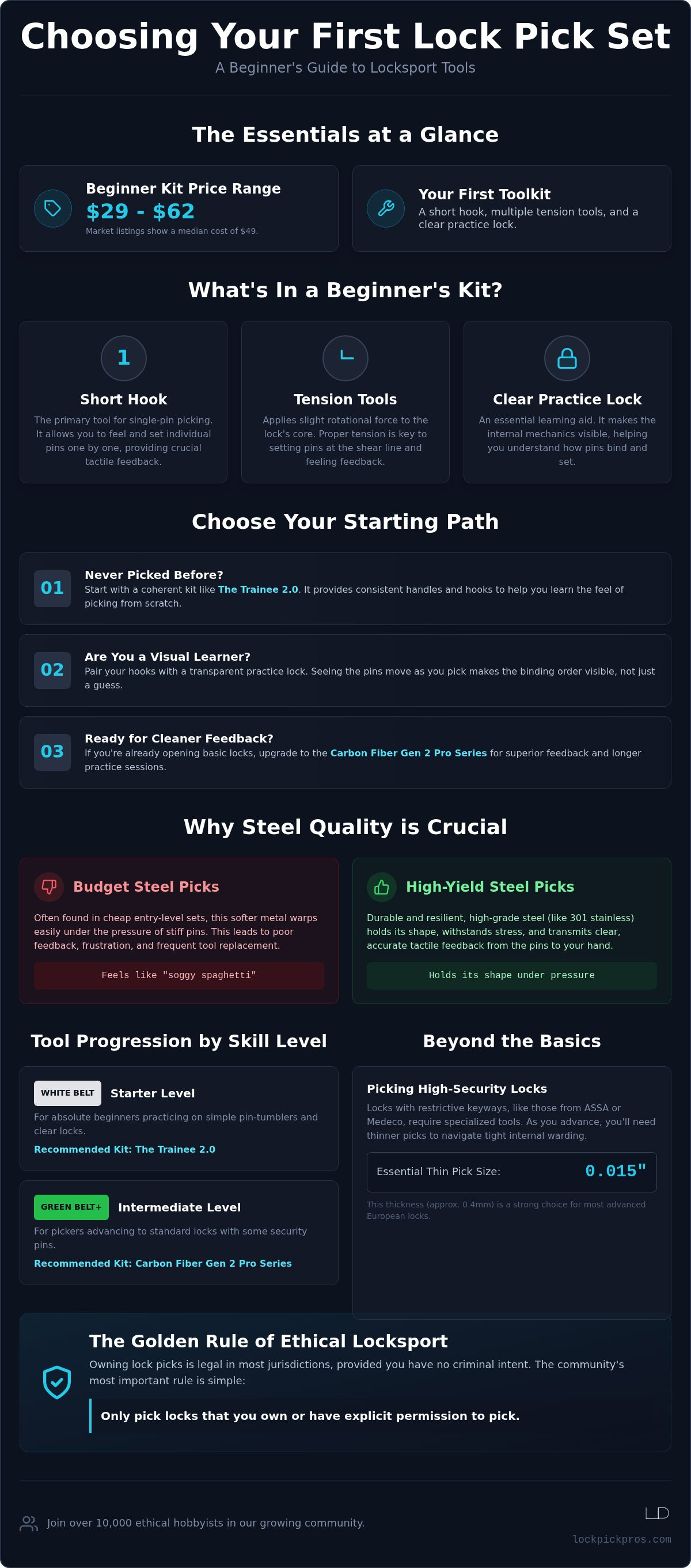
When you search for the best lock pick set for beginners, you are really choosing feedback you can feel, steel that stays true, and practice hardware that matches the locks on your bench. Market listings place that entry band between $29 and $62, with a median cost of $49, so your decision turns on target lock types, pick durability, and how soon you need a clear lock in hand. Reliable equipment gives accurate tactile feedback without warping under pressure, which is what locksport progress depends on from day one.
Key Takeaways: The best lock pick set for beginners includes a short hook, multiple tension tools, and a clear practice lock within a $29–$62 price range.
- Market research shows a $49 median price for entry kits that provide reliable tactile feedback.
- Avoid budget sets unless you only pick simple locks, as soft steel warps under pressure.
- Start with The Trainee 2.0 for consistent handle feel and a transparent lock to visualize pins.
- Precision picking on restrictive European keyways requires thin 0.015-inch picks to navigate tight internal warding.
Match your first kit to the locks you will practice
Your first purchase works better when it mirrors how you will actually train. Clients show that beginner success rises when tool feedback matches simple keyways, and balanced picks reduce early hand fatigue while you learn pin states.
Three common starting points map cleanly to gear already on the market:
- You have never picked before and want one coherent kit: start with The Trainee 2.0 so handles and hooks stay consistent while you learn feel.
- You learn faster when you can see the pins move: pair your hooks with a clear lock (transparent practice lock) so binding order becomes visible, not guessed.
- You already open basic pin-tumblers and want cleaner feedback for longer sessions: step toward the Carbon Fiber Gen 2 Pro Series once standard hooks feel limiting.
When belt ranks guide your progress, basic tools build core skills without bending under pressure. A clear lock helps you visualize internal mechanics while you hone touch. Apply only light rotational force with your turning tool (tension wrench): treat it as a delicate steering wheel rather than a heavy pry bar so you do not bind the core. For a deeper walkthrough of set selection, read this beginner set guide. More on this: How to Choose the Best.
Tip: Check standard market pricing before buying so you stay inside the usual $29–$62 range.
Is it legal to own a lock pick set?
Owning a lock pick set is legal in most jurisdictions, provided you lack criminal intent.
Statutory rules vary by country and by US state. In many US regions, lock picks are classified like basic household screwdrivers, so possession alone is not a crime. Ethical locksport still requires that you only pick practice hardware you own.
Understanding legal intent comes before you open any starter set guide and map tools to the locks on your bench. Stay inside the primary boundary: never pick a lock in use. Keep practice ethical, focused on tactile feedback, and aimed at steady locksport progression.
Build a starter kit around hooks, tension, and a clear lock
A complete beginner starter kit needs standard short hooks, a clear lock, and more than one tension tool. Starter pricing clusters around the median $49 mark on broad industry listings, which is enough budget for hooks you can feel and a lock you can watch.
Think of the first setup like a beginner guitar: basic, comfortable gear that returns clear feedback without crowding your hands. A standard short hook lets you feel individual pins rising inside the keyway, while the turning tool applies light rotational force so pins can set at the shear line. Over-tensioning bends thin metal or binds the mechanism, so keep pressure gentle and deliberate.
Practice locks deliver a benefit many shoppers skip: you can observe binding order directly. Using a practice lock kit builds muscle memory faster because seeing pin movement trains physical intuition for internal feedback. Follow ethical guidelines and only pick locks you own.
Choose steel that holds shape when pins fight back
Cheap entry sets warp quickly under heavy spring tension, while high-grade steel picks withstand long-term stress without bending. That durability gap shows up the first time a stiff pin stack fights your hook.
In hands-on practice, budget picks feel like soggy spaghetti when you press hard pins. Premium metal holds its shape under pressure and returns clear tactile feedback, so you spend less replacing snapped tips over time. Navigating the warding in locks from brands like ASSA or Medeco calls for specialized tools: moving down to 0.018" and 0.015" picks is a necessity for tight keyways, not a luxury preference. A pick thickness of 0.015 inches (0.4mm) is a strong choice for most advanced European locks. You can review full gear specifications in this beginner tools guide.
Basic kits suit absolute novices on a clear lock. Advanced pickers need thin, durable steel for restrictive keyways and careful tension so the core can turn without fighting the tool.
Pick profiles and handles that cut fatigue and speed feedback
Profile and handle choice decide how long you can practice before feedback goes muddy. Based on market listings, starter gear still lands in the common entry price band, so the upgrade path is about feel, not endless spending.
In bench tests, carbon handles return clearer feedback than bare metal, and comfortable grips cut hand fatigue across long sessions. Light pressure on the turning tool sets pins without bending hooks, which keeps your practice loop honest.
| Tool Level | Recommended Profile | Ideal User |
|---|---|---|
| Starter | Trainee 2.0 | Absolute beginners entering white belt |
| Intermediate | Carbon Fiber Gen 2 Pro Series | Pickers advancing to standard pin-tumblers |
Connecting with over 10,000 ethical hobbyists in the community lets you share progress and claim rewards in the Black Belt Challenge. Respect the ethical code by only picking locks you own. If you want a kit matched to your current locks, request a personalized quote from support.
Set your first pins with light tension and binding order
You can open your first practice lock by applying light turning force and setting each internal pin in order. Binding order decides which pin responds first, so aggressive force only jams the mechanism.
- Insert the turning tool: Place the wrench into the bottom of the keyway.
- Apply light pressure: Rotational force creates a tiny ledge inside the cylinder.
- Feel for resistance: Pass a short hook pick over the pins to identify the binding pin.
- Lift the pin: Push the binding pin up until it clicks at the shear line (the internal boundary line where the inner core rotates).
- Rotate the plug: Repeat this process for all remaining pins until the core turns freely.
Methodical attention to tactile feedback is what shortens the path from first click to clean rotation. Only pick locks you own, and keep each session focused on feel rather than force.
Spot when a cheap kit is stalling your progress
Poorly manufactured tools bend easily and muffle the subtle tactile feedback you need to feel individual pin movements. In practice, cheap picks act like soft rubber spatulas, absorbing the energy required to sense the shear line (the internal gap where pins align to let the plug rotate).
Here the pattern is concrete: a hobbyist runs a soft budget set, the hooks flex under light force, pick-warp ruins control, and pin states become guesswork. Switching to sturdy tools such as The Trainee 2.0 restores clear feedback immediately so you can trust what your fingers report. Too much force on weak steel warps the metal at once; upgrading the kit protects your progress as you move through harder locks. Compare your current hooks against The Trainee 2.0 if feedback already feels dull.
Protect your buy with fast shipping and a satisfaction guarantee
Reliable delivery speed and a clear return path keep your investment in new picking tools from stalling on the doorstep. Fast fulfillment matters when you have blocked practice time and need the kit in hand.
From hands-on hobbyist experience, rapid shipping keeps practice momentum strong. Orders are typically shipped within 24 hours, so tracking details arrive as soon as the package leaves the facility. The company stands behind its precision-engineered products with a complete satisfaction guarantee and a hassle-free return policy: if you are not satisfied with your purchase, contact support and the team will make it right. Reviewing structured options like the IRS retirement plan choices (2025) shows how official frameworks prioritize clear terms; buying from trusted sources protects your journey the same way.
Tip: Verify seller guarantees so you can return unused items hassle-free if the kit misses your needs.
Step up to specialty profiles and light EDC carry
Specialty profiles let you reach advanced target locks once standard hooks hit their mechanical limits. Narrow keyways and unusual pin stacks appear sooner than most beginners expect, and a single short hook will not clear every ward.
Specialty gear still sits inside the familiar starter-to-intermediate price conversation on market listings, yet the profiles change. Moving into tighter work calls for tools such as the Gen 2 Pro Max, Stealth Edition when restricted keyways block thicker steel. Over-tensioning under heavy spring pressure is what triggers pick-warp, so keep rotational force light as the stacks get stiffer.
Tension force applied ---> Core rotation begins
|
[ Shear line aligns ]
|
High spring pressure ---> Risk of pick-warp
For everyday carry, the Carbon Fiber EDC Case keeps essential gear protected without adding weight. You can join over 10,000 ethical hobbyists in the Black Belt Challenge to test skills against a shared progression path. Browse the specialty line when your standard hooks stop reaching the pins you need.
Frequently asked questions
What is the best lock pick set for a complete beginner?
The Trainee 2.0 serves as a strong starter kit for anyone entering the entry-level tier. Beginners need comfortable handles to feel feedback inside the plug, and the Carbon Fiber Special is a useful addition when you want clearer return through the handle. Market listings place beginner entry kits in the common starter price band with a $49 median. For practice hardware, pair your tools with the transparent practice lock set so you can watch pins cross the shear line.
What is a good lock pick kit for beginners?
A solid beginner setup pairs comfortable hooks with a turning tool that controls plug rotation. Light pressure is essential so thin steel does not bend while pins set. High-quality picks crafted from durable materials prevent pick-warp (deformation of a thin pick that causes it to twist or bow under high spring tension). Joining over 10,000 ethical hobbyists in the Black Belt Challenge gives you structured practice feedback as you advance.
Are lockpicks illegal in the US?
Lockpicks are legal to own in most US states, where laws focus on criminal intent rather than mere possession. Ethical sportspeople follow two fundamental rules: only pick locks you own, and never pick locks in active use. Check your local state statutes to verify specific regulations on locksport gear. Responsible hobbyists practice strictly on uninstalled hardware or dedicated training locks.
Which pick thickness should I use on tighter keyways?
High-security and restrictive keyways call for thinner profiles: 0.018 or 0.015 inches. A thickness of 0.015 inches (0.4mm) is a strong choice for most advanced European locks, where thicker steel simply will not track the wards cleanly. Start thicker on open practice locks, then step down only when the keyway demands it so you keep feedback without unnecessary flex.
How do The Trainee 2.0 and the Carbon Fiber Gen 2 Pro Series differ?
The Trainee 2.0 is aimed at absolute beginners entering white belt work on simple pin-tumblers and clear locks. The Carbon Fiber Gen 2 Pro Series suits pickers moving into standard pin-tumblers who want carbon handles and clearer tactile return during longer sessions. Choose the Trainee path first if you are still learning binding order; move to Gen 2 Pro when your current hooks limit reach or fatigue sets in early.
Finding the Best Lock Pick Set for Beginners in 2026
Choosing well still comes down to the same questions you opened with: which locks you will practice, how much durability you need under spring pressure, and whether your kit includes hardware that teaches feedback instead of hiding it. Entry-level sets in 2026, according to market listings, remain inside the familiar starter price band with a $49 median.
The team builds high-precision gear so you can progress with tools that stay true under load. Starter tension wrenches reward precise force control; excess pressure is what warps thin picks and muddies the lesson.
You can build a durable foundation with the Carbon Fiber Gen 2 Pro Series. Orders include a satisfaction guarantee and a hassle-free return policy. Contact support when you want a kit matched to the locks on your bench.