

How to pick a Brinks padlock with a lifetime warranty focus
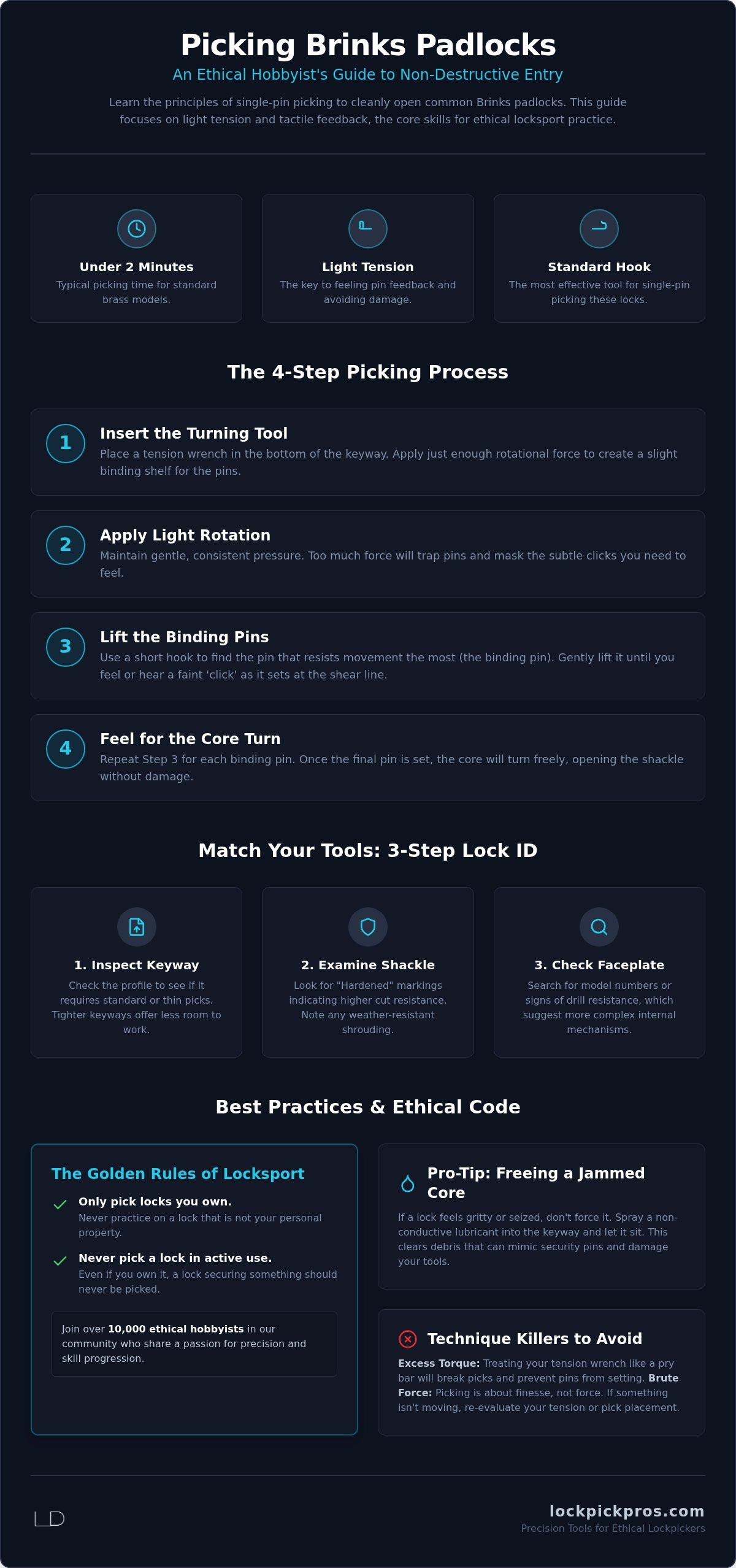
To pick a standard 4-pin Brinks padlock, apply light bottom-of-keyway tension with a turning tool (tension wrench) and feel for subtle binding clicks using a standard hook pick. Most commercial Brinks brass padlocks can be picked in under 2 minutes without causing mechanical damage. Ensure you only practice on locks you own to follow ethical locksport guidelines.
Key Takeaways: You can pick a Brinks padlock by applying light bottom-of-keyway tension and using a standard hook pick to lift individual pins until they click.
- Most commercial brass models are successfully picked in under 2 minutes without mechanical damage.
- Except when the core is seized by grit, which requires lubricant before picking attempts.
- Use single-pin picking for standard cylinders as the most reliable non-destructive entry method.
- The article notes that over 10,000 ethical hobbyists use these light-tension techniques for precision.
Match your Brinks model to the right tools in 3 steps
Categorize your padlocks by design type before selecting a single pick or tensioning tool. Skipping this step wastes effort on security pins you might not even have, so this quick check keeps your ethical locksport practice efficient.
Three situations show up often on the bench:
- A solid-brass storage locker padlock with a tight keyway: start with a standard short hook and light bottom-of-keyway tension.
- An outdoor laminated-steel perimeter lock: confirm hardened-shackle markings first, then use the same single-pin approach rather than forcing the core.
- An owned lock with a missing key: stay with single-pin picking on standard cylinders, and only consider a comb-style bypass after you verify chamber depth.
You inspect a solid brass cylinder resting on your workbench after picking it up from a hardware store. Your goal is to determine the exact internal layout before setting your key pins.
Identify your specific hardware using three steps:
- Inspect the keyway profile to confirm if it accepts standard hooks or requires thin picks.
- Examine the shackle material for hardened steel markings or weather-resistant brass shrouding.
- Check the faceplate for extra drill resistance or specific model stampings.
Brinks-branded locks span laminated-steel stacks through solid-brass and shrouded commercial bodies, so the faceplate and shackle cues above tell you which tool profile belongs in the keyway.
| Model Type | Key Mechanism Features | Common Application |
|---|---|---|
| Laminated Steel | Standard pin-tumbler stack | Outdoor perimeter security |
| Solid Brass | Tight keyway tolerances | Everyday storage locker |
| Commercial Shrouded | Heavy anti-cut shackle | High-value site protection |
You can find proper locksport gear for dedicated hobbyists who want to rank up ethically. More on this: Lockpick Pros.
When you have lost the key to a lock you own, choosing the correct tool prevents binding issues. A comb pick is a bypass tool, not a default Opener for standard security pins: it only works when the pin chambers are deep enough to lift the full pin stack above the shear line, so check clearance before you try one. Using a turning tool requires careful force management. Treat that turning tool as a steering wheel, not a pry bar, because excess pressure traps pins and masks core feedback. Steady light tension keeps binding order readable as you climb community belt rankings.
Pick a Brinks padlock cleanly with light single-pin control
You can pick a Brinks padlock without damage by applying light Manual control while individual pins are set, reading each subtle click instead of pushing past it.
- Insert the turning tool: Place a short flat tension wrench into the bottom of the keyway and hold only enough rotation to create a binding shelf.
- Apply light rotation: Maintain gentle rotational pressure on the plug so the binding pin stacks become distinct.
- Lift the binding pins: Insert a short hook pick to lift each binding pin until it aligns with the shear line.
- Feel for the drop: Keep applying steady force as the core turns freely, opening the shackle without leaving permanent marks.
Heavy spring pressure plus excess torque dulls tactile feedback and can bend a thin pick enough that you stop feeling true sets. For a non-destructive alternative on vulnerable models, learn padlock shim techniques for ethical practice.
When the key is missing on hardware you own, single-pin picking fits standard cylinders; a comb-style bypass only suits low-security designs whose chambers allow the full stack to rise above the shear line. Join over 10,000 ethical hobbyists in our growing community who share your passion for precision and climb the ranks through progressive skill tiers. Practicing this discipline means respecting the two golden rules of locksport: only pick locks you own, and never pick locks in active service.
Free a jammed Brinks cylinder before you set any pins
Applying picks to a mechanically seized lock can bend or snap your precision steel tools. Forcing a corroded core before clearing debris ruins your tactile feedback, so penetrating oil must sit inside the keyway for several minutes before you attempt to set any pin stacks.
Heavy keyway flushing clears binding grit that mimics security pin resistance. Spray non-conductive lubricant directly into the plug, then insert an old key to rake the internal components back and forth gently.
Over-applying force when a lock is physically stuck will deform the brass plug, so ease rotational pressure until the core moves freely again. Review Master Lock padlock picks to rebuild baseline tension control after a cleaning pass. Chemical cleaning removes superficial grime the way you would clear dirty window blinds before inspecting a frame, so you feel genuine mechanical resistance instead of packed grit. Clean first, then pick, and only on locks you own.
Skip brute force when a non-destructive bypass stalls
Destructive force ruins your practice locks and blocks the pin-manipulation skills you came to learn. Excess torque on a missing-key open distorts internal components long before the shackle yields.
Prying damages the plug and heavy force distorts delicate brass pins, which erases the feedback you need for clean sets. If a single-pin pick fails, and a comb bypass is not appropriate for the chamber depth you measured, reset the stack and return to light Manual pressure instead of drilling out the core.
We stand behind our precision-engineered products with a complete satisfaction guarantee, so you can push skill boundaries without defaulting to destructive methods. If you want to master delicate binding-order feedback without damaging your lock casing, compare a clear practice padlock with a cutaway during white belt training sessions. High-tension picking behaves like driving with the emergency brake engaged; gentle tension lets you feel true pin sets.
Tip: Rely on product satisfaction guarantees rather than aggressive drilling to prevent permanent casing damage.
Build a durable locksport kit that protects your locks
You can open some practice locks without traditional hooks by using specialized bypass tools when the lock’s design allows it. A comb pick offers a fast alternative only on cores whose pin chambers are deep enough for the full stack to pass above the shear line.
From client work, one recurring pattern is the hobbyist who drives a seized brass padlock with heavy torque, bends a hook, and loses feedback for the rest of the session. Switching to chamber-depth checks, lighter tension, and purpose-built bypass tools opened the same lock without permanently binding the pins, which is the numeric-quality outcome you want: intact hardware plus reusable picks.
Thin metal picks still flex under harsh spring loads, so controlled tension protects both the tool and the plug. If you are not satisfied with your purchase, contact us and we’ll make it right through a hassle-free return policy that supports ethical hobbyists climbing the belt ranks. Always respect the two golden rules by only picking locks you own. More than 10,000 ethical hobbyists with a shared drive for accuracy have already added their names to our expanding group.
Frequently asked questions
How to open a padlock if you lost the key?
On a lock you own, pick the cylinder by applying light rotation to the plug while lifting each pin to its shear line. Insert a turning tool into the keyway with only enough pressure to create a binding shelf, then use a hook pick to lift binding pins individually until the plug rotates freely. For quick bypass drills on low-security training locks whose chambers are deep enough, a comb pick can raise whole pin stacks past the shear line in one movement. Keep that work on dedicated training hardware off any live door so you stay inside community rules.
Which tools work best for picking practice locks?
Beginners find success using standard hook picks paired with top-of-keyway tension tools to build accurate feedback skills. Specialized tools exist for specific mechanisms, such as a wafer lock, which uses flat metal plates instead of pins and needs custom pick profiles. High-security mechanisms like a disc detainer use rotating discs instead of pins, so you manipulate each disc with tools made for that system. Choosing thin, durable picks and keeping tension modest preserves feedback as spring pressure rises. Organizing spare springs and security drivers on a dedicated pinning tray makes repinning practice cylinders simple as you advance through belt tiers.
What support does Lockpick Pros offer for hobbyists?
Lockpick Pros supports your progression with precision gear backed by a complete satisfaction guarantee on all products. If you are not satisfied with your purchase, contact us and we will make it right through our hassle-free return policy. You can also join over 10,000 ethical hobbyists in our growing community who share your passion for precision by entering the free Black Belt Challenge. Our gear ships from the USA to anywhere in the world, and orders are typically shipped within 24 hours so you can start practicing right away.
Mastering the Brinks Padlock Challenge
The same decisions you started with still decide the outcome: identify the Brinks body, clean a seized core before you pick, apply light tension, and refuse brute force when feedback disappears. Applying light pressure with a turning tool lets you feel individual pins set inside the keyway, and from hands-on bench practice that controlled rotation preserves tactile feedback across spool pins instead of locking the plug solid.
Mastering spool pin mechanics advances your belt rank skills in 2026. If you need specialized gear for standard pin-tumbler locks, hone your precision with the Carbon Fiber Gen 2 Pro Series. The team backs your practice with a satisfaction guarantee and a hassle-free return policy, so contact support for custom advice or request a direct product quote for your locksport setup.