

How to Use a Snake Rake: Guide for Ethical Lockpickers
Most beginners treat their snake rake like a hacksaw, but the secret to opening locks in seconds isn't speed; it's a diagnostic dance of vibration and light tension. If you're struggling to understand how to use a snake rake without bending your tools or over-setting every pin, you aren't alone. It's frustrating when you're scrubbing a lock and feel the pins jam or, worse, see a favorite tool start to warp from too much force. It's common to end a practice session staring at a bent pick and wondering why the plug won't turn. If you're tired of the struggle and want to feel the satisfying click of a successful open, you're in the right place.
This article provides the specific scrubbing and kinetic techniques required to open locks efficiently. Learn to balance your tension wrench for kinetic attacks, interpret the subtle tactile feedback through carbon fiber handles, and use this foundational tool to climb the belt ranks toward mastery. By shifting from brute force to refined skill, you'll stop pick-warp in its tracks and start earning your way from White Belt to the more advanced tiers of locksport. It's time to get those pins moving and advance your skills as an ethical lockpicker.
Key Takeaways
- Understand the sinusoidal wave profile of the snake rake and why it is the perfect tool for manipulating multiple pins simultaneously.
- Discover why "feather-touch" tension is the secret to letting pins bounce and set correctly during a kinetic attack.
- Master the specific scrubbing motions in our guide on how to use a snake rake to open locks with speed and precision.
- Learn to spot pick-warp early so you can protect your tools and maintain the tactile feedback provided by carbon fiber handles.
- See how mastering these basic raking techniques sets the stage for your journey through the community belt ranking system.
What is a Snake Rake and How Does it Work?
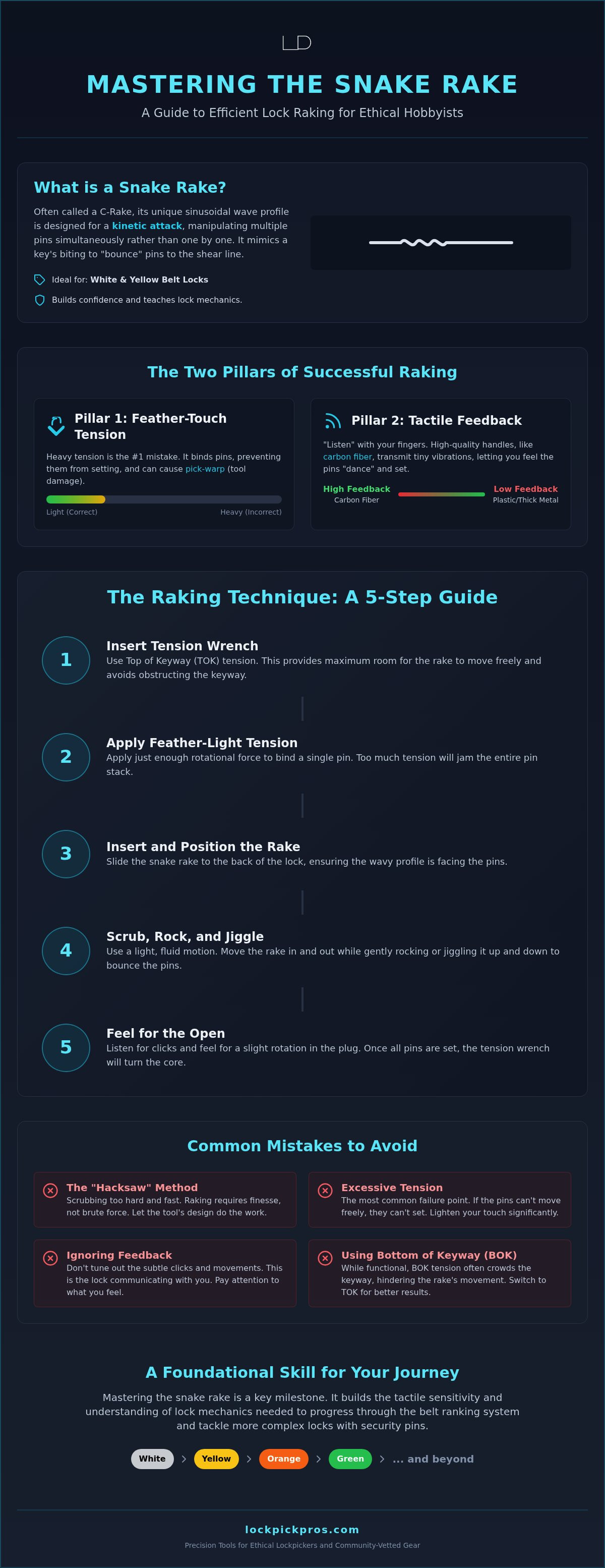
The snake rake, often called a C-rake, is a staple in any ethical hobbyist's kit. Its name comes from the sinusoidal wave profile that looks like a snake's path through the grass. Unlike single pin picking (SPP), which requires setting one pin at a time with extreme precision, raking is a kinetic attack. You aren't looking for a single binding pin; you're trying to manipulate the entire pin stack simultaneously. This tool mimics the biting of a key, bouncing pins up and down until they hit the shear line. For those just starting their journey in Lock picking, the snake rake is often the first tool that provides a successful "open" on White and Yellow belt locks. It builds confidence by showing how the mechanical components of a lock react to movement.
Anatomy of the Snake Profile
The peaks and valleys of a snake rake are carefully engineered to interact with standard pins. This "C" shape profile allows the rake to glide over the pins, lifting them to various heights as you move the tool back and forth. It's a forgiving design, making it ideal for low to medium security locks found in many entry-level practice sets. High-quality versions are made from high-yield stainless steel. This material is crucial because it resists snapping or permanent deformation, even when you're learning the right amount of pressure. If you are learning how to use a snake rake, you'll quickly realize that the tool needs to flex without breaking to be effective. This flexibility allows the peaks to reach the top of the pin stacks while the valleys clear the bottom of the plug.
Snake Raking vs. Traditional S-Rakes
While triple-peak or Bogota rakes are aggressive and fast, the snake rake offers a more controlled experience. Its profile is shallower, which makes it a superior choice for narrow keyways where a larger rake might get stuck. Many pickers use a diagnostic hybrid approach with this tool. They rake the lock first to set the majority of the pins, then finish the job with a hook. This method is incredibly efficient for clearing standard pin-tumbler locks. Using a snake rake with a Carbon Fiber Special handle helps transmit vibrations better than standard metal handles. This feedback tells you exactly when the pins are starting to set or if you are applying too much force. Learning how to use a snake rake effectively is about listening to those vibrations and adjusting your technique before the pins over-set. It's a foundational skill that prepares you for more complex security pins later in your locksport career.
The Role of Tension and Feedback in Successful Raking
The tension wrench is arguably your most important tool. While the rake moves the pins, the wrench captures the success. You need a "feather-touch" for raking. If you press too hard, the pins bind and can't bounce into their set positions. This theory of exploiting mechanical defects is explained beautifully in the MIT Guide to Lock Picking. Heavy tension is the fastest way to fail. It often leads to pick-warp, where your tool bows or twists because you're trying to force the plug to turn with the pick instead of the wrench. Always remember that the wrench does the turning while the rake does the lifting.
Top of Keyway (TOK) vs. Bottom of Keyway (BOK)
Most beginners start with Bottom of Keyway (BOK) tension, but Top of Keyway (TOK) is often the superior choice for raking. TOK gives your snake rake much more room to maneuver within the lock. It prevents the wrench from accidentally binding the plug or getting in the way of your scrubbing motion. When you use TOK, you have a clearer path to the back of the lock. You want to feel for a tiny "click" or a slight movement in the wrench. That's your signal that a pin has found its home at the shear line. This tactile feedback is easier to detect when the wrench isn't competing for space with the pick.
Why Handle Material Matters for Raking
When you're learning how to use a snake rake, feedback is your best teacher. Steel-only picks or those with thick plastic handles tend to mask the subtle vibrations of the pins. Carbon fiber is different. It's a rigid material that transmits every tiny vibration directly to your fingertips. You can actually feel the pins "dance" as they move through the peaks and valleys of the profile. This allows you to adjust your scrubbing speed in real time. If you want the best tactile response for your practice sessions, we recommend the Carbon Fiber Gen 2 Pro Series. It helps you distinguish between a pin that's set and one that's just stuck. Mastering how to use a snake rake requires this level of sensitivity to succeed consistently. Listening to these vibrations will help you progress much faster through the early belt ranks.
Step-by-Step: How to Use a Snake Rake Correctly
Mastering how to use a snake rake begins with a clean setup. First, inspect the keyway for any dirt or old lubricant that might gum up the pins. Once the path is clear, insert your tension wrench. For beginners starting with a foundational kit like The Trainee 2.0, bottom of the keyway tension is often the most comfortable place to start. Slide your snake rake into the lock until it reaches the very last pin. Don't apply any rotational force just yet. You want the tool seated properly before the pins start binding against the plug.
Once the rake is in place, apply the "feather-touch" tension we discussed earlier. This is where the magic happens. You'll start with a light, rhythmic movement. If the plug doesn't turn immediately, don't increase the tension. Instead, vary the angle of your pick or the speed of your strokes. As explained in The MIT Guide to Lock Picking, you are hunting for mechanical imperfections that allow pins to stay above the shear line. Small adjustments in your physical approach often make the difference between a stuck lock and a successful open.
The Scrubbing Motion Technique
The most common way to move the tool is the scrubbing motion. Imagine you're brushing your teeth with a horizontal in-and-out movement. While you scrub, add a tiny bit of vertical jiggling to ensure the peaks of the snake rake hit every pin at different heights. Scrubbing is a low-pressure rhythmic movement to set standard pins. This technique is highly effective for White and Yellow belt locks because it resets the pins constantly until they all happen to land in the right spot at the same time. Keep your wrist relaxed to maintain a consistent flow.
The Kinetic Raking Technique
If scrubbing doesn't work, try a kinetic approach like zipping. To zip, you apply slightly more tension and pull the rake out of the lock very quickly. This sudden movement "kicks" the pins upward, hopefully setting them as they fall back down. Another variation is rocking. Here, you keep the tool inside the lock and tilt the handle up and down like a see-saw. This changes the angle of the sinusoidal wave against the pin stacks without removing the pick. If you feel most pins set but the lock still won't turn, stop raking immediately. Switching to a hook for single pin picking prevents you from over-setting pins and losing your hard-earned progress. Learning how to use a snake rake is as much about knowing when to stop as it is about knowing how to start.
Common Mistakes and How to Avoid Them
Even the most dedicated hobbyist hits a wall when they first learn how to use a snake rake. The most frequent error is applying heavy tension. When you push too hard on the tension wrench, the pins bind so tightly that they cannot bounce or set at the shear line. This frustration often leads to the second major mistake: pick-warp. This is the permanent deformation of your tool. If you notice your pick bowing or twisting, stop immediately. You're likely trying to force the plug to turn using the pick instead of the wrench. High-quality tools are durable, but they aren't designed to act as crowbars.
Ethical lockpicking is built on a strict code. Only pick locks that you own or have explicit permission to manipulate. Never pick a lock that is currently in use, such as a front door or a padlock securing a gate. If you break a pick or damage a spring inside a functional lock, you could find yourself locked out or facing an expensive repair bill. Stick to practice locks on your pinning tray to keep the hobby fun and legal. We believe in rewarding your dedication to ethical locksport, and that starts with respecting the gear and the craft.
Identifying and Fixing Over-set Pins
Over-setting happens when a pin is pushed past the shear line into the plug's housing. The lock won't open, and the pin will feel "mushy" or completely stuck. If you suspect you've over-set a pin, listen closely. Slowly release tension on your wrench. You should hear a distinct "click" as the over-set pin drops back into place. You can also try "pulsing" the tension. This involves rapidly but lightly fluttering the pressure on the wrench. It often allows over-set pins to fall while keeping correctly set pins in place. If the lock still won't budge after pulsing, it's best to completely reset and start over. Learning how to use a snake rake effectively means mastering this delicate reset process.
Maintaining Your Tools
Your tools are precision instruments. Check your snake rake regularly for micro-cracks, especially if it's made of high-yield stainless steel. These cracks are early warning signs of tool failure. Keep your picks clean; a quick wipe removes oils and debris that can cause friction inside a keyway. To prevent accidental bending, always store your gear in a dedicated carrying case. For those looking to upgrade to tools that resist warping and provide better feedback, the Carbon Fiber Gen 2 Pro Series is an excellent choice for any serious trainee. Proper care ensures your tools last through hundreds of successful opens as you climb the belt ranks.
Advancing Your Skills: From Snake Rakes to Black Belts
Mastering the snake rake is your ticket to the first major milestones in locksport. It helps you secure your White and Yellow belts by teaching you the core mechanics of kinetic attacks. Once you've learned how to use a snake rake to clear standard pins, the next logical step is joining the Black Belt Challenge. This community-driven program guides you through every tier of the sport. As you progress, you'll naturally transition from high-speed raking to the surgical precision of single pin picking. This shift is necessary for defeating security pins like spools or serrated pins that a rake simply can't handle alone.
Best Practice Locks for Snake Raking
Visualizing internal mechanics makes a huge difference when you're starting out. We recommend practicing with a metal cutaway lock. These tools let you see the pins react to your scrubbing in real time. Common White Belt locks, like the Master Lock #3, respond well to raking and are perfect for practicing your speed. However, to build real muscle memory, you should move to a progressive practice lock set. These sets allow you to start with just two or three pins and work your way up to a full stack. It ensures you truly understand how to use a snake rake before the difficulty spikes at higher belt levels.
Upgrading Your Kit for Higher Tiers
As you climb the ranks, your equipment needs to evolve along with your skills. While basic sets are great for starting, the Carbon Fiber Gen 2 Pro Series is the gold standard for dedicated hobbyists. The superior feedback from the carbon fiber handles helps you identify pins that are almost set, which is vital for advanced picking. For those tackling narrow or paracentric keyways in Orange or Green belt locks, the Pro Series Expansion provides the thinner profiles you need to maneuver. Don't forget to share your progress on social media. Our community loves seeing picks-in-action, and it's the best way to earn reward picks as you hit new milestones. Join the community and start your journey to a Black Belt today.
Master Your Raking Technique Today
Learning how to use a snake rake is a rite of passage for every ethical hobbyist. By mastering the balance between "feather-touch" tension and rhythmic scrubbing, you've gained the skills needed to defeat standard pin-tumbler locks with speed and confidence. Successful raking is a diagnostic dance, not a test of strength. Keep your tension light, avoid pick-warp, and always follow the ethical code of the locksport community. Your journey from a White Belt to a seasoned picker depends on these foundational habits.
Now that you have the foundation, it's time to refine your feel for the pins. High-quality tools make a massive difference in your tactile feedback and overall progression. You can upgrade to the Carbon Fiber Gen 2 Pro Series for better raking feedback and enjoy the precision that comes with a lifetime warranty on all Gen 2 Pro Series tools. We ship from the USA within 24 hours, so you can start practicing almost immediately. Join over 10,000 ethical lockpickers already climbing the ranks in our Black Belt Challenge. We're excited to see you progress through the tiers and share your success with the community. Keep practicing, stay ethical, and enjoy the click!
Frequently Asked Questions
Is it possible to use a snake rake on a lock with security pins?
Yes, you can use a snake rake to set standard pins in a lock that also contains security pins. This is part of a diagnostic hybrid approach. You rake the lock first to set the easy pins and then switch to a hook for single pin picking to finish the spools or serrated pins. While a rake alone rarely defeats high-security locks, it's a great way to speed up the opening process.
How much tension should I apply when using a snake rake?
You should apply very light tension, often called "feather-touch" tension. This allows the pins to bounce freely against the rake's profile. If you apply too much rotational force, the pins will bind against the plug and won't move at all. Learning how to use a snake rake effectively means finding the sweet spot where the pins can dance but still stay set above the shear line once they hit it.
Will a snake rake damage the internal pins of my lock?
A snake rake won't damage a lock if you follow ethical guidelines and use light pressure. However, aggressive raking with too much force can cause premature wear on the pins or the plug. You should only practice on locks you own and that are not in active use. Using a high-yield stainless steel tool helps ensure the pick itself doesn't break or leave debris inside the keyway during your session.
What is the difference between a snake rake and a bogota rake?
The main difference lies in the profile peaks. A snake rake features a smooth, sinusoidal wave profile, while a Bogota rake has sharp, distinct triple peaks. The snake rake is generally shallower, making it a better choice for narrow or paracentric keyways. Bogota rakes are more aggressive and better for locks with wide open spaces. Both are excellent tools to have in your foundational lockpicking kit as you pursue higher belt ranks.
Can I use a snake rake for wafer locks commonly found in cars?
No, a snake rake is designed specifically for pin-tumbler locks. A wafer lock, which is common in automotive doors and filing cabinets, requires specialized tools to manipulate the flat metal plates inside. If you try to use a standard rake on a wafer lock, you'll likely just get the tool stuck or fail to move the wafers into the correct position. We recommend checking out our vehicle locksmith tools for those specific challenges.
Why do my pins keep over-setting when I use a snake rake?
Pins usually over-set because of excessive vertical movement or heavy tension. When you lift the pins too high, they get stuck in the housing rather than stopping at the shear line. If this happens, try pulsing your tension wrench to let the over-set pins drop back down. Refining your scrubbing motion into a rhythmic, low-pressure movement is the best way to master how to use a snake rake without constantly resetting your lock.
Do I need a specific type of tension wrench for raking?
You don't need a specific wrench, but Top of Keyway (TOK) tension is highly recommended. TOK tensioners stay out of the way, giving your rake more room to move inside the keyway. Standard Bottom of Keyway (BOK) tension wrench tools can sometimes bind the plug or limit your scrubbing range. Experimenting with different tension tools will help you find the best setup for the specific practice lock you are currently trying to clear.
How long does it take to learn how to use a snake rake effectively?
Most hobbyists can learn the basic scrubbing motion in a single afternoon. You'll likely get your first open on a Master Lock #3 within minutes. However, becoming truly effective takes consistent practice over several weeks. You need time to develop the muscle memory required to feel vibrations through a carbon fiber handle. Mastery involves knowing exactly how much tension to apply to different types of locks as you advance through the belt system.