

Essential tools for residential locksmiths: 15 piece pick sets
Outfitting a professional service kit with essential tools for residential locksmiths requires balancing portability with lock coverage, where a reliable set remains the backbone of daily calls. Skilled technicians select versatile gear so they can handle standard home hardware efficiently.
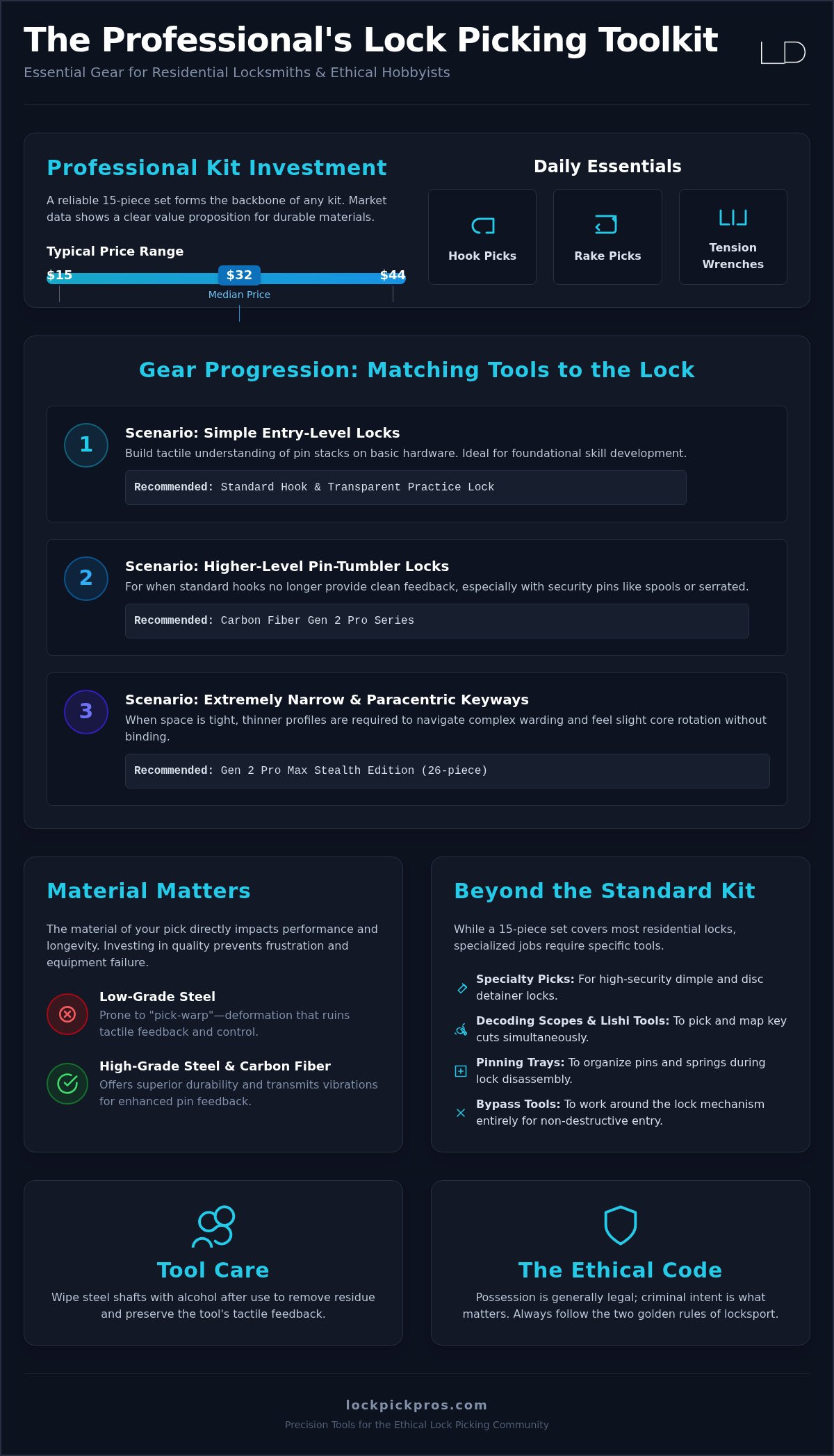
Key Takeaways: Essential tools for residential locksmiths include tension wrenches, hook picks, and rake profiles, with professional-grade 15-piece kits typically costing between $15 and $44.
- Market data shows the median price for a professional-grade kit is $32.
- Standard 15-piece sets are insufficient when you encounter high-security disc detainer or dimple locks.
- Invest in high-grade steel or carbon fiber handles to prevent picks from warping.
- Wiping steel shafts with alcohol after use preserves the tactile feedback you need.
3 Locksmith service scenarios and tool recommendations
Selecting proper gear for specific pin-tumbler situations ensures fast, non-destructive entry while you maintain strict ethical standards. Matching tool profiles to keyway constraints prevents unwanted pick-warp (deformation of a thin pick that causes it to twist or bow under high spring tension). Targeted designs avoid unnecessary stress on delicate components during technical practice.
Typical situations you will meet on residential calls:
- Simple entry-level locks: pair a standard hook with a see-through lock (transparent practice lock) so you build tactile understanding of pin stacks before you work live hardware.
- Higher-level pin-tumbler locks: move to specialized gear such as the Carbon Fiber Gen 2 Pro Series when standard hooks stop giving clean feedback.
- Extremely narrow keyways: upgrade to a 26-piece Gen 2 Pro Max Stealth Edition so the thinner profiles let you feel slight core rotation without binding.
Picture sitting at your workbench with a tight, highly paracentric lock cylinder that refuses standard hooks. Purpose-built profiles restore control in that moment. You can explore versatile gear online for ethical pickers advancing through community ranks. Always follow the two golden rules by picking only locks you own or have explicit permission to test. Your progress speeds up when the kit matches the keyway in front of you. More on this: Lockpick Pros.
Essential tools for residential locksmiths that technicians rely on daily
Technicians rely on specialized Manual picks, tension devices, decoding scopes, and bypass gear to service locks efficiently without causing unnecessary damage.
When building your kit, precision gear helps you feel the exact movement of every pin. Standard pin-tumbler locks require durable hooks and rake picks paired with a proper tension wrench (a tool that applies rotational force to the plug, allowing pins to be set and providing feedback to the picker).
For non-destructive entry on standard door hardware, the bypass tools guide shows how you work around the lock mechanism entirely. Advanced technicians who need to pick and decode keyways simultaneously often utilize a lock picking tool (Lishi tool) to map out key cuts accurately. A broken key left in a cylinder is a common residential call: the same controlled tension and hook control you use for picking also help you protect the remaining stump of lock components while you plan extraction.
Thin picks under high spring tension can lose shape and ruin tactile feel during delicate jobs, so high-grade steel or carbon fiber handles are ideal. If you are expanding your kit into specialized pin arrangements, keep components organized. A dedicated pinning tray (a small tray used to organize springs, pins, and drivers when disassembling or repinning a lock for practice) prevents tiny parts from rolling away on the job site. You can test your setup on a see-through lock to confirm visually how your pick contacts each pin stack.
Market prices show what professional kits actually cost
Entry-level lock picking tool sets fit modest budgets, while full kits require broader investment. Budget gear suits casual practice, whereas premium steel withstands heavy daily use.
High tension stresses thin picks quickly, so durable materials matter more than raw piece counts. Beginners often overpay for massive sets filled with duplicate profiles they rarely use. For foundational gear, the beginner white belt guide helps you choose effective picks without padding the case.
| Tier | Investment | Suitable User |
|---|---|---|
| Starter | Entry Level | New Hobbyist |
| Standard | Mid Range | Active Picker |
| Advanced | High End | Rank Climber |
Based on top market sampling data, standard kit investments scale with material durability and included accessories. Request a personalized quote to determine accurate pricing for your exact setup. Premium options like the Gen 2 Pro Max, Stealth Edition or the Carbon Fiber Gen 2 Pro Series offer specialized handles that enhance feedback while protecting thin shafts from tension damage.
Tip: Look for sets near the median price point of $32 to get durable steel construction without paying high brand markups.
Carrying locksmith tools stays legal when intent is clear
Carrying lockpicking gear is legally permitted in most jurisdictions unless state law explicitly assumes criminal intent upon possession. State regulations usually treat simple ownership as lawful conduct.
In daily field practice, carrying specialized kit such as the OptiView decoding scope requires clear evidence of legitimate work. Proper ethical standards demand carrying valid identification and working only on hardware you own or have permission to open.
State statutes create clear boundaries. The lock pick laws in California are built around criminal intent, not mere possession, meaning owning a pick set is not a crime on its own.
Purchasing professional gear from recognized suppliers ensures your equipment meets standard trade requirements. We stand behind our precision-engineered products with a complete satisfaction guarantee, so you have the support you need as you push your skill boundaries. Durable tools reduce the chance that a thin pick will twist under load on a live call.
Prioritize established distributors over unvetted suppliers: quality builds last longer under daily service use.
5 Steps that keep your locksmith tools calibrated longer
Proper care of your lock picking tool prevents thin shafts from twisting under high spring tension. From hands-on bench practice, keeping gear clean preserves the subtle tactile feedback needed to feel pins set properly. Caring for steel components like core shims (metal strips) keeps your kit reliable for ethical locksport practice, and treating picks as fine instruments protects that feedback over time.
- Clean gear routinely by wiping down steel shafts with alcohol after practice sessions to remove oil and grime.
- Inspect for pick-warp by placing each tool flat against a straight edge to detect subtle bending early.
- Smooth rough edges with high-grit sandpaper to remove micro-burrs that degrade tactile feedback in tight keyways.
- Calibrate tension tools to ensure your tension wrench applies rotational force evenly without slipping or stressing the lock plug.
- Store picks safely inside a protective pouch to shield thin profiles from accidental bending during transport.
Regular calibration keeps your equipment ready as you refine your skills. Join over 10,000 ethical lockpickers who are already climbing the ranks in our Black Belt Challenge. Practice ethically, track your growth, and upgrade your kit as you master new skills.
When a 15 piece pick set cannot cover the job
Standard entry kits fail when you encounter high-security cylinders with tight, restrictive keyways or specialized internal mechanisms.
Heavy tension can bend a thin pick and erase the feedback you need on advanced work. Targets such as disc detainer (a high-security lock mechanism using rotating discs instead of pins) setups require dedicated tools rather than standard hooks. Broken keys inside restrictive warding push the same limit: a short 15-piece array rarely includes the clearance profile you need for extraction support and decoding together.
Enhancing your equipment set becomes necessary once you advance to tougher belt ranks in ethical locksport. Standard pin-tumbler profiles cannot reach deep security pins around sharp keyway warding.
Specialized profiles offer the clearance you need. The 26-piece Gen 2 Pro Max Stealth Edition delivers thin, durable profiles designed for advanced locks without flexing. You also need specialized equipment for complex mechanisms like wafer locks or dimple locks. Expanding your toolkit puts the exact profile in hand so you can decode and set complex pin stacks accurately, then test those skills in the Black Belt Challenge as you climb ranks.
Reliable hand tools and bypass hardware that match home locks
Residential lock picking tool choices focus on pin-tumbler profiles rather than automotive wafer locks or heavy safe-cracking gear. You need hand tools that match standard door hardware.
Standard home locks require hooks and rake tools designed for wide or restrictive keyways. Specialty bypass hardware like comb picks work by pushing the entire pin stack above the shear line, which is the internal boundary where the inner plug separates from the outer housing to allow turning. After a break-in attempt leaves the body of lock hardware scuffed but intact, non-destructive picks and bypass options let you open and service the cylinder without replacing the whole lockset.
Cheap picks take a permanent twist under spring tension and cost you more in replacements. If you are not satisfied with your purchase, contact us and we will make it right.
Investing in quality steel gives accurate tactile feedback while the tools keep their structural integrity. Standard tension tools match residential cylinders, whereas automotive jobs require specialized tensioners and safe work demands heavy drilling rigs. Match your kit directly to residential pin configurations so you build skill on the hardware you actually service. Ask our team for a field-kit quote when you are ready to standardize your case.
Frequently asked questions
What are the essential tools for a locksmith?
Primary gear includes tension wrenches (tools that apply rotational force to the plug, allowing pins to be set and providing feedback to the picker) alongside various hook picks and rake profiles. A basic setup also incorporates a see-through lock for viewing internal pin behaviors and a pinning tray (a small tray used to organize springs, pins, and drivers when disassembling or repinning a lock for practice) during repinning exercises. You must always remember the two golden rules: only pick locks you own, and never pick a lock that is currently in use.
What tools do locksmiths need?
Picking enthusiasts and technicians need dedicated tools matched to the target mechanism, ranging from standard hooks to specialized dimple flags or comb picks (a lockpick with multiple teeth that pushes the entire pin stack above the shear line in one motion, effectively over-lifting the pins). You should select gear aligned with your current belt rank as you progress through community milestones. Using improper thickness can twist a thin pick when you navigate tight keyways, so match shaft stock to the warding you face.
What tools does a locksmith use?
Every kit relies on tension tools, short hooks, and specialized decoders like a lock picking tool designed to read pin heights precisely. Advanced hobbyists working on high-security hardware frequently employ disc detainer setups or specialized metal strips (core shims) to bypass-shielded cores safely. As an encouraging step in your journey, you can submit your picking videos to the Black Belt Challenge to climb ranks and claim milestone gear rewards.
Which tools are essential for residential locksmiths?
Residential pin-tumbler locks require standard short hooks, various turning instruments, and reliable repinning supplies to alter chamber configurations. According to current market sample listings, typical tool options across the industry feature an average cost spectrum bounded by fifteen and forty-four dollars, reflecting diverse build materials. To protect your investment while building skill, we stand behind our precision-engineered products with a complete satisfaction guarantee, so you have support as you extend your range on home cylinders of locks you are authorized to service.
How can I buy locksmith tools online?
You can order precision gear directly from online lockpicking suppliers that ship directly to your door. Reach out to support if a shipment misses your expectations and the team will correct it. Once your new kit arrives, share your practice videos with our global community to earn recognition as you advance toward your next rank level.
Complete Your Professional Field Kit in 2026
The opening choice still stands: balance portability with coverage, then decide when a compact 15-piece array is enough and when specialized profiles earn their place. Upgrading your toolkit with gear sized for residential cylinders supports faster, more precise picking on high-pinning stacks. Professional tools give clear feedback through the keyway, so you can sense every binder right at the shear line (the internal boundary where the plug rotates).
The Lockpick Pros team relies on high-grade materials that withstand heavy daily use without risking bent shafts under pressure. Upgrading your daily field kit is straightforward with the Carbon Fiber Gen 2 Pro Series.
Every purchase comes backed by a satisfaction guarantee and clear return support. Contact our support team today to request a custom quote for your field operation.