

Lock Picking: The Ultimate Skill for Puzzle Lovers
TL;DR: Lock picking is a legal, tactile hobby for puzzle lovers that uses mechanical feedback and spatial reasoning to solve physical security challenges.
- Advanced European locks require specialized pick thicknesses of 0.018 inches to navigate tight keyways.
- Avoid purchasing kits for those seeking instant gratification unless they enjoy slow, tactile learning.
- Start with a transparent practice lock to build visual muscle memory before moving to metal.
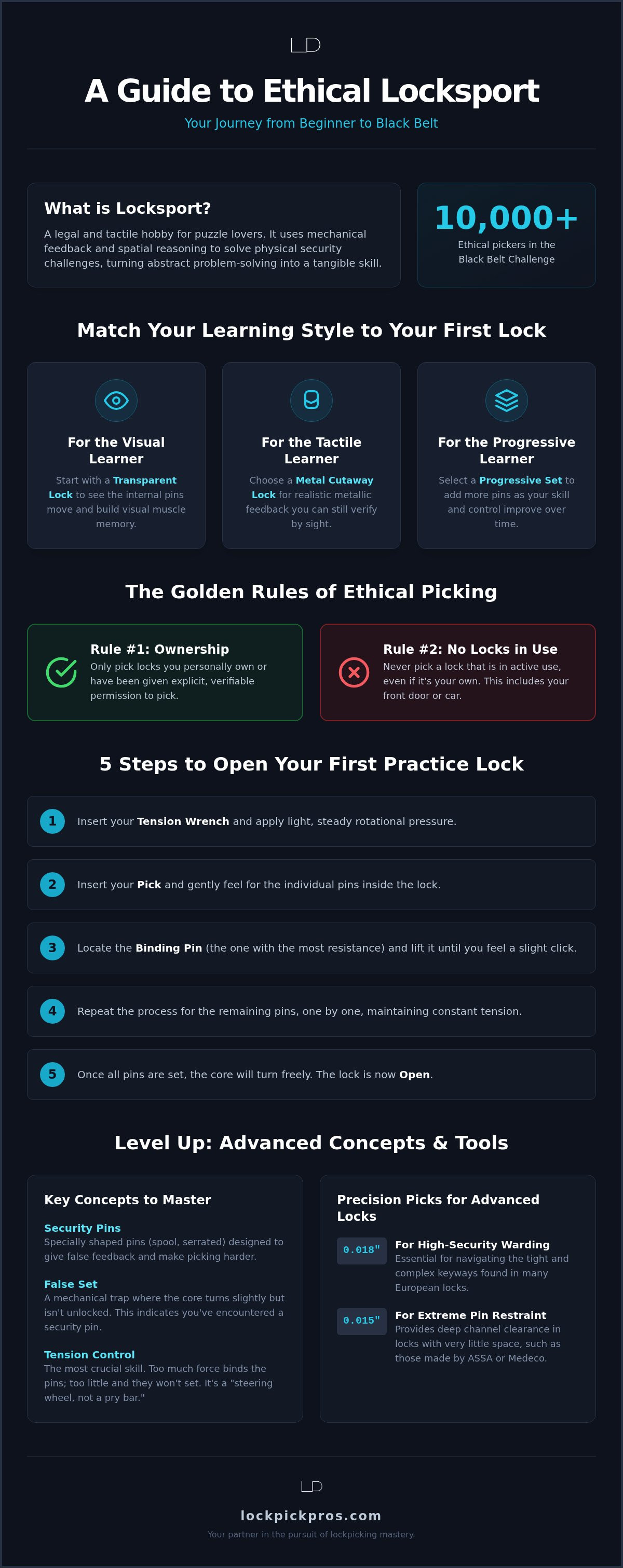
- Over 10,000 ethical pickers use the Black Belt Challenge to track progress through skill levels.
Lock picking transforms abstract problem-solving into a tangible physical skill for puzzle enthusiasts. Modern lock pickers join structured ranking systems like the Black Belt Challenge, which already includes over 10,000 ethical pickers worldwide, according to LPO belt statistics. Engaging with physical locks turns logical deductions into rewarding tactile feedback. The decisions that shape your start are practical ones: which practice lock matches how you solve puzzles, how to stay inside the law while you train, which pick thicknesses you will need as locks get harder, and when a kit is the wrong gift.
Match Practice Locks to How You Solve Puzzles
Three common starting points map cleanly to gear already used in training. If you solve by watching parts move, begin with a see-through lock (transparent practice lock) so internal motion is visible at once. If you learn through your hands, choose a metal lock with the side cut out (metal cutaway lock) for realistic metal feedback you can still verify by eye. If you prefer staged difficulty, select a beginner to expert kit (progressive lock picking set) and add pins as your control improves.
Select first gear by matching lock mechanisms to your favorite visual or tactile puzzle styles. Tactile learners gain confidence fastest when physical feedback comes first, because that feedback lets you feel pin binding order clearly.
According to the official Locksport Wikipedia entry (2026), ethical picking focuses strictly on sportsmanship and puzzle solving.
Treat picking like solving a Rubik's cube under a blindfold. You use a turning tool (tension wrench) to apply rotation. Your turning tool is a steering wheel, not a pry bar, because too much force ruins mechanical feedback.
Higher skill levels (belt ranking system) demand extra precision. Advanced cylinders use harder pins with grooves (serrated pins). Specialized picks give a mechanical advantage when lifting them, though heavy spring resistance can still trap standard hooks.
Avoid cheap cylinders that trigger fake clicks (false set). That deep false set is a mechanical trap designed to lock your tool in place.
Explore professional practice locks and tools at Lockpick Pros for your training setup. Join over 10,000 ethical lockpickers who are already climbing the ranks in the Black Belt Challenge. Only pick locks you own.
Tip: Match your puzzle style early: tactile puzzle lovers excel with cutaway locks, while spatial reasoning fans prefer progressive pin sets.
Owning Lockpicks Is Legal When Intent Stays Ethical
Owning lockpicking tools is legal in most jurisdictions unless you possess them with intent to commit a crime. Think of picks like a plain butter knife in your kitchen drawer: harmless when spreading jam, problematic if carried into a bank with malicious intent.
As a law-abiding puzzle enthusiast, you stay ethical with two rules. First, never pick a lock you do not own or do not have explicit permission to pick. Second, never pick a lock that you rely on, such as your own front door.
You can practice at home by acquiring your own padlocks. To build skill levels, learn How to Earn Your Lockpicking Belt and Unlock Reward Picks while testing yourself against structured challenges.
Purchase legal practice gear so the hobby stays safe and low-stress. Clear tools help you visualize internal mechanics without breaking local laws.
Before buying equipment, check your local regulations, as a few regions classify these items differently without a locksmith license.
Sequential Discovery Puzzles Build the Feel You Need for Tight Keyways
A sequential discovery puzzle is a high-end mechanical lock that requires finding hidden tools inside the device to solve it.
You must use parts of the mechanism itself to progress through multiple stages. High-security locks need precise equipment to manipulate tight tolerances. Moving down to 0.018" and 0.015" picks is a necessity for navigating the warding in locks from brands like ASSA or Medeco. These thin picks act like keyless precision blades, sliding into tight spots where thicker tools fail.
Mechanical trick locks build the spatial awareness you need for single-pin picking. Working through multi-stage puzzle boxes teaches you to track hidden components by feel alone. To transfer those problem-solving skills to real locks, study How to Earn Your Red Belt in Lockpicking and see how advanced skill levels structure growth.
| Pick Thickness | Primary Application | Navigation Feature |
|---|---|---|
| 0.018" | High-security warding | Tight keyway access |
| 0.015" | Extreme pin restraint | Deep channel clearance |
Tactile feedback guides each step, and precision decides whether a pin sets cleanly. A fake click state can feel like a win, yet that deep false set is a designed mechanical trap. Learn how each internal pin responds to light tension, and keep the ownership rules in mind: only pick locks you own, and never pick a lock that is in active use.
Five Steps That Open Your First Practice Lock
You can open your first practice lock by applying subtle rotational force and lifting each pin to the internal gap. From hands-on bench experience, structured step-by-step guidance clears the confusion vague set instructions often leave behind. Standard manuals routinely skip the delicate physical feeling required to set a pin correctly.
You sit at your desk, pick in hand, facing a see-through lock. Keep ownership limits clear before you start: only pick locks you own, and never pick locks in active use.
- Apply light pressure: Insert your turning tool into the keyway. Your turning tool is a steering wheel, not a pry bar.
- Feel the pins: Slide your hook pick to the back pin. A pick thickness of 0.015 inches (or 0.4mm) suits most advanced European locks.
- Find the binding pin: Push up gently on each pin until you feel resistance.
- Set the pin: Lift that firm pin until it clicks into place.
- Repeat the process: Continue testing remaining pins until the plug rotates.
Control force carefully so you avoid a fake clicks trap; that mechanical issue can turn a promising attempt into a sudden dead end. Master these basic feedback loops before learning How to Earn Your Blue Belt in Lockpicking through the skill levels.
Practicing on clear cylinders first works well because visual confirmation builds muscle memory quickly. Industrial designs still reward the same patient tension control.
When a Lock Picking Kit Is the Wrong Gift Choice
Lock picking tools make poor gifts for people who lack patience or lose focus when mechanical frustration appears.
In one recurring client pattern, hands-on puzzle solvers abandon entry-level sets when they expect instant results and get no early tactile feedback; the set then sits unused. Developing tactile sensitivity takes time, so a pick set is the wrong choice for anyone who wants immediate gratification. Like learning a complex instrument, feeling a tiny pin bind requires calm focus. People who prefer visual or digital puzzles often dislike tactile tools and may also resist skill levels progression.
Instead of an active set, consider a visual mechanical puzzle, or select a clear see-through lock for easy visual display.
Before buying, remember locksport ethics: never pick a lock you do not own, and never pick a lock in active use. Giving tools to someone who ignores those boundaries risks real legal trouble.
Precision-engineered products carry a complete satisfaction guarantee and a hassle-free return policy. If you are not satisfied with your purchase, contact us and we will make it right. Request a quote when you want help matching a set to the recipient.
Frequently asked questions
Is owning lockpicks illegal?
Owning picking tools is legal in most regions if you possess no criminal intent and follow ethical guidelines. Obey the two rules that keep the hobby clean: only pick locks you own or have explicit permission to open, and never pick a lock in active use.
What is the best gift for someone who loves puzzles?
A beginner to expert kit makes an engaging challenge for puzzle lovers. Over 10,000 ethical lockpickers already climb the ranks in the Lockpick Pros Black Belt Challenge, according to company records. Each purchase includes a complete satisfaction guarantee.
What lock-picking gift sets are available?
Gift options range from basic practice kits to advanced high-security pick collections. You can practice on a see-through lock or a metal lock with the side cut out. Precision picks with a thickness of 0.018" and 0.015" help you navigate tight keyways.
How much do the gift sets cost?
Total prices vary based on materials, pick thickness, and included practice locks. Customizing your gear affects overall production expenses. Ask for a personalized quote to get exact pricing for your preferred setup.
Which set is suitable for beginners?
Starter bundles with clear acrylic cores offer immediate visual feedback for new hobbyists. These sets help you practice controlling a turning tool without over-leveraging the mechanism. A hassle-free return policy lets you exchange products if the set does not fit how you learn.
Choose Gear, Rules, and Goals Before You Buy in 2026
Lock picking for puzzle lovers turns complex mechanical analysis into a rewarding tactile hobby, and the same decisions that opened this guide still apply: match the lock to your puzzle style, stay inside ownership rules, step up pick thickness only when the keyway demands it, and skip the kit when the recipient will not enjoy slow tactile feedback.
Client work shows that a beginner to expert kit gives a steady learning curve when the buyer already likes physical puzzles. The team at Lockpick Pros designs tactile puzzle gear so you can build mechanical feedback step by step.
Explore recommended beginner sets under the satisfaction guarantee and hassle-free return policy, then contact the Lockpick Pros team for a personalized quote on custom gear.