

Emergency Car Opening Tools: The 2026 Guide to Ethical Automotive Entry
At least 15 deaths in the United States have been attributed to electronic door handles failing after a crash, a sobering reality that recently prompted the introduction of the SAFE Exit Act of 2026. It's a stark reminder that knowing how to access a vehicle quickly and safely is more than just a hobbyist's challenge; it's a vital skill for ethical lockpickers. You likely feel the weight of this responsibility and the common fear of damaging a door frame or weather stripping while trying to help. It's also normal to feel some legal anxiety regarding the possession of emergency car opening tools in states like California, where the law focuses heavily on your intent.
This guide will help you master the art of non-destructive entry (NDE) by showing you how to choose and use professional gear with precision. You'll learn the mechanics of high-quality reach tools and wedges that won't compromise a vehicle's integrity. We'll also explore how to build an automotive entry kit that aligns with your locksport belt rank, ensuring you have the right tools to progress from a curious trainee to a master of the craft. Let's dive into the technical skills and ethical standards that define the modern automotive entry specialist.
Key Takeaways
- Discover how to transition your skills from standard padlocks to the specialized discipline of Non-Destructive Entry (NDE) for modern vehicles.
- Master the "Wedge and Reach" method using professional emergency car opening tools like air pump wedges that protect the vehicle's frame and weather stripping.
- Learn the precise mechanics of automotive wafer locks and how specialized decoders have revolutionized advanced vehicle entry for the locksport community.
- Find the perfect balance for your skill level by comparing foundational Trainee kits with high-performance Pro Series expansion sets.
- Take your next step toward mastery by using automotive entry as a key milestone to help you earn your Black Belt in Lockpicking.
The Fundamentals of Emergency Car Opening Tools for Ethical Lockpickers
Emergency car opening tools aren't just simple bypass kits; they represent a high-precision subset of Non-Destructive Entry (NDE) technology. While a beginner might start their journey by feeling the click of a pin in a master lock, automotive entry demands a different level of finesse. You're moving from the vertical world of pin tumblers to the complex, often horizontal world of wafer locks and electronic bypasses. This transition is a major milestone for any ethical lockpicker. It requires a shift in mindset from defeating a lock to understanding a complete security system. If you're currently mastering the basics with The Trainee 2.0, vehicle entry is your next logical step toward advanced mastery.
At Lockpick Pros, we're dedicated to the sport of lockpicking. We believe in transparency, skill refinement, and community growth. Our commitment to ethical lockpicking means we provide the tools and knowledge for legal, responsible use. Whether you're helping a friend who's locked their keys in their car or practicing on your own vehicle, legal compliance is non-negotiable. Using professional emergency car opening tools allows you to practice this craft without the risk of damaging expensive automotive components.
The Role of NDE in Automotive Locksmithing
Non-destructive entry is the absolute gold standard for both professionals and hobbyists.
Essential NDE Tools: Wedges, Reach Kits, and Bypass Devices
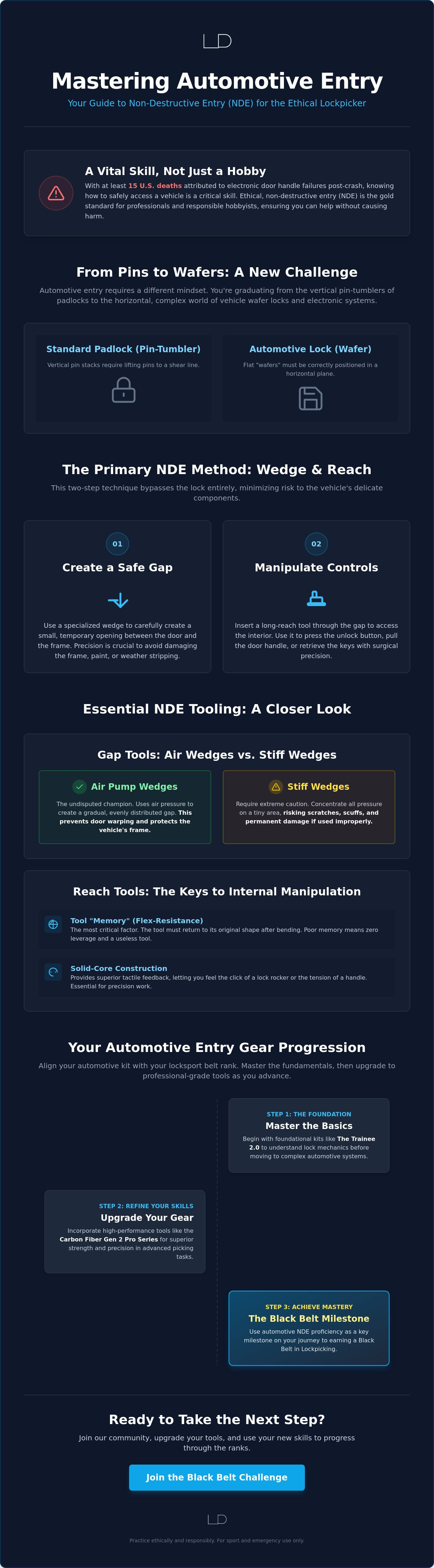
The "Wedge and Reach" method is the primary tactic for modern vehicle entry because it bypasses the lock cylinder entirely. It's a two-step process: create a small gap in the door frame and use a long-reach tool to manipulate the interior handle or unlock button. This technique is favored by ethical lockpickers because it avoids the high risk of damaging delicate wafer locks. Precision is key here. You aren't trying to pry the door open. You're simply creating enough space for a surgical strike. Using high-quality emergency car opening tools ensures that this gap is created without compromising the vehicle's safety features.
Air Wedges vs. Stiff Wedges: Choosing Your Gap Tool
Air pump wedges are the undisputed champions of frame protection. They use air pressure to expand the gap gradually and evenly. This distribution of force prevents the localized stress that causes permanent door warping. In contrast, rigid plastic or wooden wedges concentrate all the pressure on a tiny surface area. While stiff wedges with protective sleeves can still be useful for older, heavy-duty truck frames, they require much more caution. A professional-grade "No-Mar" wedge is defined by its ability to slide into tight tolerances without scratching paint or leaving scuff marks on the weather stripping.
Reach Tool Geometry and Material Strength
Once you've secured the gap, your reach tool becomes your hands inside the car. The most critical factor here is tool "memory." This refers to the tool's ability to return to its original shape after being flexed. If a tool lacks flex-resistance, it will bend permanently under the pressure of the door seal, leaving you with zero leverage. Solid-core professional reach tools provide the best tactile feedback, allowing you to feel the click of a lock rocker or the tension of a handle. While multi-piece collapsible rods offer portability, they often sacrifice rigidity at the joints. For those looking to refine their internal manipulation skills, the Carbon Fiber Gen 2 Pro Series offers the perfect blend of lightweight strength and precision for supplementary picking tasks.
Specialized bypass tools also play a role in advanced entry. These emergency car opening tools are designed for specific vehicle architectures, such as "Under the Glass" tools for horizontal linkages or "J-tools" for vertical pull-pins. Mastering these requires a deep understanding of automotive anatomy, moving you closer to that expert-level status in the locksport community. You're no longer just opening a door; you're navigating a complex mechanical puzzle.
Precision Automotive Tools for Advanced Skill Refinement
While the "Wedge and Reach" method handles the majority of modern lockouts, true mastery in the locksport community involves manipulating the lock cylinder itself. The evolution of emergency car opening tools has shifted away from aggressive raking toward sophisticated decoding. In the past, you might have gotten lucky with a quick rake, but modern tolerances are tight. Today, ethical pickers prioritize decoding the lock to understand its internal state before ever applying turning pressure. This precision-first approach is what separates a trainee from a seasoned pro. It’s not about how fast you can get in. It’s about how much you can learn about the lock's mechanics during the process.
Wafer Lock Picking and Jiggler Techniques
Automotive locks primarily use wafers rather than the pin-tumbler systems found in most padlocks. Wafers are flat metal plates that must be moved to a specific height to clear the shear line. Unlike pins, wafers often interact with both the top and bottom of the keyway. This means your tension and pick placement must be incredibly precise. For older vehicle fleets, jiggler keys and try-out keys remain effective. These tools act as a "statistical rake," mimicking common bitting patterns to find a match. If you want to expand your knowledge on other NDE methods, check out our Bypass Tools for Locksmiths guide for a deeper dive into non-cylinder entries.
Specialized Professional Sets for Advanced Tiers
As you move into higher belt ranks, you'll encounter "civil" and high-security locks that require specialized geometry. The 12pcs High Quality Honest Lock Smith Supplier Tools are specifically designed for Kaba and other high-security variants. These sets feature colorful, ergonomic handles that aren't just for show. They provide the enhanced feedback sensitivity you need to feel the subtle movement of a wafer or a side-bar. This level of communication between the tool and your hand is essential for advanced skill refinement.
When dealing with complex automotive cylinders, the right emergency car opening tools make the difference between a successful pick and a jammed lock. The HUK 8pcs Kaba tools facilitate precision entry by providing distinct tactile responses that allow you to map out the internal components of high-security cylinders. By focusing on the unique mechanics of each lock, you build a foundation of knowledge that applies to every vehicle you encounter. You're not just opening doors; you're earning your way toward a Black Belt in the sport of lockpicking.
Criteria for Selecting a Professional Automotive Locksmith Tool Kit
Selecting your gear isn't just about buying a bag of metal rods. It's about building a kit that grows with your skill. You need a framework. Think about vehicle age first. Older models from the early 2000s are often more forgiving. They might only require a simple jiggler or a basic bypass tool. Modern vehicles are different. They have tight tolerances and sensitive electronics. For these, you need emergency car opening tools that offer high-memory retention and non-marring finishes. Your skill level dictates your investment. Don't buy a black-belt decoder if you haven't mastered the air wedge yet.
Why do some kits cost more? It's the materials. Cheap steel bends. It stays bent. Professional tools use high-yield stainless steel or carbon fiber. These materials snap back to their original shape. They provide better feedback. You can feel the lock through the handle. It's a precision instrument, not a pry bar. Investing in professional-grade emergency car opening tools ensures you can perform non-destructive entry on a wider variety of vehicles without the risk of permanent damage.
As your professional operations expand, managing the financial side of a high-volume business becomes essential. Many industry leaders choose P2EZPay Merchant Services to streamline their B2B payment processing and corporate accounts.
The Trainee vs. The Professional Setup
If you're a White or Yellow belt hobbyist, keep it simple. Your foundational bag should have a high-quality air wedge and a versatile reach tool. The Trainee 2.0 is the perfect jumping-off point for ethical entry. It gives you the basics without the overwhelm. As you progress toward Green or Blue belt status, you'll need more. You'll want tools that can handle shielded linkages and electronic locks. Upgrading to the Gen 2 Pro Max Stealth Edition prepares you for those advanced automotive challenges.
Durability and Maintenance of Automotive Tools
Your tools are an investment. Take care of them. The "no-mar" coating on your reach tools is vital. If it chips, the exposed metal can scratch the car's interior. Wipe your rods down after every use. Keep them clean of grit. Storage is just as important. Don't just toss your air wedges in a box with sharp picks. A single puncture ruins a wedge. Use a dedicated carrying case to protect your gear. For more organization tips, read The Ultimate Professional Locksmith Tool Kit Guide for 2026.
Ready to level up your kit? Check out the Carbon Fiber Gen 2 Pro Series for the ultimate in lightweight strength and precision.
Advancing Your Skills: The Black Belt Challenge and Vehicle Entry
Mastering automotive entry is a defining milestone in any lockpicker's journey. It proves you've moved beyond the static environment of a practice vice and into the dynamic world of complex mechanical systems. When you successfully use emergency car opening tools to navigate a shielded linkage or decode a high-security wafer lock, you're demonstrating true technical maturity. This isn't just about utility. It’s about the mental discipline required to perform non-destructive entry under real-world constraints. You're building a foundation that will serve you as you tackle even more difficult locksport challenges.
We created the Black Belt Challenge to give you a clear, free path to community recognition. This program isn't a race. It’s a roadmap for your progression as an ethical lockpicker. By participating, you join a community of passionate hobbyists who value skill, patience, and legal compliance. We encourage a "share-to-earn" loop to keep the community thriving. When you document your progress and post "picks-in-action" content on social media, you can earn exclusive rewards. Just remember the golden rule: only practice on locks you own or have explicit permission to use. Ethical practice is what keeps our sport respected and accessible.
Joining the Locksport Community
Documentation is a huge part of the belt ranking system. To verify your progress, you'll need to record your successful entries, showing the tools used and the mechanical feedback you received. This transparency helps other members learn from your techniques. Our community bounty program also rewards users who hit specific social reach goals with their educational content. It’s a great way to give back to the hobby while earning credit toward your next gear upgrade. Don't wait to start your journey. Join the Black Belt Challenge today and see how far your skills can take you.
Next Steps for the Ethical Lockpicker
Once you've mastered the nuances of vehicle entry, you're ready to transition back to the world of high-security cylinders. The precision you've developed with emergency car opening tools will translate perfectly to Advanced Lock Picking challenges, such as dimple locks or complex side-bar systems. You might find that your current kit needs a boost to handle these expert-level obstacles. Expanding your setup with the Pro Series Expansion will give you the specialized profiles required for Black Belt level locks. Lockpicking is a lifelong journey of mastery, one belt at a time. Keep practicing, stay ethical, and enjoy the challenge.
Master Your Automotive Entry Skills
Mastering automotive entry is a defining moment in your locksport journey. You've moved from simple padlocks to understanding the complex anatomy of modern vehicle security. By focusing on non-destructive entry and high-quality emergency car opening tools, you ensure that every practice session builds real-world skill without causing damage. Our gear is trusted by ethical lockpickers worldwide for its precision carbon fiber and high-yield steel construction. These materials provide the tactile feedback you need to feel every wafer move, making the transition to advanced belt ranks much smoother.
The Lockpick Pros community is built on this shared passion for mastery and ethical standards. We provide the community-driven belt ranking support you need to track your progress from a curious trainee to a black-belt expert. Don't let your skills plateau. Take the next step in your progression by joining a group of enthusiasts who value technical excellence as much as you do. It's time to put your practice into action and earn your recognition.
Join the free Black Belt Challenge and upgrade your kit today!
Your journey is just beginning. Keep refining your technique, stay curious, and remember that every lock is a new opportunity to learn. We're excited to see your progress on the leaderboards. Happy picking!
Frequently Asked Questions
Are emergency car opening tools legal to own for hobbyists?
Yes, it is legal to own these tools in most states provided you lack criminal intent. In California, for example, Assembly Bill 486 makes it a misdemeanor to possess high-tech entry tools only if you intend to commit a crime. Ethical lockpickers focus on the sport and skill development rather than illicit activities. It's always a good idea to check your local statutes to ensure you stay compliant while you build your specialized collection.
Will using an air wedge damage my car door or weather stripping?
No, an air wedge will not damage your vehicle if you inflate it slowly and only create the minimum gap needed. These emergency car opening tools use air pressure to spread force across a wide surface area, which protects the door frame from warping. Rigid plastic wedges often concentrate pressure on one spot, which can cause permanent damage. Using a professional air wedge keeps your weather stripping intact and your car looking great.
What is the difference between a Slim Jim and a long-reach tool?
A Slim Jim is a thin metal strip that slides into the door cavity to pull the lock linkage directly. A long-reach tool is a flexible rod used after a wedge has created a small gap in the door frame. Most modern vehicles have shielded linkages to prevent Slim Jim use, making reach tools the safer choice. Reach tools also avoid the risk of snagging internal wiring or side-impact airbag sensors inside the door.
Can I use standard lock picks to open a car door?
You can use standard picks, but automotive wafer locks require much more finesse than the pin-tumbler locks found in homes. Standard hooks or rakes might work on very old models, but they often lack the reach or profile needed for complex wafer arrangements. Most hobbyists prefer specialized wafer picks or jigglers for these tasks. Using tools designed specifically for cars helps you avoid jamming the delicate wafers inside the door cylinder.
What tools do I need to open a car with electric locks?
To open a car with electric locks, you generally need an air wedge and a long-reach tool with a specialized tip. Once the wedge creates a gap, you use the rod to press the electronic unlock button or pull the interior handle. This method is the safest way to bypass modern security systems without triggering alarms or damaging electronic components. It's a foundational skill for anyone using emergency car opening tools in a locksport setting.
How do I know which automotive entry tool is right for my vehicle model?
You can determine the right tool by checking your vehicle's lock type and the year it was manufactured. Older vehicles often rely on mechanical linkages that jigglers can defeat, while newer models with electronic latches require the "Wedge and Reach" method. Many hobbyists start with a versatile kit that includes multiple rod lengths and wedge sizes. This variety ensures you have the right leverage for different door frame thicknesses and interior layouts. If you are also interested in the professional side of key management and duplication, check out Soxxi Master to see how experts handle complex automotive security.
What is NDE (Non-Destructive Entry) in the context of car lockouts?
NDE refers to any entry method that leaves the vehicle's locks, frame, and electronics completely unharmed. This includes avoiding scratches on the paint, protecting the weather stripping, and ensuring the lock cylinder remains functional. For ethical lockpickers, NDE is the only acceptable way to practice the craft. It emphasizes skill and precision over force, which is why professional-grade tools are so important for maintaining the vehicle's integrity.
How can I practice automotive entry ethically without a car?
You can practice ethically by using standalone automotive practice locks or salvaged door cylinders from a local parts yard. Mounting these locks in a vice allows you to feel the wafers move without needing a full vehicle in your workshop. This setup is perfect for refining your technique before moving on to a real car. It's a great way to build muscle memory and test new picks in a controlled, legal environment.