

Lock picking techniques for beginners: 10 minute basics
TL;DR: Mastering lock picking requires applying light rotational tension to bind pins sequentially at the shear line using a hook pick and a turning tool.
- Entry-level practice starter sets typically range from $24 to $49 for durable steel tools.
- Avoid picking locks in active use or those you do not own to remain ethical.
- Single-pin picking is best for patient learners seeking precise mechanical control over individual pins.
- Over 10,000 ethical hobbyists use the community belt ranking system to track their skill progression. Learning how to pick locks with pins (tumbler locks) takes as little as 10 minutes once you understand basic mechanical principles. You need to grasp how the components align while applying rotational force using a turning tool (tension wrench). Practicing this tactile skill allows you to open your first lock quickly and safely. The decisions that matter most are which practice path matches your goal, which tools give clean feedback, and how you stay inside ethical and legal bounds.
Match your beginner practice path to your locksport goal
Choosing the right practice track accelerates your progress while keeping your picking strictly ethical. Typical starting points look like this:
- You want visual confidence first: begin with a see-through lock (transparent practice lock), then move to standard tactile feedback once pin movement makes sense.
- You aim for community belt skill levels (belt ranking system): pick up a beginner kit (progressive lock picking set) built around real lock with pins.
- You need a budget-aware start: entry-level practice starter sets in the market typically range from $24 to $49, which is enough to build clean habits without overspending.
With clients we see a clear arc: the situation is uncertainty about first gear, the solution is a transparent practice lock paired with a modest starter set, and the result is faster mapping of mechanical movement before any opaque lock is attempted. Seeing the internal pins helps your brain map those movements quickly.
Your goals determine the exact equipment you need first. Selecting proper Lock Picking Tools: The 2026 Beginner's Guide ensures you build clean habits from day one. Respect the two golden rules: never pick locks you do not own or locks in use. A turning tool acts like a steering wheel, not a pry bar. Pushing too hard bends picks. Tactile learning rewards steady, short sessions more than force.
How rotational tension creates the binding ledge in tumbler locks
Applying rotational force creates a tiny ledge inside lock with pins to catch raised components. This mechanical offset binds the pin stacks one by one as you pick them.
Rotational torque turns the inner cylinder slightly. According to Wikipedia's 2026 lock picking entry, this movement creates a tiny ledge where driver pins rest above the shear line.
Your turning tool guides the plug with light control. Excessive force bends components and erases feeling. A fake click (false set) can feel like victory, yet it is a carefully designed mechanical trap: lower tension slightly to clear it. Mastering this light touch lets you open practice cores efficiently while respecting ethical locksport rules. To build your kit, explore this Lock Picking Tools: 2026 Beginner's Guide to Locksport. Consistent practice reveals true binding order quickly; light pressure works best.
Starter kits that give durable tactile feedback from day one
Choosing a starter set with durable steel hooks and versatile turning tools (tension wrenches) gives you immediate tactile feedback.
Purchasing a starter bundle saves money compared to buying individual tools down the line, according to practitioner observations. High-quality picks prevent early bending or breaking under heavy pressure.
Falling into a deep fake click within a lock with pins (tumbler lock) can be an intentional mechanical trap. Picking security pins (spool or serrated pins) requires controlled counter-rotation rather than brute force. Over-tensioning quickly causes bent picks (pick-warp) and ruins delicate feedback.
According to 2026 retail list prices, entry-level kit options fall within a predictable market price band across various stock models. Buying durable steel tools saves money over replacements. Reviewing our Locksport for Beginners: 2026 Guide to Ethical Picking helps you practice safely. A beginner kit with standard hooks suits newcomers who want reliable feedback first. Request a quote on a progressive set when you are ready to compare builds.
Single-pin picking vs raking: which control style fits you
Single-pin picking offers precise control over lock components, whereas raking focuses on fast opening using broad motion. From daily bench testing, selecting a hook pick lets you feel individual binding pins directly through light touch. That precision helps you read lock mechanics with fewer wasted motions.
Raking scrubs multiple pins simultaneously using rapid movements with a wave or snake pick. Single-pin picking targets one pin at a time using a standard short hook. Selecting the right gear from a Lock Picking Tools: 2026 Beginner's Guide to Locksport kit shapes how you read internal feedback: a hook gives clear tactile communication, while a rake delivers rapid, erratic signals.
| Technique | Primary Tool | Tactile Feedback |
|---|---|---|
| Single-Pin Picking | Short Hook | Detailed pin-by-pin feel |
| Raking | Snake Rake | Rapid, broad vibration |
Single-pin picking fits patient learners targeting lock with pins, while raking suits beginners wanting quick results. Practice on uninstalled locks you own.
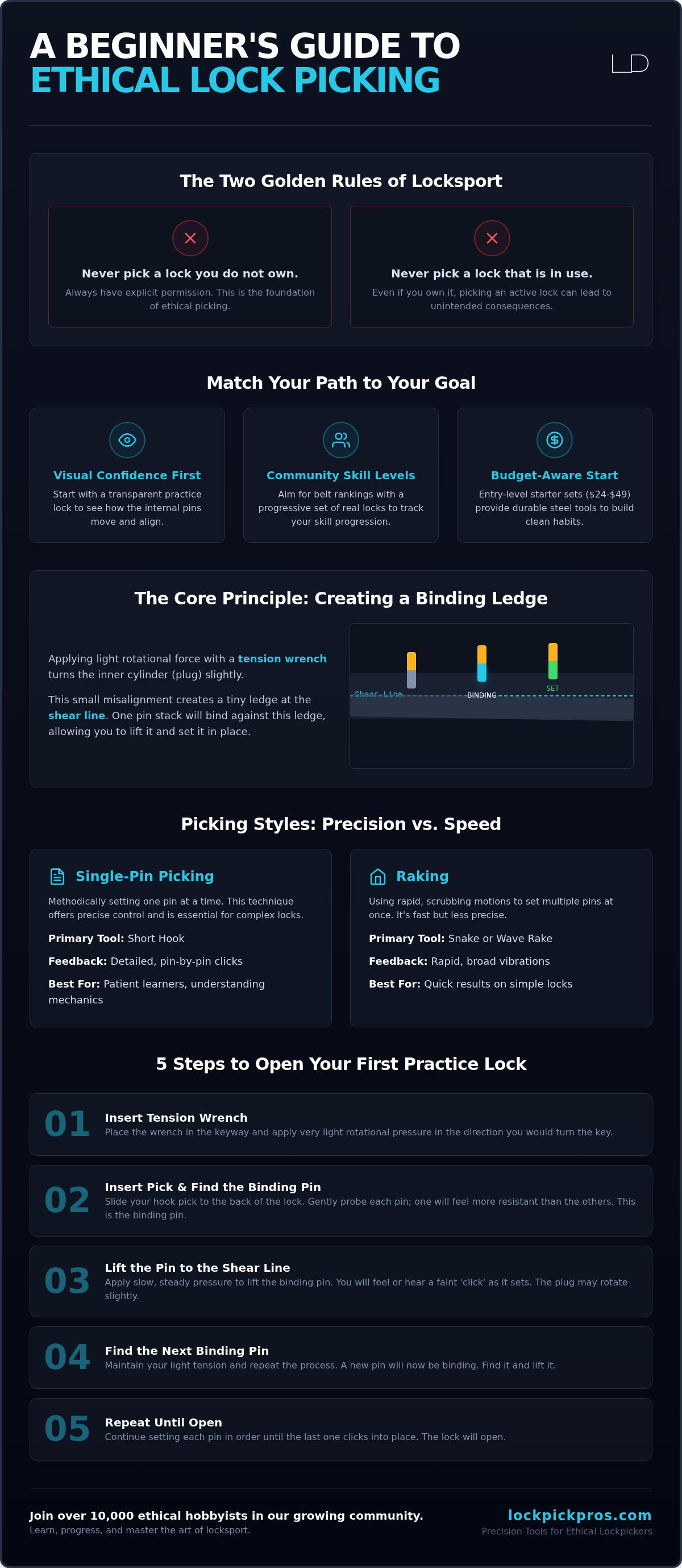
5 Steps that open your first practice lock
Applying gentle rotational pressure while raising each binding pin inside allows you to open a see-through lock. Hands-on practice builds feel. Keep the golden rules in mind: pick only locks you own, and never pick installed locks.
- Insert the turning tool: Place it into the bottom of the keyway and keep force minimal so the mechanism does not bind completely.
- Apply light pressure: Rotate the plug gently with one finger.
- Feel the pins: Slide your pick to locate individual binding components inside the lock with pins.
- Lift until it sets: Push the resting pin upward until it snaps into place at the shear line.
- Rotate the plug: Once all pins lift correctly, the lock core turns freely.
Watch out for a fake click. That deep false set is not a victory; it is a mechanical trap caused by security pins. Take your beginner kit and work through your first pin assembly with steady tension control.
When owning a lock pick set stays legal
Owning lock picks is legal in most places, provided you lack intent to commit a crime. Ownership rules vary depending on your specific state or country laws.
Research local statutes before carrying tools outside your home. Having picks in public often carries different legal weight than keeping them in your workshop. What few people think of: keeping security tools in a vehicle might be classed as possessing burglary tools during a routine traffic stop. You must safeguard your gear just like private digital data, as highlighted by the FTC consumer advice 2024.
Follow ethics: never pick a lock you do not own or one actively in use. Using a beginner kit responsibly keeps the hobby viable. Share practice progress within the community while respecting local regulations.
Why a bobby pin rarely replaces real picks
You can pick simple household locks using bobby pins, but movie depictions make the process look deceptively easy. Everyday hair accessories lack the precise feedback required for standard lock with pins.
Converting two bobby pins into makeshift picks requires bending one flat for insertion. The second pin serves as a crude turning tool. Pushing too hard easily ruins the makeshift tool.
From field testing, improvised tools often bend long before binding any pin stack. Proper gear provides real tactile feel. Follow ethical lockpicking rules and only pick devices you own.
When cheap picking tools cost you more than they save
Buying cheap sets wastes money and breaks easily under stress. A flimsy beginner kit often bends during early practice sessions.
From practitioner observations, a bent pick ruins keyway feedback instantly. That damage makes learning proper single pin picking nearly impossible.
Invest in quality steel gear early. High-grade picks handle tough security pins without bending out of shape. Cheap metal flexes too much inside tumbler locks. Quality gear lasts longer when you stay on locks you own and do not rely on daily.
Climb the belt ranks with over 10,000 ethical lockpickers
According to our internal platform metrics, join over 10,000 ethical lockpickers who are already climbing the ranks in our Black Belt Challenge. From practitioner observation, tracking your progress across different skill levels keeps motivation high across daily sessions. It feels like earning achievements in a real-life video game. We stand behind our precision-engineered products with a complete satisfaction guarantee, so you have support while you push your boundaries. We offer a hassle-free return policy. If you’re not satisfied with your purchase, contact us and we’ll make it right. Keep growing your skills.
Tip: Choose gear backed by complete satisfaction guarantees to support long-term progression.
Frequently asked questions
What is a practical way to start picking locks as a beginner?
Single pin picking with a see-through lock gives clear basic feedback. Insert your turning tool carefully and keep tension light so you can feel each set.
Is owning a lock pick set legal?
Owning a beginner kit is legal in most jurisdictions if you lack criminal intent. Practice only on locks that belong to you, and skip locks that are currently in active use.
Can you really pick a lock with a bobby pin?
You can open basic lock with pins using household bobby pins in emergencies. Improvised items lack durability and precise feedback, and they frequently cause a bent pick inside the keyway.
What's the difference between picking and bumping a lock?
Picking uses specialized picks to lift individual pins inside the lock mechanism one by one. Bumping utilizes a specially cut key to force all pins upward simultaneously. High security components like security pins resist these sudden kinetic forces.
How long does it take to learn lock picking?
Mastering basic lock picking techniques for beginners takes just a few hours of dedicated practice. Progress depends on your specific skill levels goals. According to community records, over 10,000 ethical lockpickers are climbing the ranks in the Black Belt Challenge.
Master Lock Picking Techniques for Beginners in 2026
Practicing fundamental lock picking techniques for beginners builds genuine physical feedback skills, and the same decisions from the start still apply: match the path to your goal, control tension with care, and stay inside ethical limits.
From client work we see how proper tension control prevents early tool wear: the situation is over-tensioning on first locks, the solution is lighter plug control on a progressive setup, and the result is fewer bent picks and fewer fully locked-up mechanisms. Reaching a fake click on security pins signals a trap, not an immediate victory.
The Lockpick Pros team offers White Belt gear backed by a satisfaction guarantee and a hassle-free return policy. Contact support advisers to request a quote on custom progressive lock picking sets when you want a path matched to your belt goals.