

The Clear Practice Padlock: Your 2026 Guide to Visualizing the White Belt Win
Your first hour of lockpicking shouldn't feel like you're trying to solve a complex puzzle in a pitch-black room. Most beginners start their journey feeling completely blind, poking tools into a metal cylinder and hoping for a click that never seems to come. It's incredibly frustrating when you can't tell which pin is binding or why you keep oversetting the stack. This is exactly why a clear practice padlock is the most important tool in your kit. We have all been there, staring at a standard lock and wishing we had X-ray vision to see the mechanics hidden inside.
The good news is that you don't need superpowers to master this skill. This guide will show you how a transparent trainer translates confusing internal physics into a clear, visual map. By the time you finish reading, you'll understand exactly how to manipulate the shear line and fast-track your way to earning your White Belt rank. With the mechanical lock market hitting $13.43 billion in 2026, it's the perfect time to join our growing community of ethical hobbyists. We are going to dive into pin tumbler mechanics, decode the binding order, and set you on the path to your very first successful open.
Key Takeaways
- Understand why a clear practice padlock is the essential first step for any locksport hobbyist looking to visualize internal pin movement and tactile feedback.
- Master the anatomy of a pin tumbler lock by identifying driver pins, key pins, and the critical shear line through a transparent acrylic shell.
- Compare the benefits of transparent trainers versus metal cutaway locks to determine which tool best fits your current training goals and durability needs.
- Learn the fundamentals of Single Pin Picking (SPP) with actionable steps on applying light tension and navigating the pin stack with a hook pick.
- Prepare for your first community belt promotion by bridging the gap between practice tools and real-world locks like the Master Lock #3.
Why Every White Belt Starts with a Clear Practice Padlock
A clear practice padlock is much more than a simple training device; it's the Rosetta Stone of the locksport world. This transparent acrylic tool reveals the internal pin tumbler mechanism, showing you exactly how the springs and pins interact with your pick. For a beginner, a standard metal lock is a "black box" that offers no clues about what's happening inside. By using a transparent version, you turn an invisible struggle into a visual lesson. You can see the driver pins clear the shear line in real time, which is the fastest way to understand the physical "click" you'll eventually feel through your tension wrench.
This tool plays a foundational role in the community. As we discuss in our Lock Picking Belt Levels Explained guide, the journey to mastery starts at the White Belt. The clear practice padlock is the primary instrument used to secure this first rank. It helps you build a solid mental model of how a lock functions. This internal map is what allows advanced pickers to "see" inside a solid brass lock using nothing but the feedback from their tools.
The Psychology of Visual Learning in Locksport
Traditional padlocks can be incredibly discouraging for newcomers. When you can't see the pins, every mistake feels like a mystery. Are you oversetting? Is your tension too heavy? The clear shell solves this by breaking the mystery of the blind pick. Seeing the mechanism respond to your movements builds immediate confidence. That first "pop" of the shackle isn't just a win; it's the spark that turns a curious beginner into a lifelong hobbyist. It reduces the steep learning curve by providing instant feedback that your brain can process and store for later.
Ethical Use and the Hobbyist Mindset
Mastering this skill comes with a responsibility to the community. We follow the "Golden Rules" of ethical lockpicking: only pick locks you own and never pick a lock that is currently in use. A clear practice padlock is the perfect environment to learn these boundaries. It frames the activity as a challenge to be solved rather than a way to defeat security. When you join the community of ethical pickers, you're engaging in a discipline that values precision, patience, and logic. We treat every lock as a mechanical puzzle, focusing on the sport and the skill refinement required to progress through the ranks.
Anatomy of the Pin Tumbler: Behind the Plastic Shell
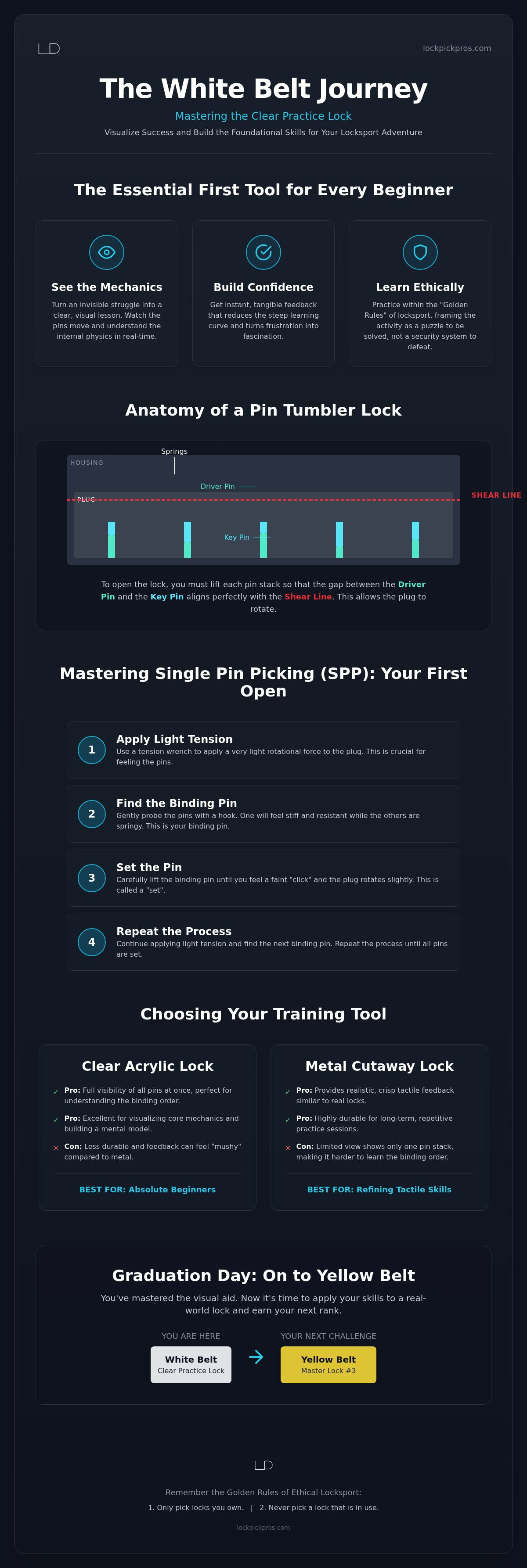
To master locksport, you have to understand the mechanical dance happening inside the cylinder. Your clear practice padlock provides a front-row seat to this performance. Inside each chamber, you'll find a pin stack consisting of a spring, a driver pin, and a key pin. When no key is present, the driver pins are pushed down by the springs, crossing into the plug and preventing it from turning. It's a simple system, but the physics of how these components interact under tension is what makes picking possible.
The Mechanics of the Pin Stack
Springs are the heartbeat of the lock. They provide the constant downward pressure that resets the pins every time you release your tension wrench. Key pins are the ones that actually touch your pick or the key; their varying heights are what create the lock's unique "bitting." Above them sit the driver pins, which act as the physical deadbolts for the plug. The shear line is the exact point where the plug and housing meet. To open the lock, every driver pin must be lifted until its bottom edge aligns perfectly with this invisible boundary.
Identifying the Binding Order
Why doesn't every pin move at once? It comes down to manufacturing tolerances. No matter how precise the factory is, the holes drilled into the lock body are never perfectly aligned. When you apply tension, the plug rotates a fraction of a millimeter until one specific driver pin hits the side of its chamber. This is the binding pin. It's the first obstacle standing between you and a successful open.
By watching through the transparent shell of your clear practice padlock, you'll see this pin get trapped between the plug and the body. It will feel stiff and resistant to your pick, while the other pins feel springy and loose. Once you lift that binding pin to the shear line, the plug rotates just a tiny bit more, and the next pin in the sequence starts to bind. This domino effect is known as the binding order. Mastering this sequence is the secret to a fast open. If you're ready to feel these subtle shifts with professional-grade feedback, consider upgrading to the Carbon Fiber Gen 2 Pro Series picks to enhance your tactile sensitivity.
Clear Padlock vs. Metal Cutaway: Which Training Tool Wins?
Choosing your first training tool often comes down to a debate between the clear practice padlock and the metal cutaway. Both serve a specific purpose in your locksport journey, but they offer very different experiences. A clear lock provides 360-degree visibility. You can see every spring compression and pin set from any angle. This total transparency is vital when you're first learning to coordinate your hands. However, acrylic is a soft material. It tends to absorb the vibrations of a setting pin, resulting in what many hobbyists call "mushy" feedback. You see the open, but you don't necessarily feel the crisp snap of a real lock.
Metal cutaways are different. They are usually made from actual brass or steel lock bodies with a small window milled into the side. This gives you the realistic tactile feedback you'll need for higher belt ranks. The trade-off is the limited visual field. You can only see the pins from one specific side. For most beginners, the best path is to start with a transparent model to master the concepts and then quickly transition to a set like The Trainee 2.0. This progression ensures you don't develop a "visual crutch" that hinders your progress when you move to solid metal locks.
Tactile Feedback vs. Visual Clarity
The goal of using a clear practice padlock is to eventually stop looking at it. Beginners often fall into the trap of staring at the pins instead of focusing on what their fingers feel. In a real-world scenario, you'll be picking by touch alone. Acrylic doesn't transmit the "click" of a set pin as clearly as metal does. If you rely too heavily on your eyes, you'll struggle when you graduate to your first Master Lock. We recommend using the clear lock to understand the mechanics, then closing your eyes periodically to see if you can feel the binding pin without looking. Once you can open the clear lock blindfolded, you're ready for a metal-bodied practice lock.
Durability and Maintenance
Acrylic is susceptible to cracking if you use heavy tension. Beginners often use too much force, which can stress the plastic housing over time. To keep your clear practice padlock in top shape, avoid dropping it and keep the plastic clean. Dust or oil from your hands can cloud the visibility of the internal chambers. Metal cutaways are significantly more durable and can handle the repetitive stress of practicing with security pins like spools or serrated pins. Think of your clear lock as a bridge. It's a foundational tool designed to get you across the gap from "clueless" to "capable," but it isn't meant to be your permanent practice home.
Mastering Single Pin Picking (SPP) on Your First Practice Lock
Single Pin Picking (SPP) is the gold standard of locksport. While raking might get you a quick open, SPP is how you truly learn to "read" a cylinder. Your clear practice padlock is the perfect laboratory for this technique because it provides visual confirmation for every movement you make. It allows you to verify the physical feedback you're receiving through your tools, which is essential for building muscle memory.
Follow these steps to secure your first SPP open:
- Step 1: Insert your tension wrench into the bottom or top of the keyway. Apply pressure that is as "light as a feather." If you press too hard, you'll bind every pin simultaneously and nothing will move.
- Step 2: Use a standard hook pick to probe each pin stack from front to back. Don't try to lift them yet; just get a feel for where they are located.
- Step 3: Identify the binding pin. As you probe, most pins will feel springy. The binding pin is the one that feels stiff and doesn't spring back when you touch it.
- Step 4: Gently lift the binding pin. Watch through the transparent shell until you see the gap between the key pin and driver pin align perfectly with the shear line. You should feel a slight "give" in the tension wrench.
- Step 5: Repeat this process. Hunt for the next pin in the binding order. Once all pins are set, the plug will rotate freely and the shackle will pop.
Tension Control: The Secret Sauce
Tension is 90% of lockpicking. Most beginners use far too much force, which prevents the pins from reaching the shear line. You can use Bottom of Keyway (BOK) tension for most basic trainers, but Top of Keyway (TOK) often provides more room for your pick. To ensure a pin is set correctly, use the "jiggle test." A set pin will have a tiny bit of wiggle room because the driver pin is no longer resting on the key pin. If you want to refine this tactile sensation, we recommend the Carbon Fiber Gen 2 Pro Series picks, which are designed to transmit these minute vibrations directly to your fingertips.
The 'Eyes-Closed' Transition Drill
Once you can open the lock while watching the pins, it's time to break the visual crutch. Pick the clear lock while looking a few times to remind your brain what success looks like. Then, close your eyes and try to replicate the process by feel alone. Focus on the resistance of the binding pin and the subtle rotation of the plug. Use the crisp "click" sound as a secondary confirmation that a pin has successfully cleared the shear line. This drill is the bridge that prepares you for solid metal locks where you'll be picking in total darkness.
Graduation Day: Moving Toward Your Yellow Belt
Once you can open your clear practice padlock consistently without looking, you've officially outgrown your training wheels. This is a major milestone in any locksport journey. To mark the occasion, some hobbyists enjoy a celebratory toast; you can read more about local delivery options for spirits and wines. You've successfully built the mental model required to translate tactile vibrations into a visual map. Now, it's time to apply those skills to real-world hardware. Transitioning to metal cylinders is the ultimate test of your foundational training. You are no longer guessing; you're picking with intent and precision.
Mastering the Master Lock #3
The Master Lock #3 is the classic next step for any aspiring Yellow Belt. While your clear practice padlock taught you the mechanics, this lock introduces the gritty reality of metal tolerances. It features a standard 4-pin tumbler stack with no security pins, making it the perfect gateway to "blind" picking. To successfully open the Master Lock #3, follow these technical steps:
- Tension: Unlike the light touch used on acrylic, apply heavy tension. These locks are often "crunchy" and require significant force to bind the pins.
- Pick Choice: Use a standard hook pick. The keyway is wide enough to accommodate most beginner tools without snagging.
- Process: Locate the first binding pin. Because there are no security pins like spools or serrated pins, you won't have to deal with counter-rotation.
- The Open: Apply steady, heavy pressure on the wrench while lifting the pins front to back. Once all four pins reach the shear line, the plug will give a satisfying, heavy rotation.
Upgrading Your Toolset
As you move away from the "mushy" feel of acrylic, your tools become your primary sense of touch. Making the right pick set selection is vital as you move into these real-world challenges. Most beginners start with standard .025" thick picks, which are durable and forgiving. However, as you progress toward narrower keyways, you'll eventually need the precision of a .015" pick. This is where the Carbon Fiber Gen 2 Pro Series makes a world of difference. These professional-grade tools offer superior feedback, allowing you to feel the difference between a binding pin and a set pin with incredible clarity. If you're wondering what else belongs in your kit, check out our guide on What is in a Beginner Lock Pick Set? to ensure you have the right expansion tools for higher tiers.
The Black Belt Challenge Roadmap
Locksport isn't just a solitary hobby; it's a community-driven pursuit of mastery. To truly test your skills, we encourage every graduate to join the Black Belt Challenge. This is our structured roadmap that tracks your progress from White Belt all the way to the elite ranks. We also reward those who help grow the sport through our "share-to-earn" loop. This includes a community bounty system where you earn rewards for reaching social milestones. When you share your "picks-in-action" content on social media, you help foster engagement and bring new ethical pickers into the fold. It's a way to celebrate your success while earning gear upgrades. Join the Black Belt Challenge today and start your climb toward locksport mastery.
Take the First Step Toward Locksport Mastery
Mastering the internal mechanics of a pin tumbler lock is the most rewarding hurdle for any new hobbyist. By using a clear practice padlock, you've turned a confusing "black box" into a visual playground. You now understand how to identify binding pins and navigate the shear line with precision. These foundational skills are your ticket to the White Belt rank and the start of a lifelong journey in ethical locksport. Remember that this tool is your bridge. It translates the invisible language of feedback into a map you can finally see.
As you graduate from acrylic to metal, your gear needs to keep pace with your evolving skills. Precision is everything in this sport. Our community thrives on progress and shared success through the belt ranking system. If you're ready to leave the plastic behind and feel the crisp feedback of professional-grade equipment, it's time to upgrade. Start your journey to Black Belt with the Carbon Fiber Gen 2 Pro Series. These carbon fiber precision tools are designed for pickers who are serious about advancing through the ranks. Keep practicing, stay ethical, and we'll see you at the next belt level.
Frequently Asked Questions
Is a clear practice padlock good for beginners?
A clear practice padlock is the single most effective tool for anyone starting their journey in beginner lockpicking. It removes the mystery of the "black box" by showing you exactly how the pins respond to your tools. This visual feedback is essential for understanding the mechanical logic of a cylinder before you transition to picking by feel alone. It builds the confidence needed to pursue higher belt ranks within the locksport community.
Can I learn to pick real locks using a clear padlock?
You can certainly use these trainers to develop the core skills required for real hardware. While the material is different, the physics of the pin tumbler remains the same. The goal is to use the transparent shell to visualize the process, then gradually close your eyes to simulate picking a standard metal lock. This transition is a vital step in your progression toward opening your first Master Lock or Abus cylinder.
Why does my clear lock feel 'mushy' compared to a real lock?
The "mushy" feel is a result of the acrylic housing, which is softer than the brass or steel found in professional locks. Plastic tends to absorb the vibrations of a setting pin, making the tactile "click" less distinct. While this makes the lock less realistic in terms of feel, the 360-degree visibility it provides is an invaluable trade-off for students who need to see the binding order in action during their initial training.
What tools do I need to pick a clear practice lock?
You only need a basic tension wrench and a standard hook pick to get started. When making your first pick set selection, look for a kit that includes a variety of hook profiles and at least two different tension tools. These foundational implements are all you need to manipulate the pins and clear the shear line. As you advance, you might add rakes or specialized tensioners, but the hook and wrench remain the most important tools in your bag.
How long does it take to learn to pick a clear lock?
Most hobbyists can achieve their first successful open in about 15 to 20 minutes. Mastering the lock consistently by feel usually takes a few hours of dedicated practice. This quick win is why practice locks are so popular; they provide immediate gratification and a clear roadmap for improvement. Once you can open the clear lock blindfolded, you are technically ready to move on to more challenging metal hardware.
Are clear locks legal to own for hobby purposes?
Owning lockpicking tools for hobbyist use is legal in the vast majority of U.S. states as of August 2026. The law typically focuses on the owner's intent rather than the possession of the tools themselves. As long as you follow the ethical code of only picking locks you own and never picking a lock in use, you are engaging in a safe and legal sport. Always check your local state statutes to stay informed about specific regional regulations.
Should I start with a clear lock or a metal cutaway?
We recommend starting with a clear lock for total visibility, then moving to a metal cutaway for better tactile feedback. The clear version allows you to see the entire mechanism from any angle, which is best for the very first stage of learning. A metal cutaway is a great secondary tool because it offers the realistic "snap" of brass while still providing a small window to verify that you haven't overset a pin.
What happens if I overset a pin in a clear lock?
When you overset a pin, the key pin enters the housing and prevents the plug from turning. In a clear practice padlock, you can see the pin stuck in the wrong position, which helps you diagnose the error instantly. To fix it, simply release your tension wrench to let all the pins drop back to their resting state. This reset is a normal part of the learning process and helps you refine your "jiggle test" for future opens.